3UR-FE ENGINE
-
General
-
A compact and lightweight segment conductor type generator that generates high amperage output in a highly efficient manner is standard equipment.
-
This generator has a joined segment conductor system in which multiple segment conductors are welded together to form the stator. Compared to the conventional winding system, the electrical resistance is reduced due to the shape of the segment conductors, and their arrangement helps to make the generator compact.
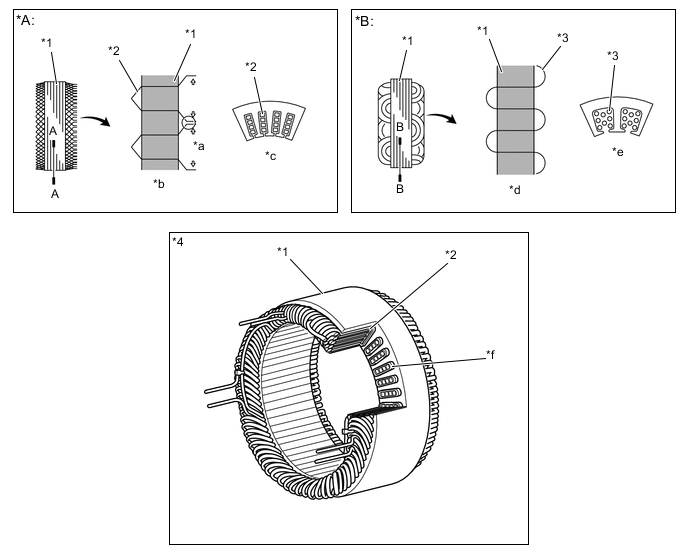
*A Segment Conductor Type Generator *B Conventional Type Generator *1 Stator *2 Segment Conductor *3 Conductor Wire *4 Stator of Segment Conductor Type Generator *a Joined *b Joined Segment Conductor System *c A - A CrossSection *d Winding System *e B - B CrossSection *f Cross Section Specifications Generator Type SC6 Rated Voltage 12 V Rated Output 180 A Initial Output Starting Speed Max. 1000 rpm Figure 1. Wiring Diagram
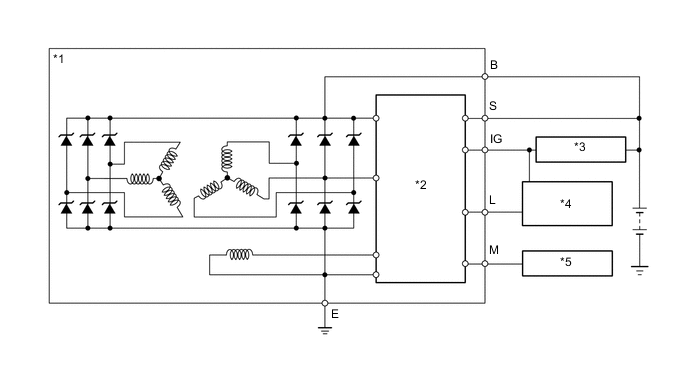
*1 Generator *2 Regulator *3 Ignition Switch *4 Discharge Warning Light *5 ECM - -
-
-
Dual Winding System
-
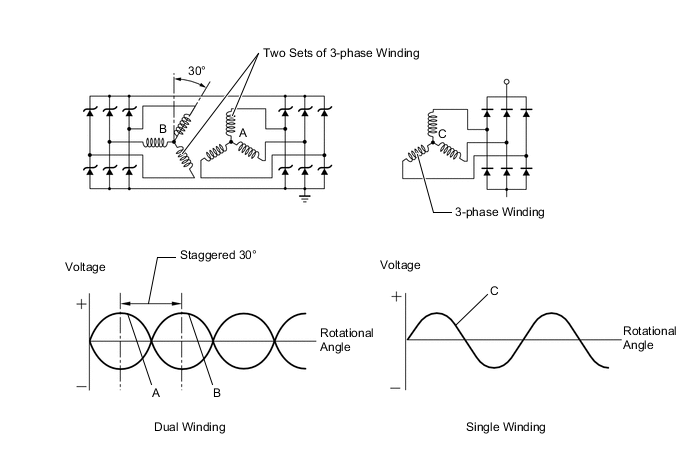
A dual winding system is used. This system consists of two sets of three-phase windings whose phases are staggered 30°. This system results in the reduction of both electrical noise (ripple and spike) and magnetic noise (a hum that is heard as generator load is increased). This system significantly suppresses noise at the source (generator). Because the waves that the respective windings generate have opposite polarities, magnetic noise is reduced. However, the electrical power generated does not cancel itself out due to the use of separate rectifiers. The opposite polarities that are generated are shown below:
-