СИСТЕМА АВТОМАТИЧЕСКОЙ ТРАНСМИССИИ
-
CONSTRUCTION
-
The ATF warmer uses engine coolant that has been warmed by the engine to warm up the ATF quickly. Consequently, the friction losses of the automatic transmission are quickly reduced, thus improving fuel economy.
-
The ATF warmer has a transmission oil thermostat that changes the route through which the ATF flows.
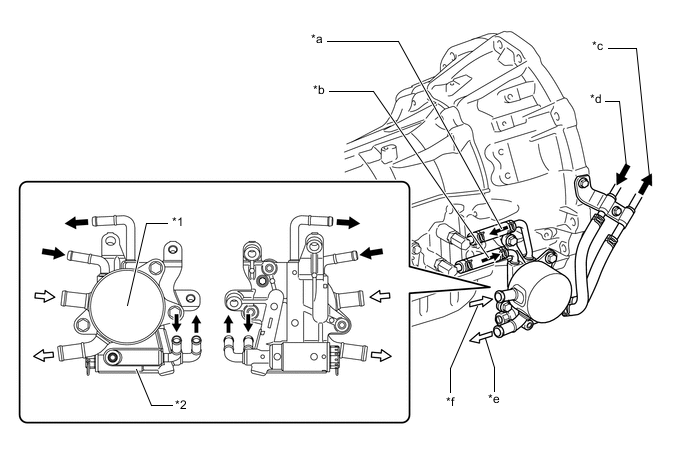
*1 ATF Warmer *2 Transmission Oil Thermostat *a To Transmission *b From Transmission *c To Radiator (Water-cooled Type ATF Cooler) *d From Radiator (Water-cooled Type ATF Cooler) *e To Engine *f From Heater Core 
ATF Flow 
Engine Coolant Flow -
When the ATF temperature is low, the ATF is heated by the ATF warmer using the engine coolant, and when the ATF temperature is high, the ATF is cooled down by the ATF warmer and radiator (water-cooled type ATF cooler).
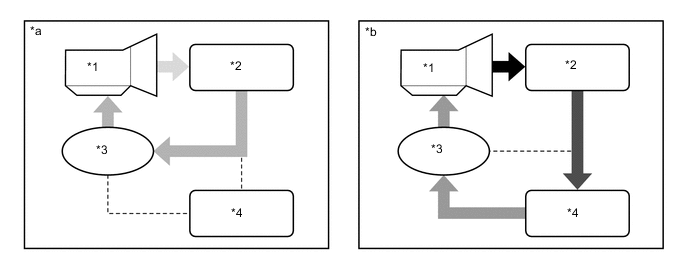
*1 Transmission *2 ATF Warmer *3 Transmission Oil Thermostat *4 Radiator (Water-cooled Type ATF Cooler) *a ATF Temperature is Low *b ATF Temperature is High -
The transmission oil thermostat consists of a poppet valve, a bypass valve and an element case (contains wax). When the ATF temperature changes from low to high, the wax will expand to start to open the poppet valve and close the bypass valve, thus switching the ATF passages.
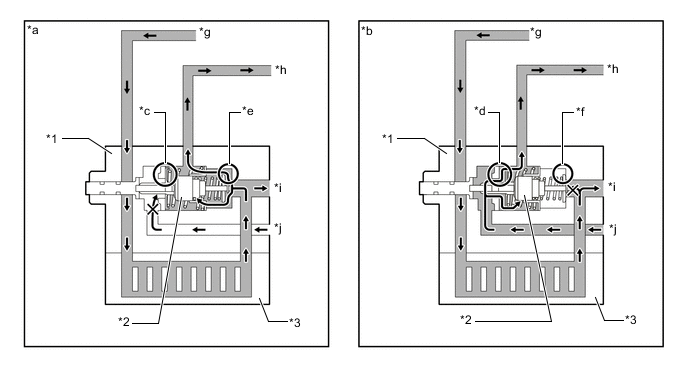
*1 Transmission Oil Thermostat *2 Element Case (Contains Wax) *3 ATF Warmer - - *a ATF Temperature is Low *b ATF Temperature is High *c Poppet Valve: Closed *d Poppet Valve: Open *e Bypass Valve: Open *f Bypass Valve: Closed *g From Transmission *h To Transmssion *i To ATF Cooler *j From ATF Cooler
-