ENGINE UNIT DETAILS
-
CONSTRUCTION
-
Cylinder Head Cover
-
A cylinder head cover made of plastic is used for weight reduction.
-
Acrylic rubber, which excels in heat resistance and reliability, is used for the cylinder head cover gasket.
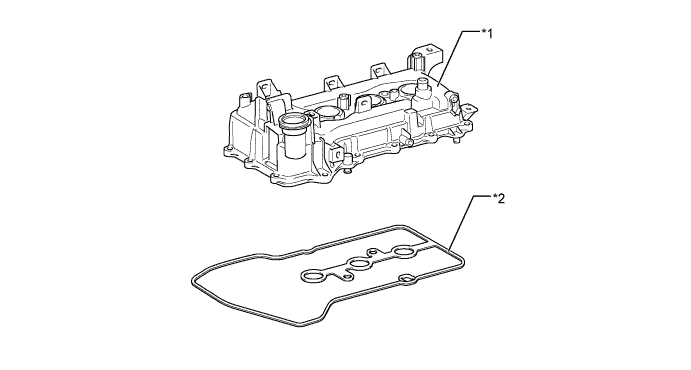
Text in Illustration *1 Cylinder Head Cover Sub-assembly *2 Cylinder Head Gasket
-
-
Cylinder Head Gasket
-
A steel-laminate type cylinder head gasket is used. The gasket surface is coated with NBR* to enhance the airtightness of the cylinder head.
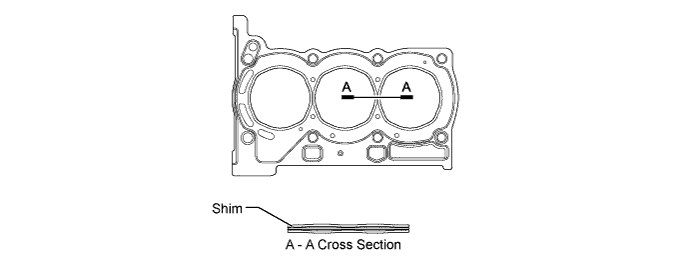
Tech Tips
* NBR (Nitrile Butadiene Rubber):
-
A rubber material that excels in heat resistance, oil resistance, and wear resistance.
-
-
-
Cylinder Head
-
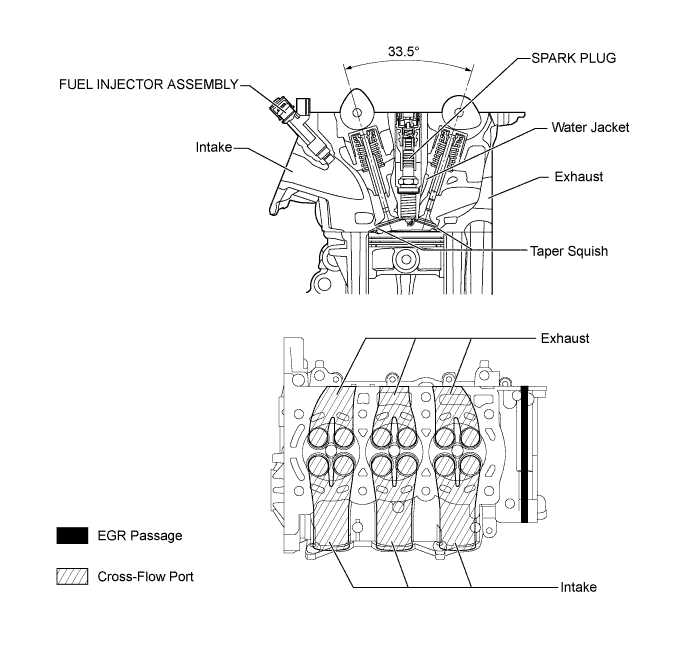
The spark plug has been located in the center of the combustion chamber in order to achieve high the engine's anti-knocking performance.
-
The angle of the intake and exhaust valves is narrowed and set at 33.5° to realize a compact cylinder head.
-
A taper squish combustion chamber is used to achieve high anti-knocking performance and intake efficiency. In addition, excellent engine performance and fuel economy have been realized.
-
The shape of the intake ports has been optimized to realize efficient combustion.
-
The cylinder head bolt employs plastic region tightening bolts.
-
The routing of the water jacket in the cylinder head is optimized to achieve high cooling performance.
-
-
Cylinder Block Sub-assembly
-
An aluminum cylinder block sub-assembly with a 7 mm (0.28 in.) distance between the cylinder bores is used to realize a compact and lightweight configuration.
-
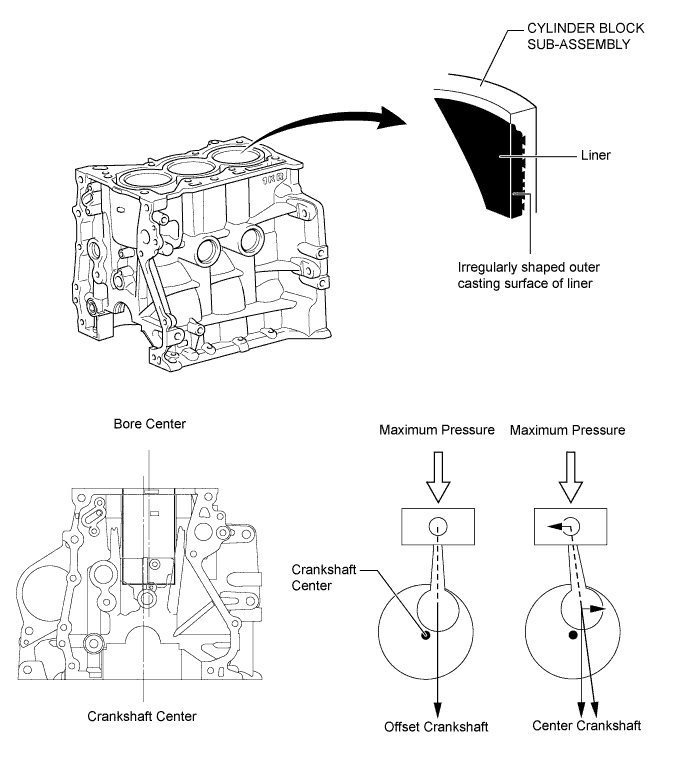
It is not possible to bore the block with this liner. The liners are the spiny type, which have been manufactured so that their casting exterior forms a large irregular surface in order to enhance the adhesion between the liners and the aluminum cylinder block sub-assembly. The enhanced adhesion helps heat dissipation, resulting in a lower overall temperature and heat deformation of the cylinder bores.
-
Through the use of the offset crankshaft, the bore center is shifted 8 mm (0.31 in.) towards the intake, in relation to the crankshaft center. Thus, the side force to cylinder wall is reduced when the maximum pressure is applied, which contributes to fuel economy.
-
Cylinder block water jacket spacers are used in the water jackets of the cylinder block sub-assembly.
-
They suppress the water flow in the center of the water jackets, guide the coolant above and below the cylinder bores, and ensure uniform temperature distribution. As a result, the viscosity of the engine oil that acts as a lubricant between the bore walls and the pistons can be lowered, thus reducing friction.
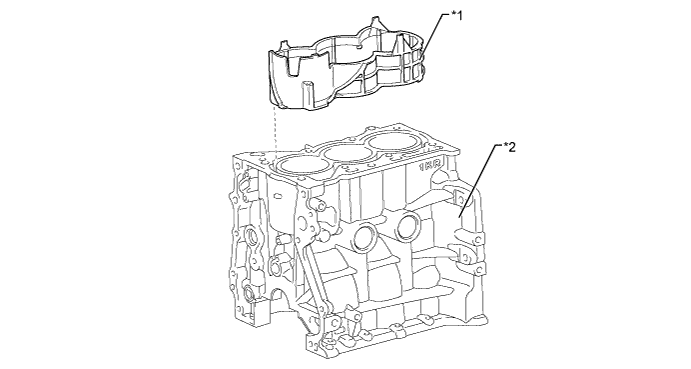
Text in Illustration *1 Cylinder Block Water Jacket Spacer *2 Cylinder Block Sub-assembly
-
-
Piston
-
The piston is made of aluminum alloy.
-
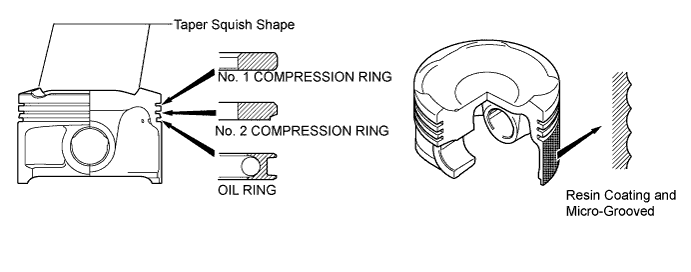
The piston head portion uses a taper squish shape to accomplish fuel combustion efficiency.
-
A resin coating and micro-grooves have been added to the piston skirt in order to minimize noise and friction.
-
Low-tension piston rings are used to reduce friction and achieve excellent fuel economy.
-
-
Connecting Rod and Connecting Rod Bearing
-
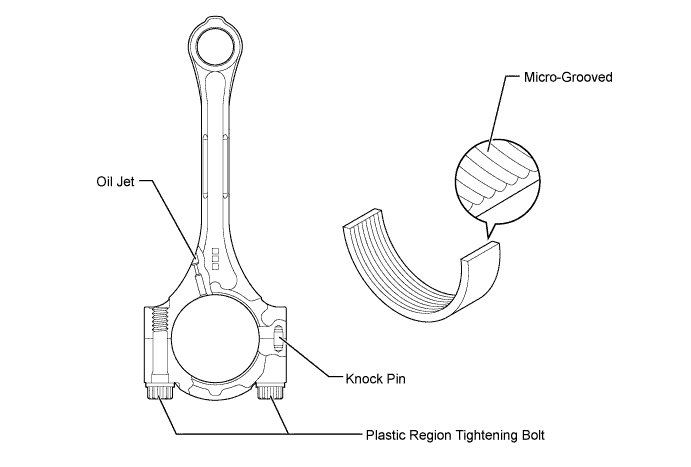
Connecting rods that have been forged for high strength are used for weight reduction. Plastic region tightening bolts are used.
-
The lining surface of the connecting rod bearing has been micro-grooved to realize an optimal amount of oil clearance. As a result, excellent cold-engine cranking performance has been realized and engine vibrations have been reduced.
-
An oil jet has been provided in the large end of the connecting rod. Oil is injected from the oil jet to cool the cylinder bore, improving the piston durability as well as preventing knocking.
-
-
Crankshaft and Crankshaft Bearing
-
The crankshaft has 4 journals and 6 balance weights.
-
All pins and journal fillets are roll-finished to maintain adequate strength.
-
The crankshaft bearing is made of aluminum alloy.
-
The lining surface of the crankshaft bearings has been micro-grooved to realize an optimal amount of oil clearance. As a result, excellent cold-engine cranking performance has been realized.
-
The upper main bearing has an oil groove around its inside circumference.
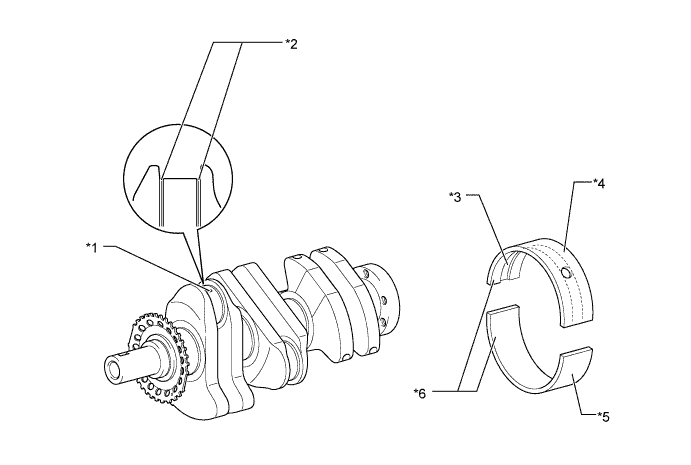
Text in Illustration *1 Oil Hole *2 Roll-Finished *3 Oil Grooved *4 Upper Main Bearing *5 Lower Main Bearing *6 Micro-Grooved
-
-
Oil Pan
-
The oil pan No. 1 is made of aluminum alloy.
-
An oil strainer made of plastic is used for weight reduction.
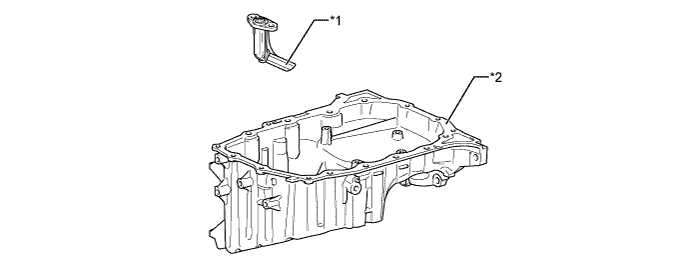
Text in Illustration *1 Oil Strainer Sub-assembly *2 Oil Pan Sub-assembly
-
-
Valve Mechanism
-
Each cylinder has 2 intake valves and 2 exhaust valves. Intake and exhaust efficiency is increased by means of the large total port areas.
-
The valves are directly opened and closed by 2 camshafts.
-
The VVT-i system is used to achieve low fuel consumption, high engine performance and reduce exhaust emissions.
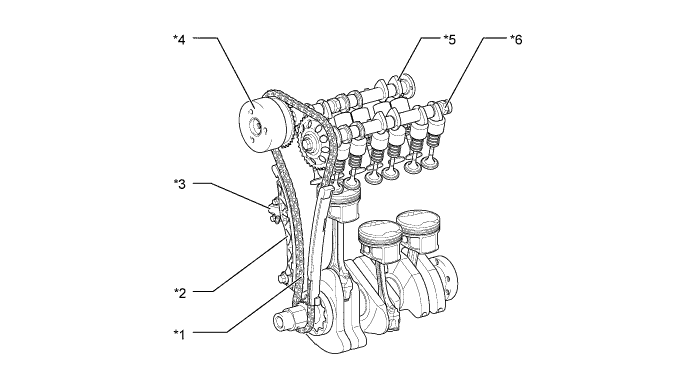
Text in Illustration *1 Timing Chain (Chain Sub-assembly) *2 Timing Chain Tension Arm *3 No. 1Chain Tensioner Assembly *4 VVT-i Controller (Camshaft Timing Sprocket Assembly) *5 Intake Camshaft (Camshaft) *6 Exhaust Camshaft (No. 2 Camshaft)
-
-
Camshaft
-
Oil passages are provided in the intake camshaft in order to supply engine oil pressure to the VVT-i system.
-
A VVT-i controller is installed on the front of the intake camshaft to vary the timing of the intake valves.
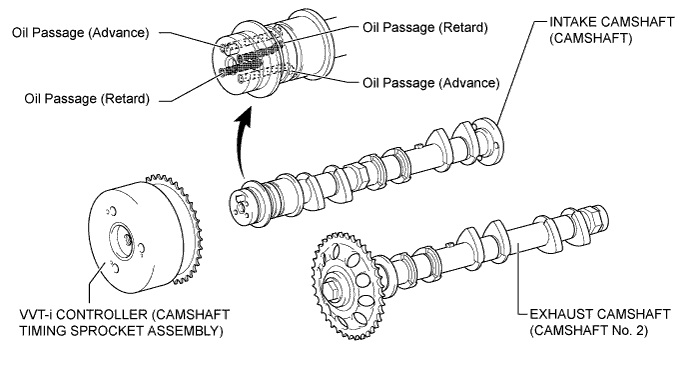
-
-
Camshaft Timing Sprocket Assembly
-
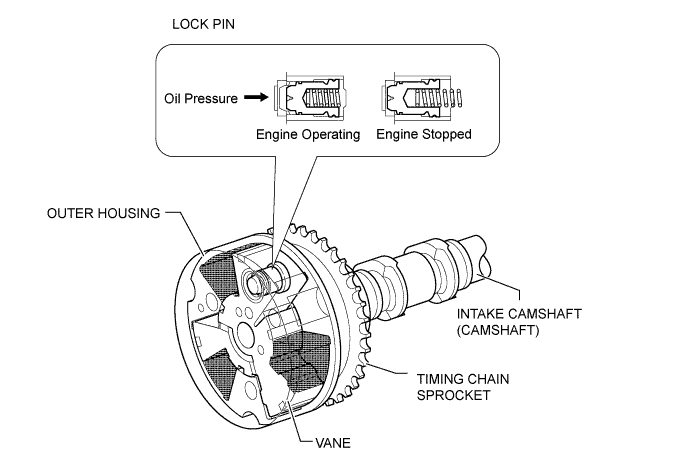
The camshaft timing sprocket assembly consists of an outer housing that is driven by the timing chain sprocket, and a vane that is coupled to camshaft.
-
The camshaft timing sprocket assembly uses 3 vanes.
-
When the engine stops, the camshaft timing sprocket assembly is locked at the most retarded angle by its lock pin. This ensures excellent engine startability.
-
The oil pressure sent from the advance or retard side passages of the intake camshaft causes rotation of the vane relative to the timing chain sprocket, to vary the valve timing continuously.
-
-
Intake and Exhaust Valve and Valve Lifter
-
Narrower valve stems are used to reduce the intake and exhaust resistance and to reduce weight.
-
The same valve springs are used for both the intake and exhaust valves. They are variable pitch springs that offer good valve following performance.
-
Valve lifters with shimless valve adjustment is used for weight reduction.
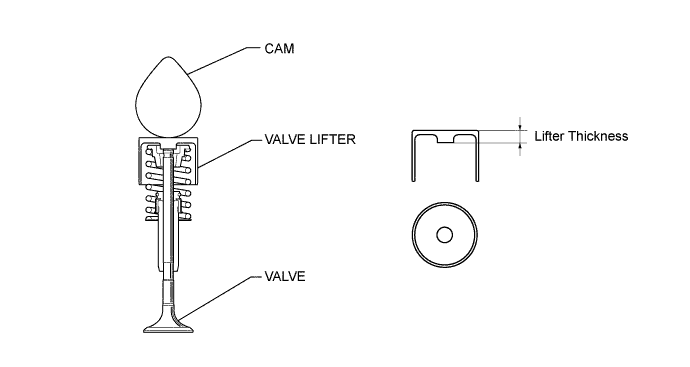
Tech Tips
The adjustment of the valve clearance is accomplished by selecting and replacing the appropriate valve lifters. Adjusting valve lifters are available in 29 increments of 0.02 mm (0.0008 in.), from 5.12 mm (0.201 in.) to 5.68 mm (0.223 in.).
-
-
Timing Chain and Chain Tensioner
-
A high-strength roller chain with an 8.0 mm (0.31 in.) pitch is used to make the engine more compact and to ensure the reliability of the timing chain.
-
The chain tensioner assembly No. 1 uses a spring and oil pressure to maintain proper chain tension at all times. The chain tensioner assembly No. 1 suppresses noise generated by the timing chain.
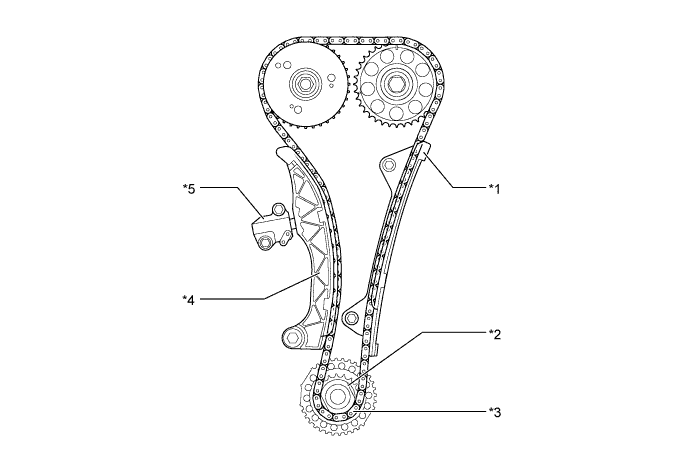
Text in Illustration *1 Timing Chain Guide *2 Crankshaft Timing Sprocket (Crankshaft Timing Gear or Sprocket) *3 Timing Chain (Chain Sub-assembly) *4 Timing Chain Tension Arm *5 No. 1 Chain Tensioner Assembly - -
-
-
Timing Chain Cover
-
The oil pump housing is enclosed in a timing chain or belt cover sub-assembly made of aluminum, to which a water pump assembly, an oil filter bracket and ventilation case sub-assembly are mounted.
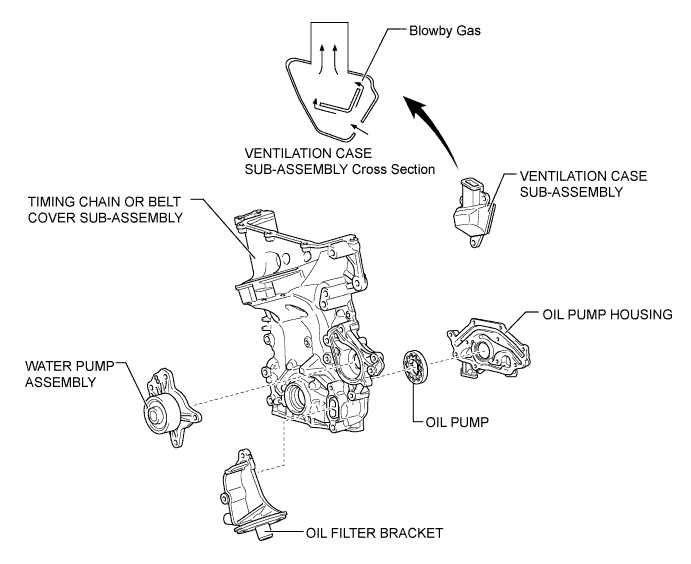
-
-
Engine Mounting
-
The engine and transaxle are supported in three points by the engine mounting insulator sub-assembly RH, engine mounting insulator LH and engine moving control rod, in order to reduce vibrations during idling.
-
For models equipped with the CVT, an electrical hydraulic type engine mounting is used in the engine mounting insulator sub-assembly RH. The mounting is operated by the vacuum which is generated by the intake air surge tank that is used to control engine mounting.
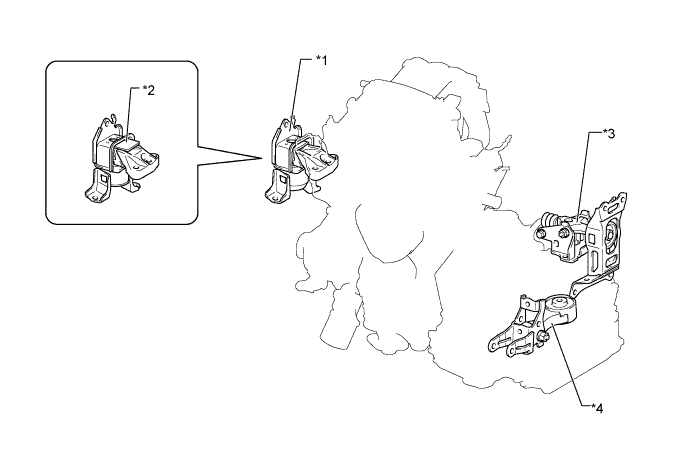
Text in Illustration *1 Engine Mounting Insulator Sub-assembly RH (Models with CVT) *2 Engine Mounting Insulator Sub-assembly RH (Models without CVT) *3 Engine Mounting Insulator LH *4 Engine Moving Control Rod
-
-
V-ribbed Belt
-
Accessory components are driven by the 2 V-ribbed belts.
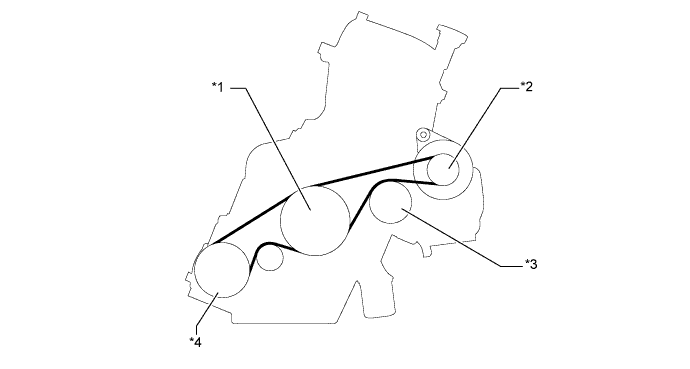
Text in Illustration *1 Crankshaft Pulley *2 Generator Pulley *3 Water Pump Pulley *4 Cooler Compressor Pulley (Models with Air Conditioning)
-
-
Crankshaft Pulley
-
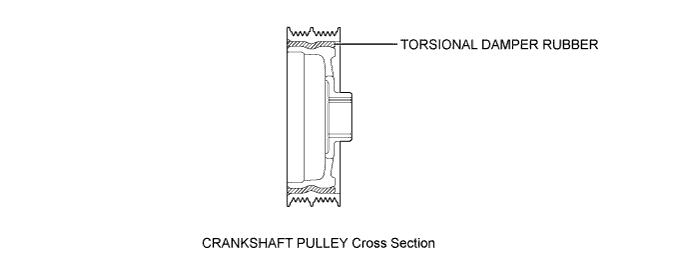
The rigidity of the crankshaft pulley with its built-in torsional damper rubber reduces noise.
-
-