BODY STRUCTURE DETAILS
-
FUNCTION
-
Impact Absorbing Structure for Front Collision
-
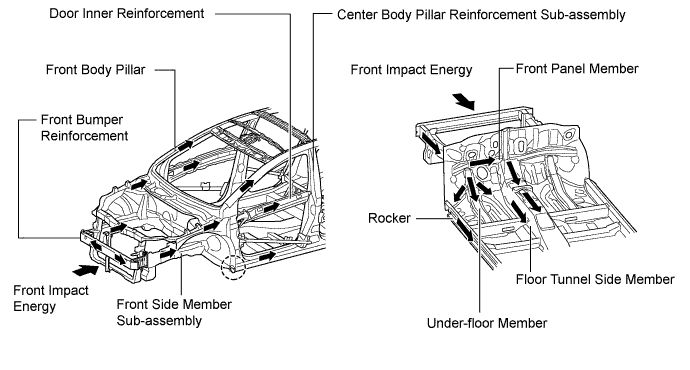
To help minimize the deformation of the cabin in case of a front collision, the following parts effectively dissipate the energy of the impact applied to the front of the vehicle: the front bumper reinforcement, front side member sub-assemblies, under-floor members, front panel member, floor tunnel side members, rockers, front body pillars, center body pillar reinforcement sub-assemblies, door inner reinforcements and front door side impact protect beam.
-
The load box reduces the time needed to transfer the impact energy to the underbody at the moment of collision.
-
A dash panel insulator pad and dash panel silencer pad are used on the lower section of the dash panel, helping reduce injuries to the legs.
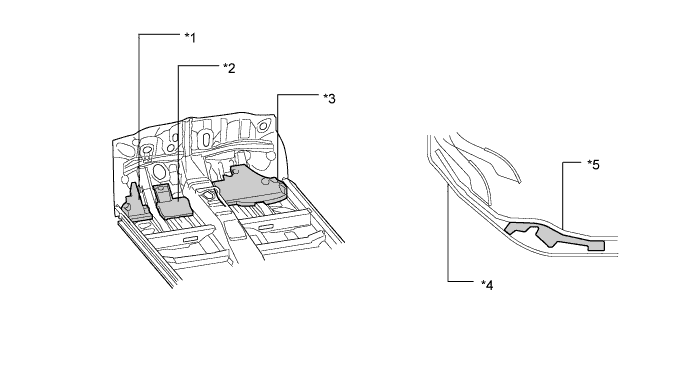
Text in Illustration *1 No. 2 Dash Panel Insulator Pad *2 Dash Panel Silencer Pad *3 No. 3 Dash Panel Insulator Pad *4 Dash Panel *5 Floor Carpet - -
-
-
Impact Absorbing Structure for Side Collision
-
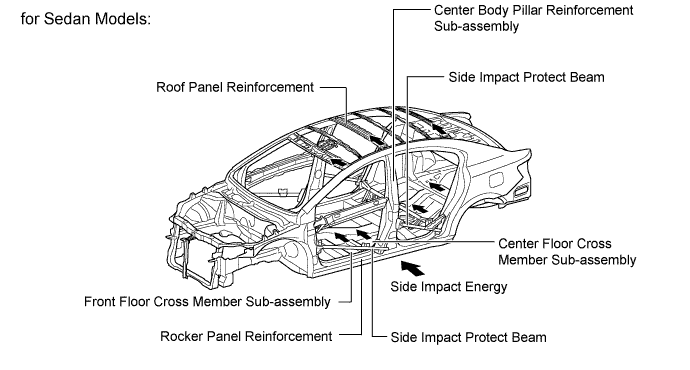
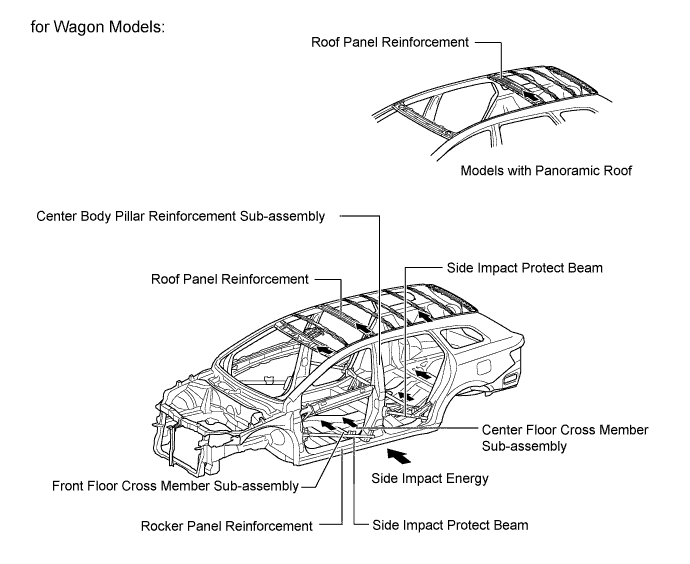
The center body pillar reinforcement sub-assembly is optimally placed to suppress cabin intrusion at the time of a side collision.
-
Rocker panel reinforcements are provided at the sides of the front floor cross member sub-assembly and center floor cross member sub-assembly in order to transmit the load to the cross members.
-
The roof panel reinforcement is used in order to convey the load more efficiently.
-
Ultra high-strength sheet steel is used for the doors side impact protect beam to suppress cabin intrusion at the time of a side collision.
-
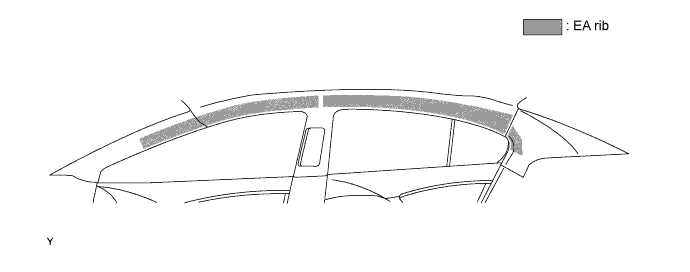
On the sedan models without Supplemental Restraint System (SRS) curtain shield airbag assembly, a head impact protection structure is used. With this type of construction, if the occupant's head hits against the roof side rail and pillar in reaction to a collision, the inner panel of the roof side rail and pillar collapses to help reduce the impact.
-
Door trim lower pads are provided in the door trims to help dampen the impact applied from the sides of the vehicle to the occupants.
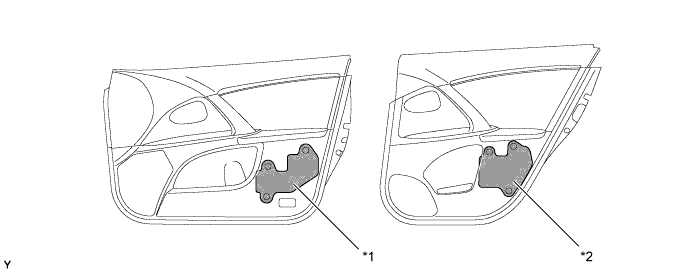
Text in Illustration *1 Front Door Trim Lower Pad *2 Rear Door Trim Lower Pad
-
-
Lessening Pedestrian Head Injury
-
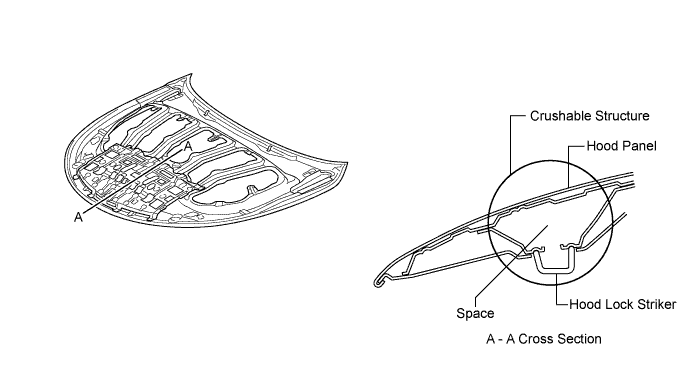
The space between the hood panel and the hood lock striker has been formed into a crushable structure so that the hood sub-assembly can collapse easily during a collision.
-
A space is provided between the hood panel and the hood lock striker to enable the hood panel to collapse.
-
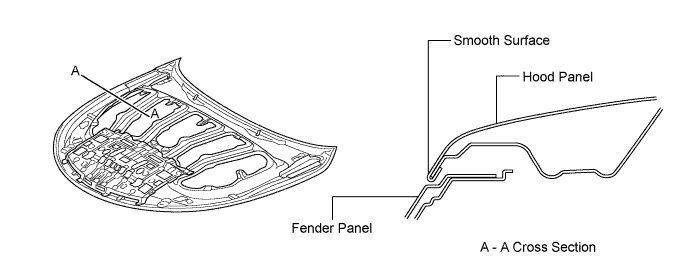
The hood panel has a side parting line with front fender panel. This parting line is folded inside to create a smooth surface in consideration of the damage caused to a pedestrian in the event of a collision.
-
Apron fender side extensions are used in the joint portion of the front fender. Thus, a certain deformation stroke in the event of a head form collision has been ensured, reducing the impact.
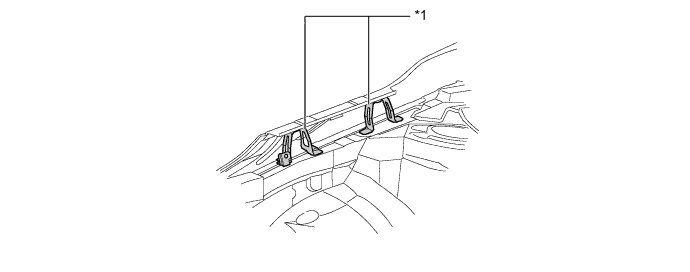
Text in Illustration *1 Apron Fender Side Extension - - -
The cowl area has an open structure. In the event of a collision with a pedestrian, this structure helps lessen the impact inflicted by the cowl to the head of the pedestrian.
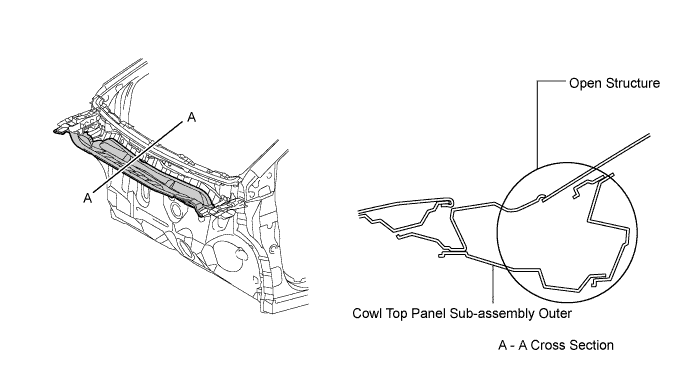
-
A front bumper energy absorber and a front bumper absorber lower are provided in front of the front bumper reinforcement and below the radiator support lower. This structure helps lessen the impact applied to the legs of the pedestrians.
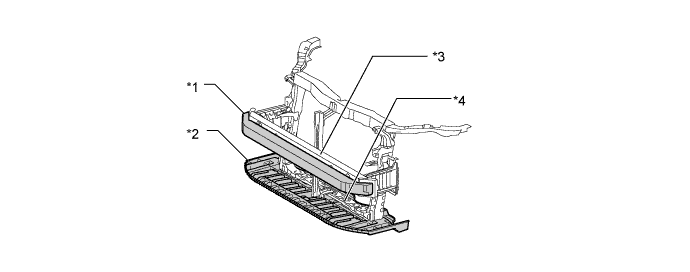
Text in Illustration *1 Front Bumper Energy Absorber *2 Front Bumper Absorber Lower *3 Front Bumper Reinforcement *4 Radiator Support Lower
-
-
Door Closing Sound
-
Door panel protectors are used in the side door outer panel, dampening the sound when closing the doors.
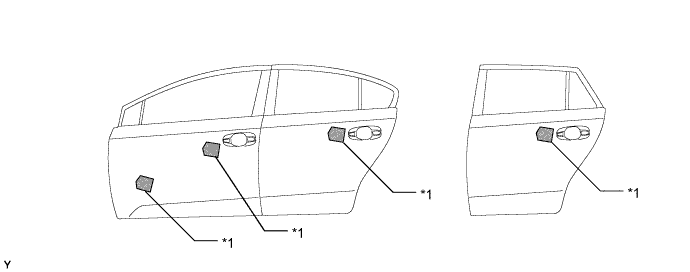
Text in Illustration *1 Door Panel Protector - -
-
-
Aerodynamics
-
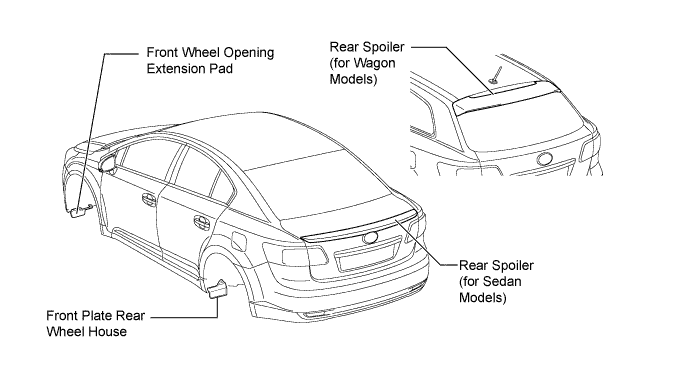
Aerodynamic parts have been provided in various areas to improve the vehicle's aerodynamic performance, thus achieving an excellent Cd value for the vehicle.
-
Various types of airflow routing parts that control airflow are provided under the floor, and an under cover is provided to make the under floor area flat in order to ensure excellent aerodynamic performance.
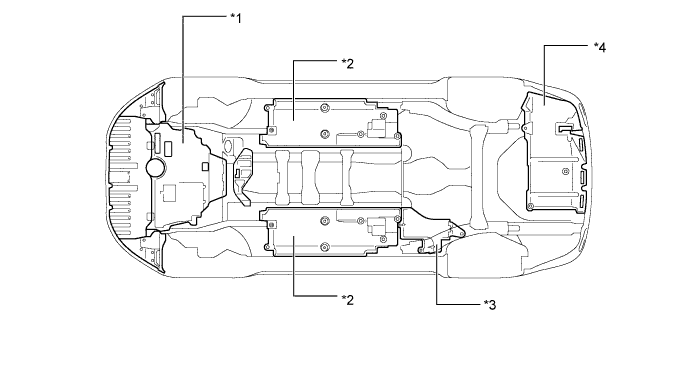
Text in Illustration *1 Engine Under Cover *2 Front Floor Cover *3 Rear Floor Side Member Cover *4 No. 2 Floor Under Cover -
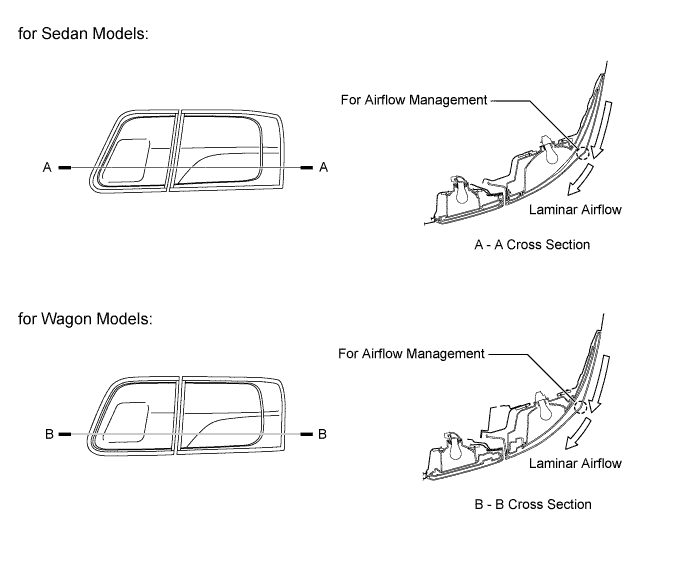
The shape of the rear combination light shapes the air flowing toward the rear of the vehicle into a laminar airflow, thus contributing to aerodynamic performance.
-
A lower control arm cover is provided for the rear suspension. As a result, improved fuel economy, a reduction of CO2and improved handling are achieved.
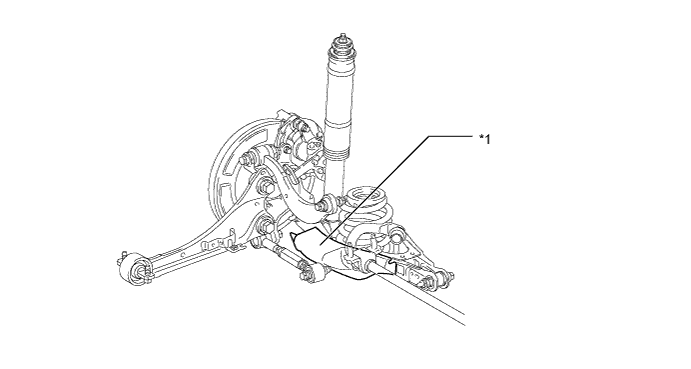
Text in Illustration *1 Lower Control Arm Cover - -
-
-
-
CONSTRUCTION
-
High-strength Sheet Steel
-
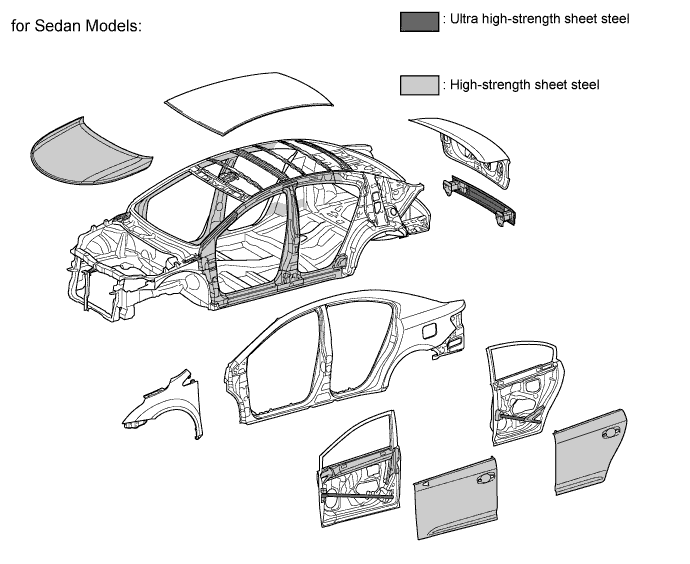
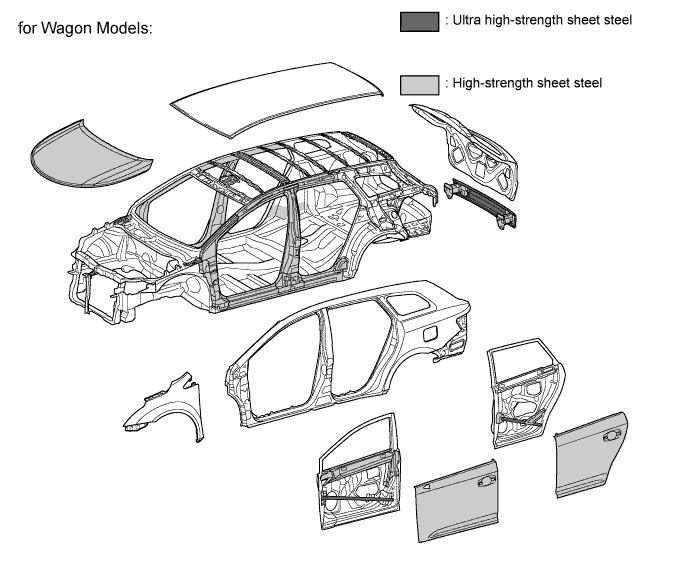
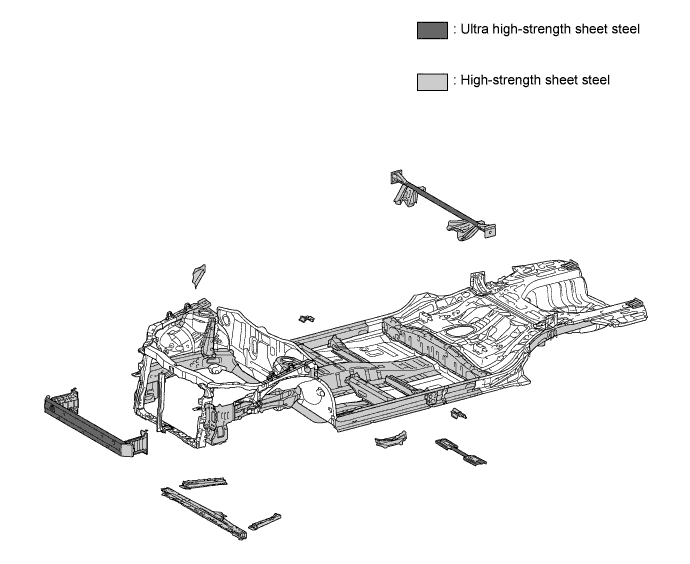
High-strength sheet steel and ultra high-strength sheet steel are used in order to achieve excellent body rigidity and a lightweight body.
-
-
Anti-corrosion Sheet Steel
-
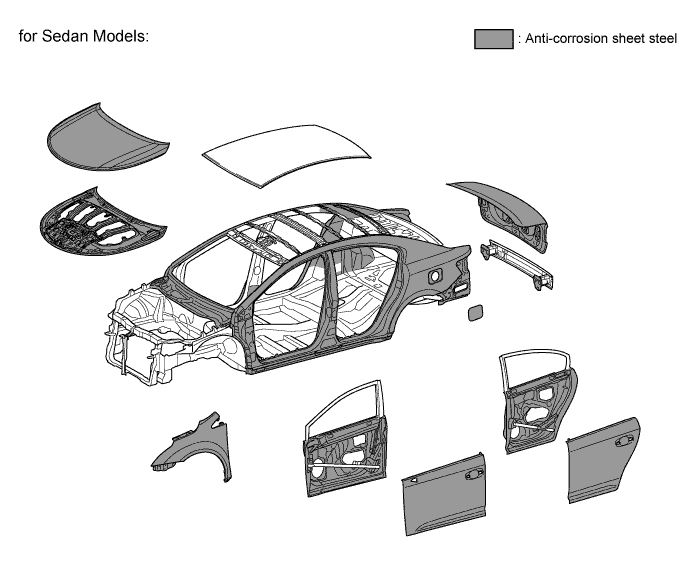
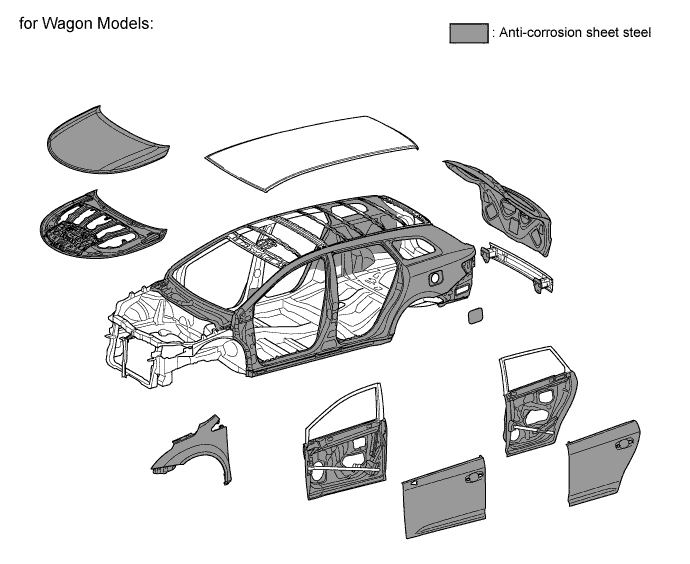
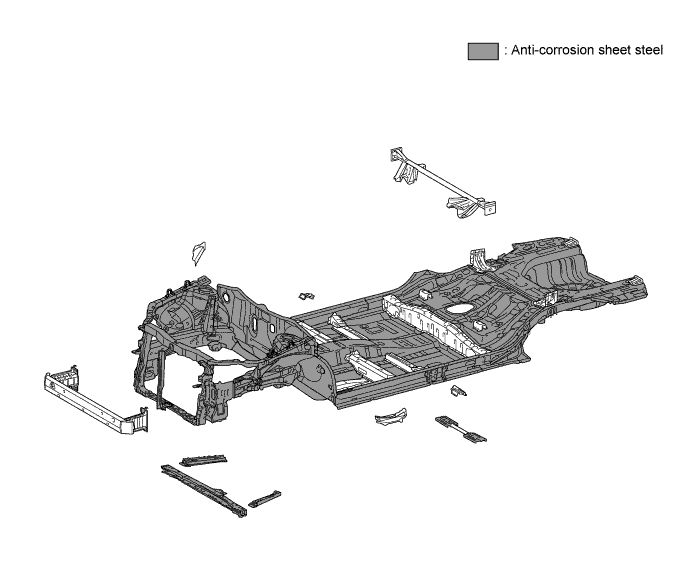
Anti-corrosion sheet steel is used as in the following illustration:
-
Wax is applied to the edge of the door lower portion, door hinge and fuel filler lid hinge to improve rust-resistant performance. Sealer is applied to hemmed portions of the door panels, hood panel, and luggage compartment door panel sub-assembly.
-
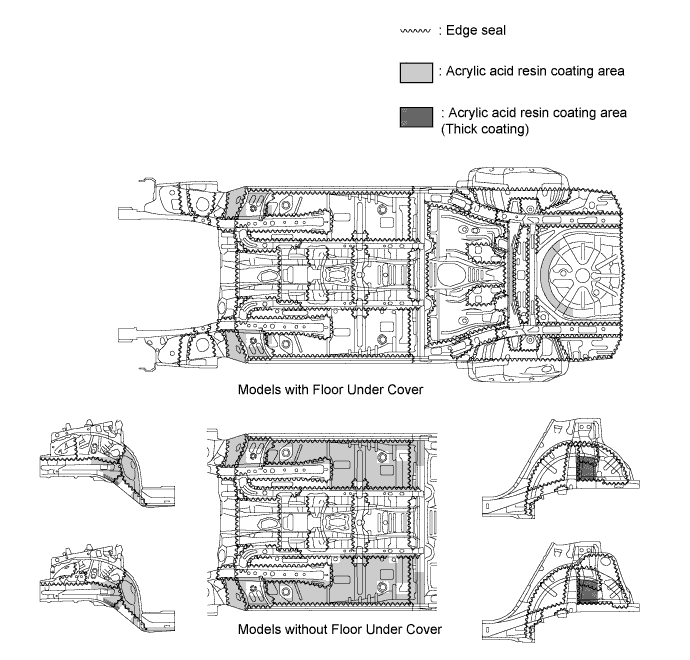
Acrylic acid resin is applied to the under side of the body, inside the wheel housing and other parts that are susceptible to stone chipping damage, thus improving the rust-resistant performance of these areas.
-
-
Anti-chipping Application
-
To protect the paint from chipping, anti-chipping paint is applied to the rockers and the front end of the hood panel.
-
A quarter panel protector and a rear door panel protector are available as an option on the quarter panel on the back of the rear door to protect the paint surface from icy snow or gravel and to achieve a high level of rust resistance.
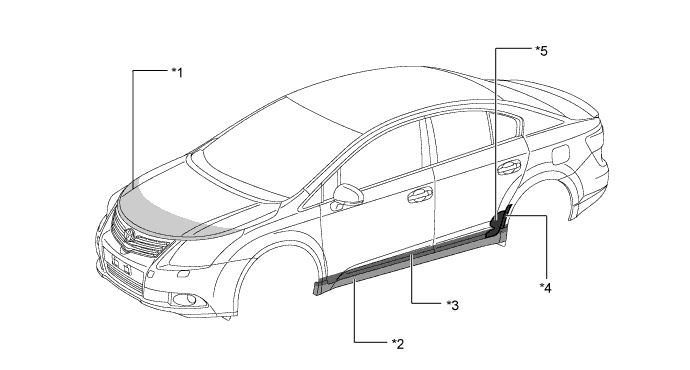
Text in Illustration *1 Soft Chipping Primer *2 Plastic Rocker *3 Urethane Coating *4 Quarter Panel Protector *5 Rear Door Panel Protector - -
-
-
Sound Absorbing and Vibration Damping Materials
-
A hood insulator is provided on the rear of the hood panel. This achieves excellent sound insulation performance.
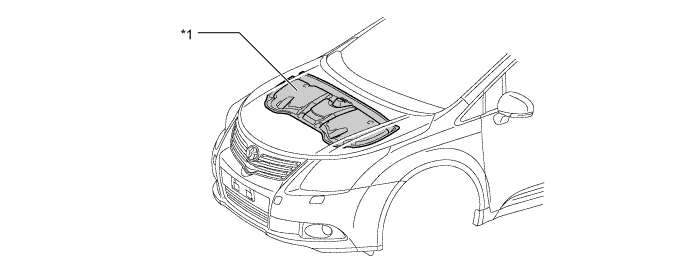
Text in Illustration *1 Hood Insulator - - -
A dash panel insulator outer is provided. This reduces the amount of engine noise leaking into and out of the cabin.
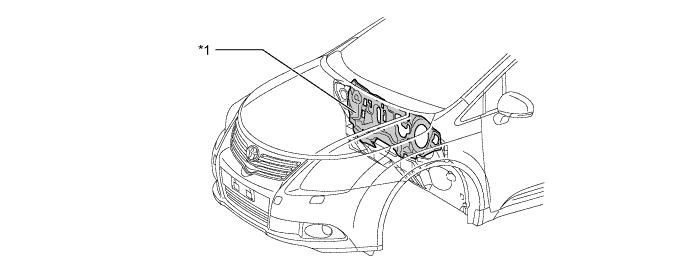
Text in Illustration *1 Dash Panel Insulator Outer - - -
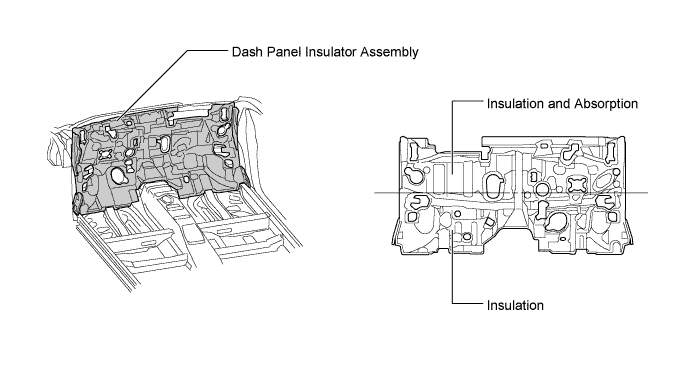
A dash panel insulator assembly is provided. This insulates and absorbs the engine noise to reduce the amount of engine noise leaking into the cabin.
-
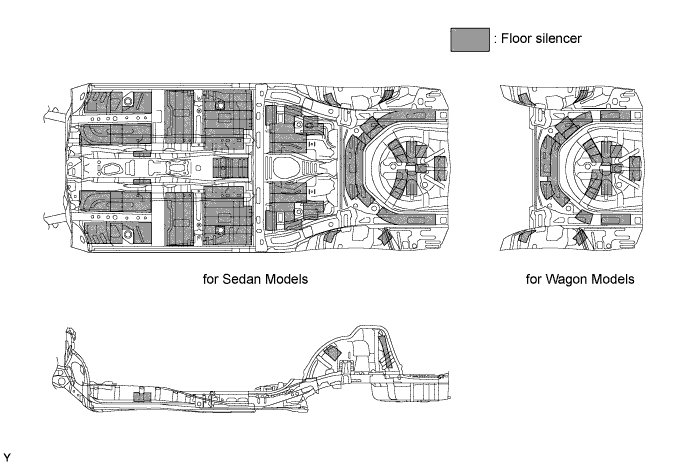
To reduce the amount of road noise, engine noise, and droning sound that enters the cabin, the floor panel is coated with a floor silencer.
-
Front fender liner and rear wheel house liner are provided to absorb road noise and achieve superior quietness.
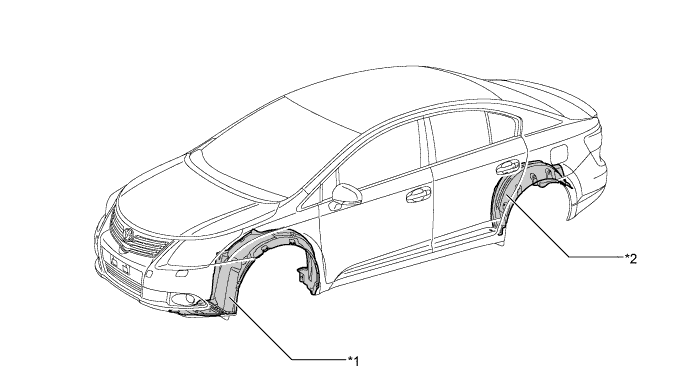
Text in Illustration *1 Front Fender Liner *2 Rear Wheel House Liner -
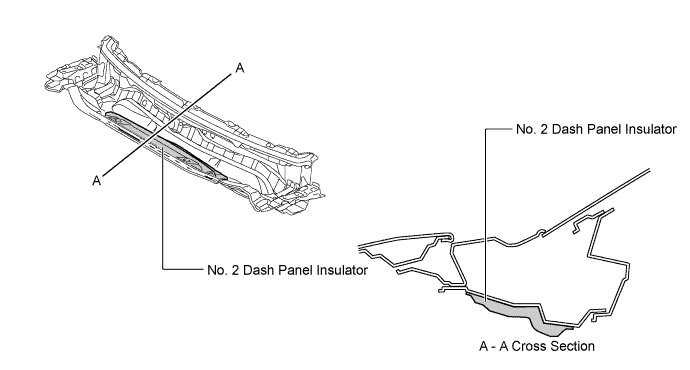
No. 2 dash panel insulator is provided at the front of the cowl. This reduces the noise coming from the engine compartment and achieves superior quietness.
-
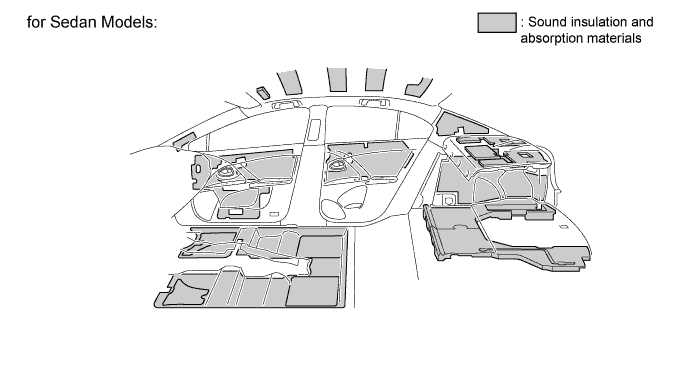
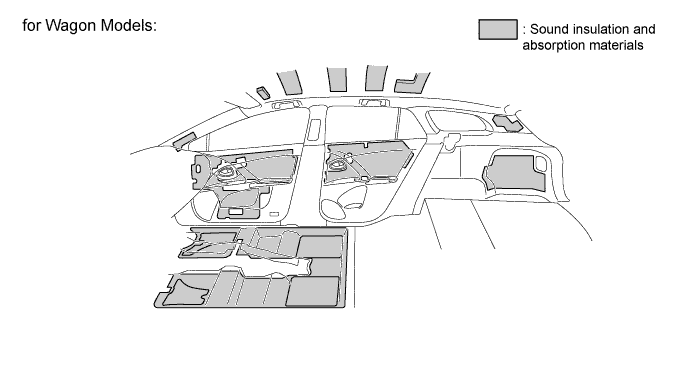
All the locations of sound insulation and absorption materials in the cabin have been optimized, thus creating a quiet drive.
-
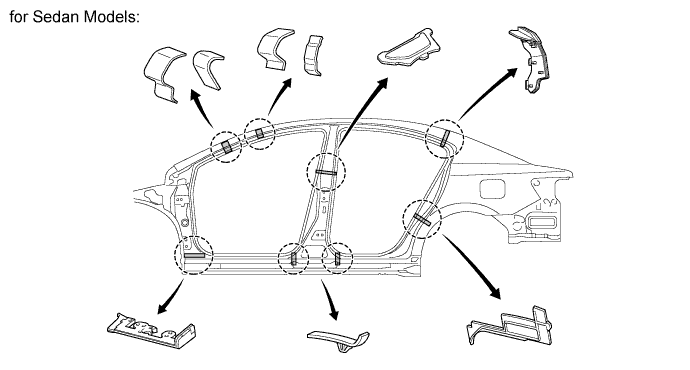
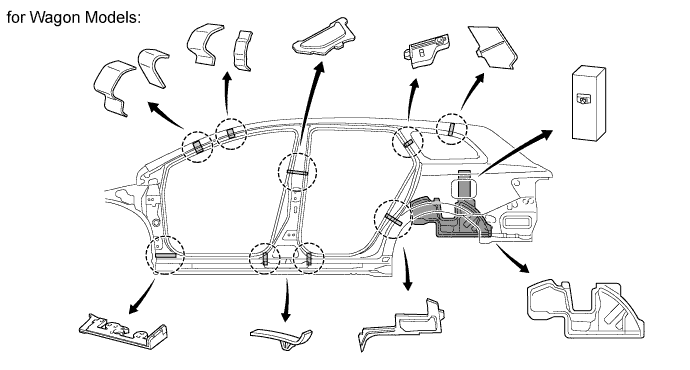
A foam type sound insulation material is used in the body frame profile, thus dampening the various noises which intrude from the outside of the vehicle to the inside of the cabin.
-
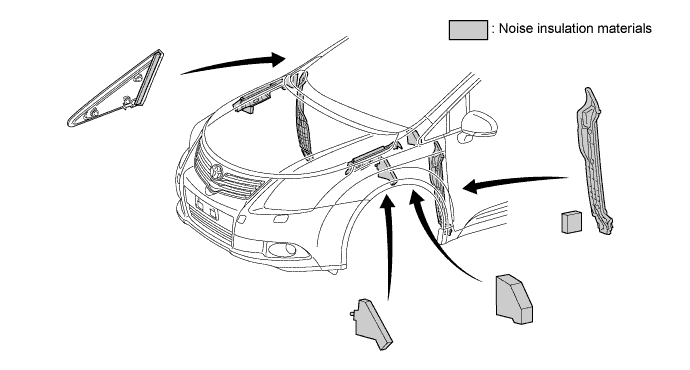
As shown in the following illustration, noise insulation is provided in various parts of the vehicle, thus reducing the amount of engine noise and road noise intruding into the cabin.
-
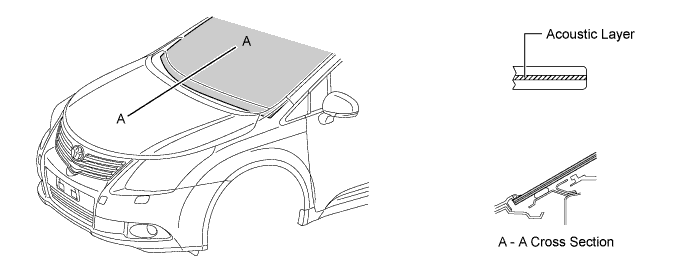
An acoustic layer laminated windshield is provided to reduce the amount of engine noise and road noise intruding into the cabin.
-
-
Parts with Low Repair Cost
-
The number of parts which need to be replaced or repaired in the case of a minor collision has been minimized to achieve repair cost reduction, thus ensuring top-level damageability.
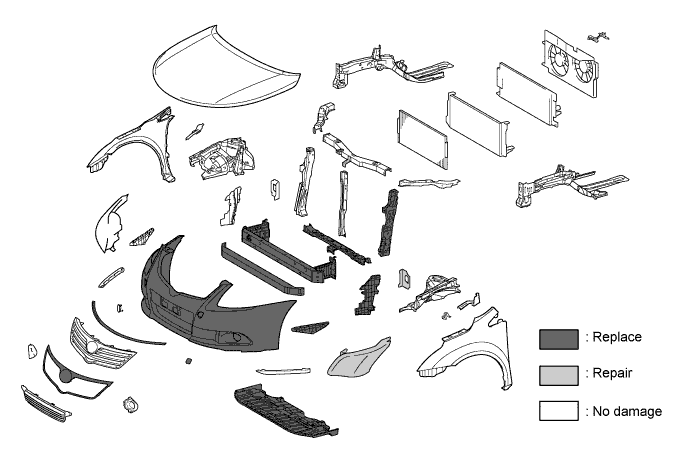
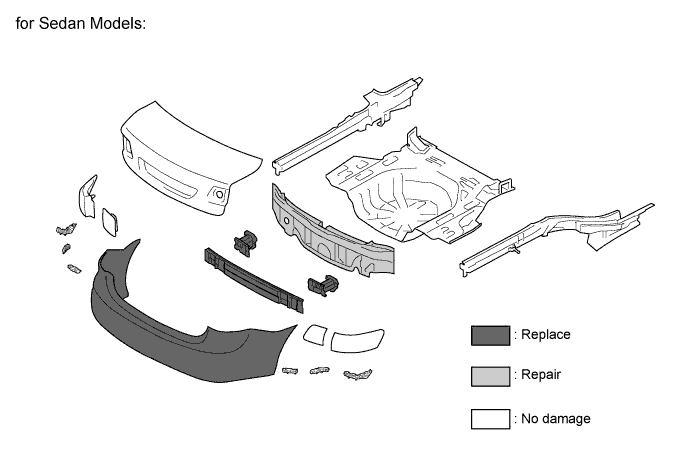
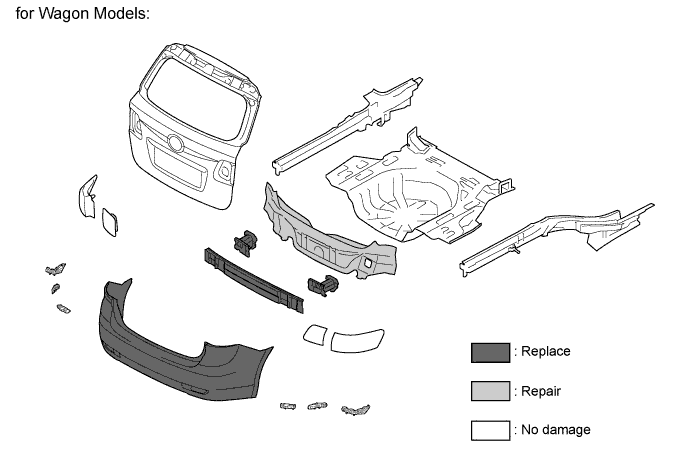
-
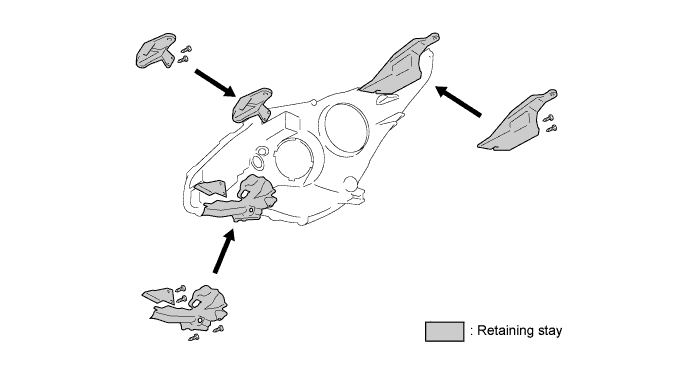
Retaining stays for the headlight unit have been provided separately from the headlight housing to help protect them from severe damage in a minor collision. Retaining stays have been made available as service parts. The replacement retaining stay is secured with the screws. The headlight housing can be reused by replacing the damaged retaining stay with a new one.
-
The rear bumper reinforcement and the rear bumper arm sub-assemblies use a bolt-on structure to enable efficient repair or replacement work.
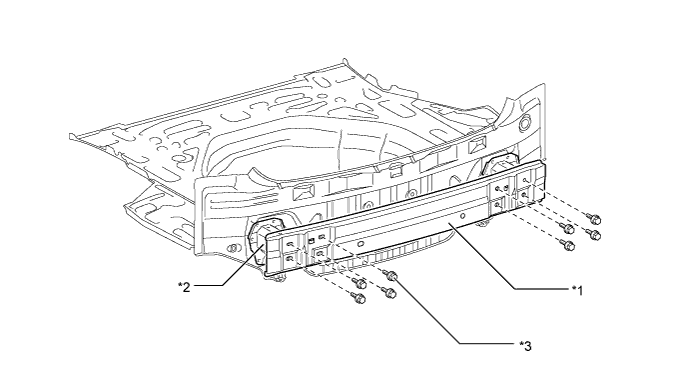
Text in Illustration *1 Rear Bumper Reinforcement *2 Rear Bumper Arm Sub-assembly *3 Bolt - -
-
-