FUEL SYSTEM DETAILS
-
FUNCTION OF MAIN COMPONENTS
-
Supply Pump
Components Function Feed Pump Pumps fuel to two plungers. Regulator Valve Regulates fuel pressure in pump. Suction Control Valve Controls volume of fuel drawn in to plungers. Pump Body Eccentric Cam Drives ring cam. Ring Cam Drives two plungers. Plunger Effects suction and pumping of fuel. Delivery Valve Pumps fuel to common-rail.
-
-
SYSTEM CONTROL
-
Common-rail System
-
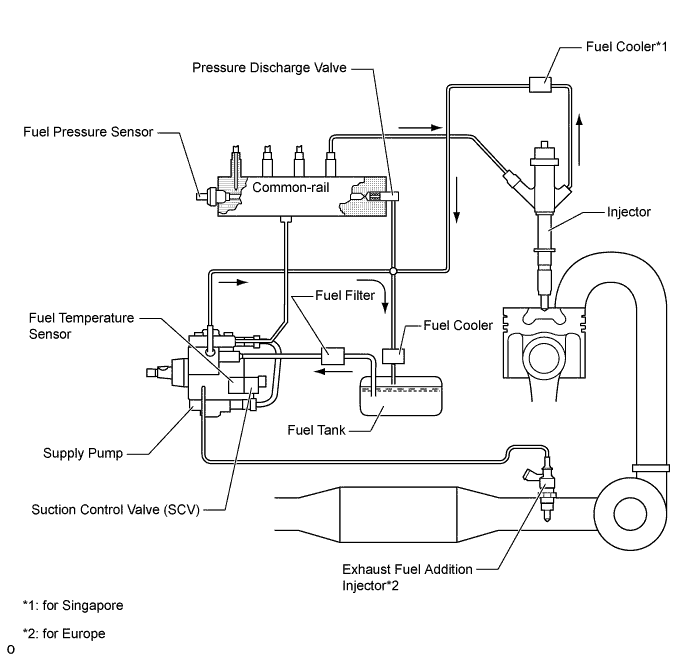
In this system, the high-pressurized fuel that is supplied by the supply pump is stored in the common-rail, and the engine ECU sends signals to the injectors via the EDU (Electronic Driver Unit) in order to control the injection timing and injection volume.
-
Fuel pressure is controlled in accordance with fuel pumping volume that is controlled by the SCV (Suction Control Valve) in the supply pump and fuel discharge volume that is controlled by the pressure discharge valve in order to realize accurate fuel pressure control. The SCV and pressure discharge valve are controlled by the engine ECU via the EDU.
-
-
-
CONSTRUCTION
-
Supply Pump
-
The supply pump consists of an eccentric camshaft, a ring cam, two plungers, four check valves, SCV (Suction Control Valve), a fuel temperature sensor and a feed pump.
-
The 2 plungers are placed opposite to each other outside of the ring cam.
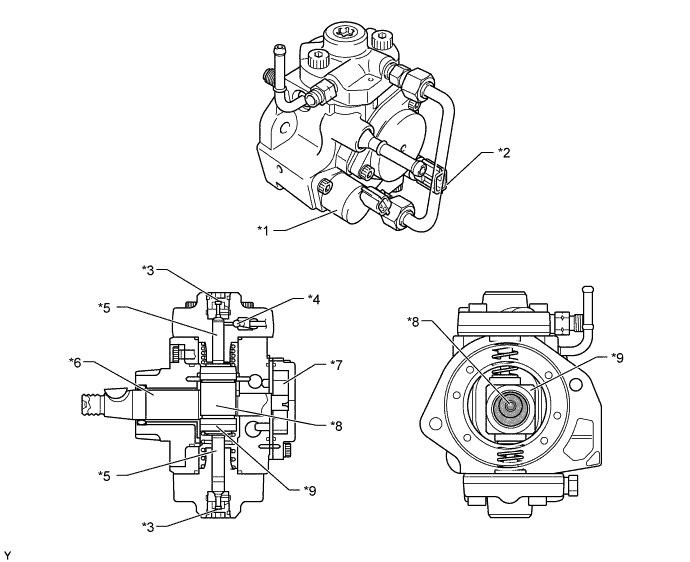
Text in Illustration *1 SCV *2 Fuel Temp. Sensor *3 Check Valve (for Suction) *4 Check Valve (for Discharge) *5 Plunger *6 Eccentric Camshaft *7 Feed Pump *8 Eccentric Cam Portion *9 Ring Cam - - Tech Tips
-
The engine ECU learns and memorizes the pump discharge volume variances associated with the individual differences in the supply pumps. Therefore, make sure to perform the operation described below after replacing the supply pump. For details, refer to the Repair Manual.
-
Connect an intelligent tester II to the DLC3 connector and use the tester to reset the learned value.
-
Alternatively, connect the SST (09843-18040) to the TC and CG terminals of the DLC3 connector, and leave the ignition switch ON for approximately 3 minutes to reset the learned value.
-
After resetting, start the engine, allow it to idle* for approximately 1 minute, and turn the ignition switch OFF to enable the engine to memorize the learned value.
-
*: The engine coolant temperature should be 60 °C (140 °F) or more, and the fuel temperature should be 20 °C (68 °F) or more.
-
-
-
Common-Rail
-
The function of the common-rail is to store the fuel that has been pressurized by the supply pump. The common-rail is equipped with a fuel pressure sensor, which detects the fuel pressure in the common-rail, and a pressure discharge valve, which regulates the fuel pressure.
-
Internally, the common-rail contains a main hole and five branch holes that intersect the main hole. Each branch hole functions as an orifice that dampens the fluctuation of the fuel pressure.
-
In the pressure discharge valve, the plunger opens and closes in accordance with the actuation signals from the EDU. Thus, it regulates pressure by releasing excess pressure from the common-rail. In addition, it has a pressure reduction function in case of emergency.
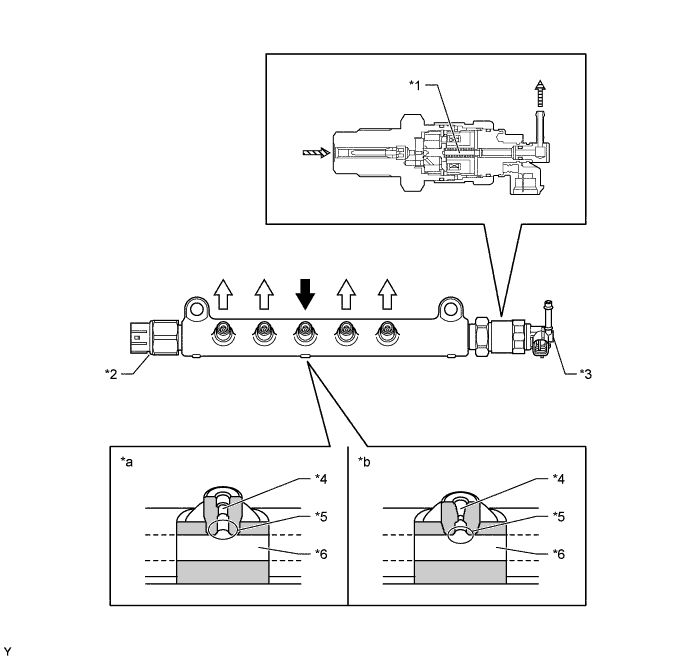
Text in Illustration *1 Plunger *2 Fuel Pressure Sensor *3 Pressure Discharge Valve *4 Orifice *5 Branch Hole *6 Main Hole *a Fuel Inlet *b Fuel Outlet 
Fuel Inlet 
Fuel Outlet 
from Common-rail (High Pressure) 
to Fuel Tank (Excess Pressure) Tech Tips
-
Fuel pressure sensor has its sealing portion plastic-deformed in order to keep sealing performance, so do not reuse it after disassembling.
-
If parts that affect the alignment has been changed, make sure to replace the pipe with a new one as well. The parts that require the replacement of a pipe are listed below.
-
Injection Pipe: Injector, Common-Rail, Cylinder Head
-
Fuel Inlet Pipe: Supply Pump, Common-Rail, Cylinder Block, Water Pump, Cylinder Head
-
For details, refer to the Repair Manual.
-
-
-
Injector (for Europe)
-
A fuel injector consists of the following components; a piezo actuator that controls inward or outward fuels, a displacement amplifier that amplifies the amount of the actuator operation, a three-way valve that controls a nozzle needle, that opens and closes the fuel spray orifice.
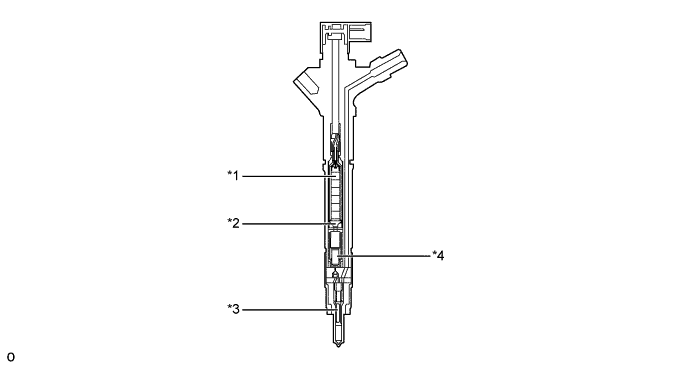
Text in Illustration *1 Piezo Actuator *2 Amplifier Piston *3 Nozzle Needle *4 Three-way Valve
-
-
Injector (for Singapore)
-
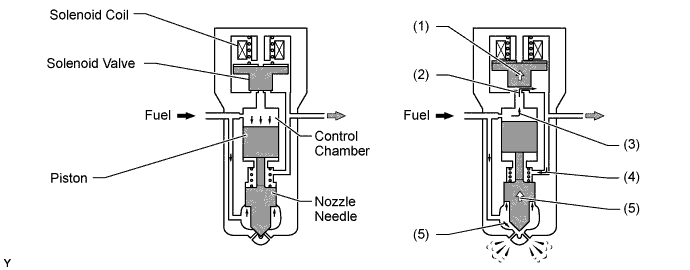
An injector consists of a nozzle needle, piston, and solenoid valve.
-
An injector compensation value and QR (Quick Response) code containing encoded characteristics of the injector are printed on each injector.
-
The injector compensation value and QR code contain various pieces of information regarding the injector, such as model code, injection volume correction, and injection timing correction values.
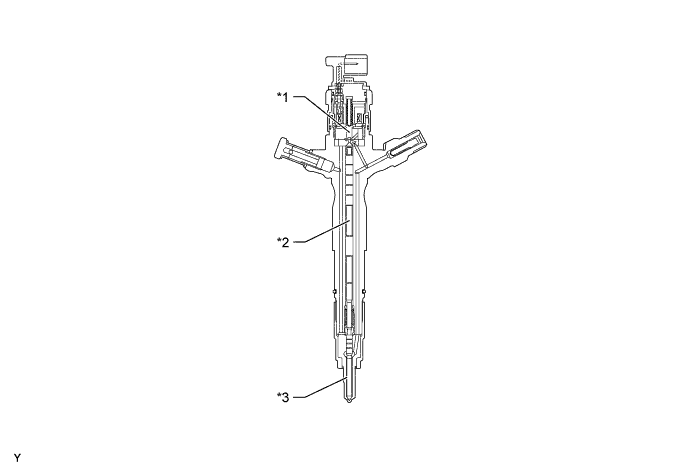
Text in Illustration *1 Solenoid Valve *2 Piston *3 Nozzle Needle - - 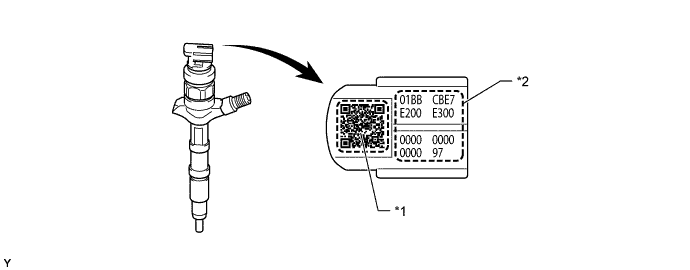
Text in Illustration *1 QR Code *2 Injector Compensation Value Tech Tips
-
If the engine ECU is replaced, use the intelligent tester II and input the injector compensation values of all 4 injectors. If one of the injectors is replaced, input the injector compensation value of the replaced injector. Then, the proper compensation will be made so that the injection volume precision prior to the replacement will remain unchanged. For details, refer to the Repair Manual.
-
The QR code, which requires a special scan tool, is not used at TOYOTA dealers.
-
What is QR (Quick Response) Code?
-
QR code, a matrix symbology consisting of an array of nominally square cells, allows omni-directional, high-speed reading of large amounts of data.
-
QR code encodes many types of date such as numeric, alphanumeric, kanji, kana and binary code. A maximum of 7,089 characters (numeric) can be encoded.
-
QR code (2D code) contains information in the vertical and horizontal direction, whereas a bar code contains data in one direction only. QR code (2D code) holds a considerably greater volume of information than a bar code.
-
-
-
Fuel Filter
-
A fuel filter consists of a fuel filter element integrated with the fuel filter housing.
-
On models for Singapore, the fuel filter warning switch is provided in the fuel filter.
-
On models for Europe, the fuel filter with the fuel heater is provided as standard equipment, and the fuel filter without the fuel heater is available as optional equipment.
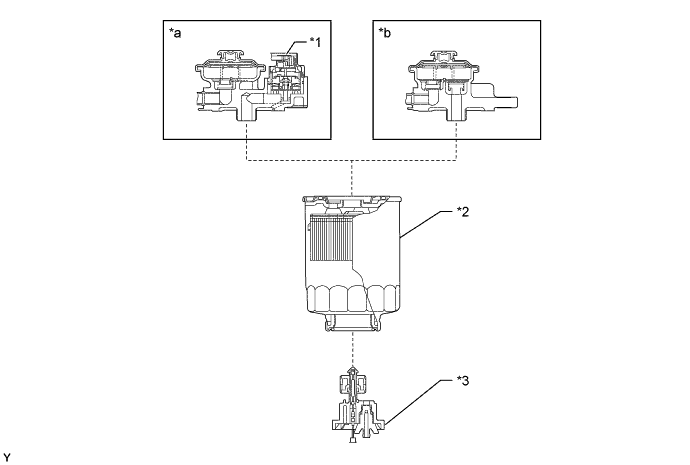
Text in Illustration (for Europe:) *1 Fuel Heater *2
-
Fuel Filter Assembly
-
Filter Element
*3 Fuel Sedimenter Level Warning Switch - - *a with Heater Type *b without Heater Type 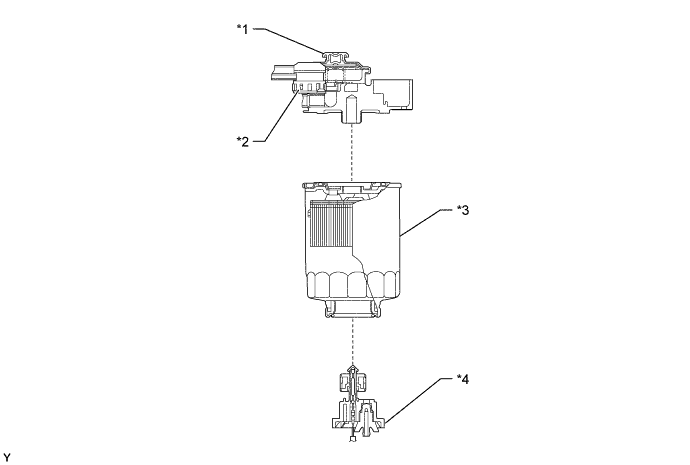
Text in Illustration (for Singapore:) *1 Priming Pump *2 Fuel Filter Warning Switch *3
-
Fuel Filter Assembly
-
Filter Element
*4 Fuel Sedimenter Level Warning Switch -
-
-
Fuel Cooler
-
The two types of the fuel coolers are used; one is the water-cooled type, and the other is the air-cooled type. These fuel coolers, which are provided in the fuel return path, cool the return fuel that has reached a high temperature as a result of the pumping of the supply pump. This prevents the reduction in fuel viscosity that is caused by the rise in fuel temperature, and improves the reliability of the fuel system.
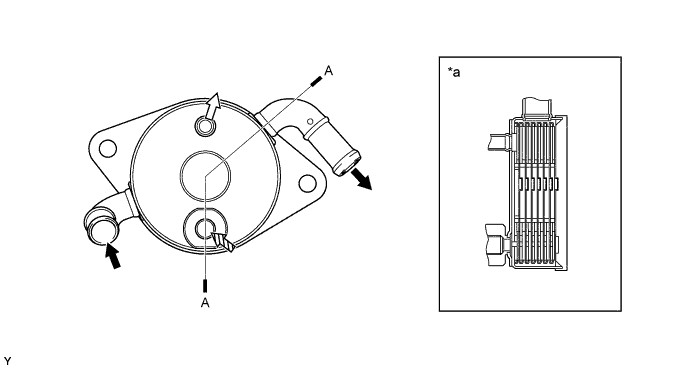
Text in Illustration (Water-cooled Type Fuel Cooler:) *a A-A Cross Section - - Water Fuel (to Fuel Tank) Fuel (from Injector) - - 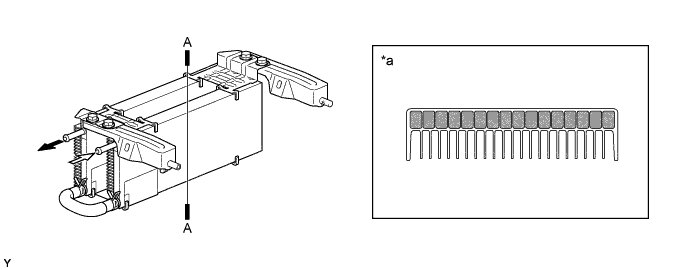
Text in Illustration (Air-cooled Type Fuel Cooler:) *a A-A Cross Section - - to Fuel Tank from Engine
-
-
-
OPERATION
-
Supply Pump
-
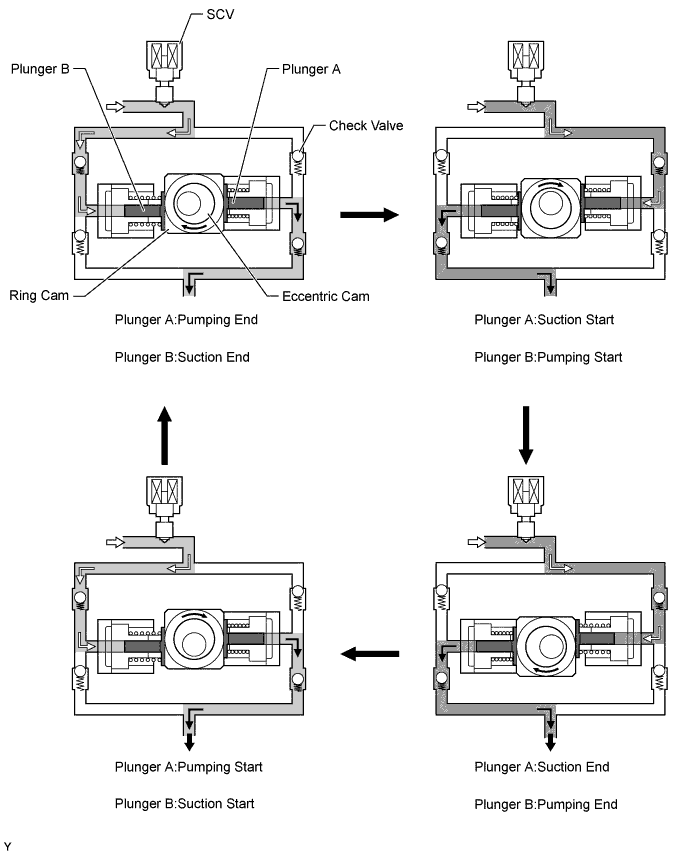
Due to the rotation of the eccentric cam, the ring cam pushes plunger A upward as illustrated below. The force of the spring pulls plunger B (which is located opposite plunger A) downward. As a result, plunger B draws fuel in, and plunger A pumps fuel at the same time.
-
The SCV controls the volume of fuel that is drawn into the plungers in accordance with the signals from the engine ECU.
-
-
Injector (for Europe)
-
When current is applied to the piezo actuator, the No. 1 piston, No. 2 piston and three-way valve are pushed down.
-
The orifice on the upper part of the three-way valve opens and the fuel in the control chamber flows out.
-
The fuel pressure in the control chamber drops.
-
Current to the piezo actuator is shut off and the No. 1 and No. 2 pistons and the three-way valve are pushed up due to spring tension.
-
The orifice on the upper part of the three-way valve closes to stop fuel flow.
-
The fuel pressure in the control chamber rises.
-
As a result, the nozzle needle goes down to stop fuel injection.
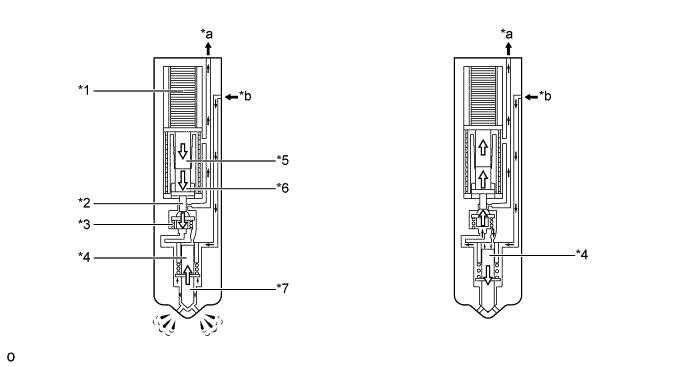
Text in Illustration *1 Piezo Actuator *2 Orifice *3 Three-way Valve *4 Control Chamber *5 No. 1 piston *6 No. 2 piston *7 Nozzle Needle - - *a Return Fuel *b Fuel from Common-rail
-
-
Injector (for Singapore)
-
When electrical current is applied to the solenoid coil, it pulls the solenoid valve up.
-
The orifice of the control chamber opens, allowing the fuel to flow out.
-
The fuel pressure in the control chamber drops.
-
Simultaneously, fuel flows from the orifice to the bottom of the piston and raises the piston up (to enhance response).
-
As a result, the piston raises the nozzle needle to inject fuel.
-
-
Fuel Filter Warning Switch (for Singapore)
-
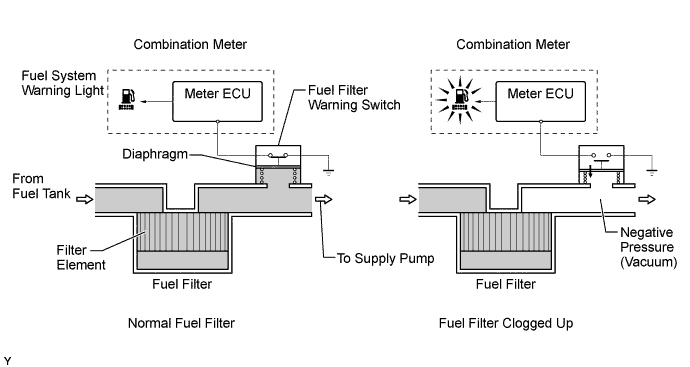
A fuel filter warning switch, which turns ON/OFF when the internal vacuum of the fuel filter increases, is provided in the fuel filter. This switch, which turns OFF when the internal vacuum of the fuel filter increases to a predetermined level, is connected by wire to the meter ECU.
-
When the meter ECU detects that the internal vacuum of the fuel filter has increased (by way of the fuel filter warning switch OFF signal), it determines that the fuel filter has become clogged. Then, it illuminates the fuel system warning light on the combination meter to urge the driver to replace the fuel filter.
-
-