FEATURES PERFORMANCE
-
OUTLINE
-
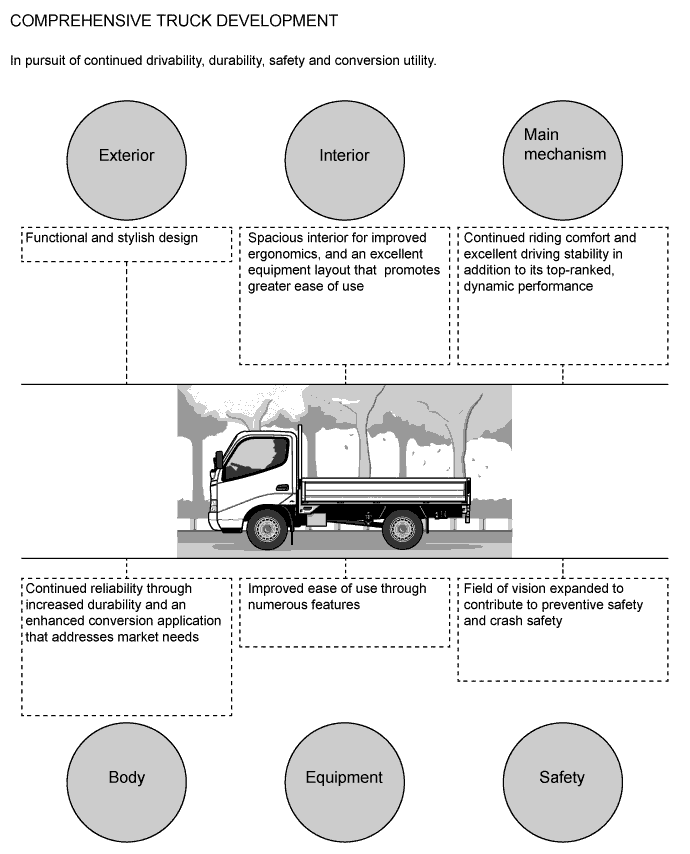
Concept
-
2KD-FTV Engine
-
The 2KD-FTV TOYOTA D-4D (Direct injection 4-stroke common-rail Diesel engine) is in-line 4-cylinder,2.5 liter, 16 valve DOHC with intercooler turbocharged diesel engine. This engine offers fuel economy and high power output and complies with the STEP III.
-
An oil maintenance management system has been adopted to determine the deterioration condition of the engine oil.
-
The conventional, 4-plunger, tandem supply pump has been changed to a 2-plunger, opposite type. As a result, the pump has been mode more compact and its overall length has been shortened.
-
Exhaust gas control system has been adopted to increase the exhaust pressure. As a result, the exhaust temperature and the engine load increase, thus improving warm-up performance and heater performance.
Item Specification No. of Cyls. and Arrangement 4-Cylinder, In-line Valve Mechanism 16 Valve, DOHC, Belt and Gear Drive Displacement 2494 cm3(152.2 cu. in.)
Bore x Stroke 92.0 mm x 93.8 mm (3.62 in. x 3.69 in.) Max. Output (EEC) 65 kW@ 3800 rpm (75 kW@ 3000 rpm)* Max. Torque (EEC) 192 N*m @ 1200-3000 rpm (260 N*m @ 1400-2600 rpm)*
-
*: Hi Version Engine
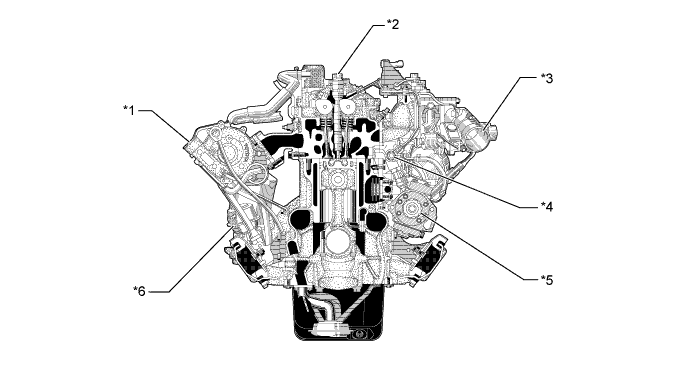
Text in Illustration *1 Turbocharger *2 Common-Rail Injector *3 Diesel Throttle *4 Common-Rail *5 Supply Pump *6 Exhaust Gas Control Valve -
-
-
5L Engine
-
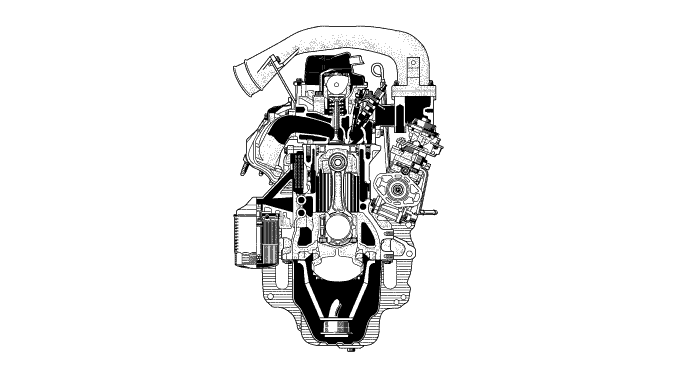
The engine has been changed from the 3L engine (2.8L) that was used on the previous Dyna 100/150 to the 5L engine (3.0L) that provides more torque through increased cylinder displacement.
-
) Based on the 3L engine, the 5L engine offers greater torque, better fuel economy, and lower exhaust emissions by improving combustion. Efficiency and tuning the fuel injection timing to an optimal level.
Item Specification No. of Cyls. and Arrangement 4-Cylinder, In-line Valve Mechanism 8-Valve, OHC, Belt Drive Displacement 2986 cm3(182.2 cu. in.)
Bore x Stroke 99.5 mm x 96.0 mm (3.92 in. x 3.78 in.) Max. Output (EEC) 66 kW @ 4000 rpm (65 kW @ 3600 rpm)* Max. Torque (EEC) 192 N*m @ 2400 rpm (192 N*m @ 2400-2800 rpm)*
-
*: Singapore only
-
-
-
G54 Manual Transmission
-
A G54 5-speed manual transmission is used on the Dyna 100.
Item Specification Gear Ratio 1st 4.452 2nd 2.398 3rd 1.414 4th 1.000 5th 0.802 Reverse 4.472
-
-
R451 Manual Transmission
-
A R451 5-speed manual transmission is used on the Dyna 150 for Europe.
Item Specification Gear Ratio 1st 4.313 2nd 2.330 3rd 1.436 4th 1.000 5th 0.838 Reverse 4.220
-
-
R452 Manual Transmission
-
A R452 5-speed manual transmission is used on the Dyna 150 except for Europe.
Item Specification Gear Ratio 1st 5.146 2nd 2.780 3rd 1.509 4th 1.000 5th 0.830 Reverse 5.035
-
-
Suspension
-
An independent front suspension has been used on the model for Europe and Australia.
-
A leaf spring rigid front suspension has been used on the model for general countries.
-
A leaf spring rigid rear suspension has been used on all models.
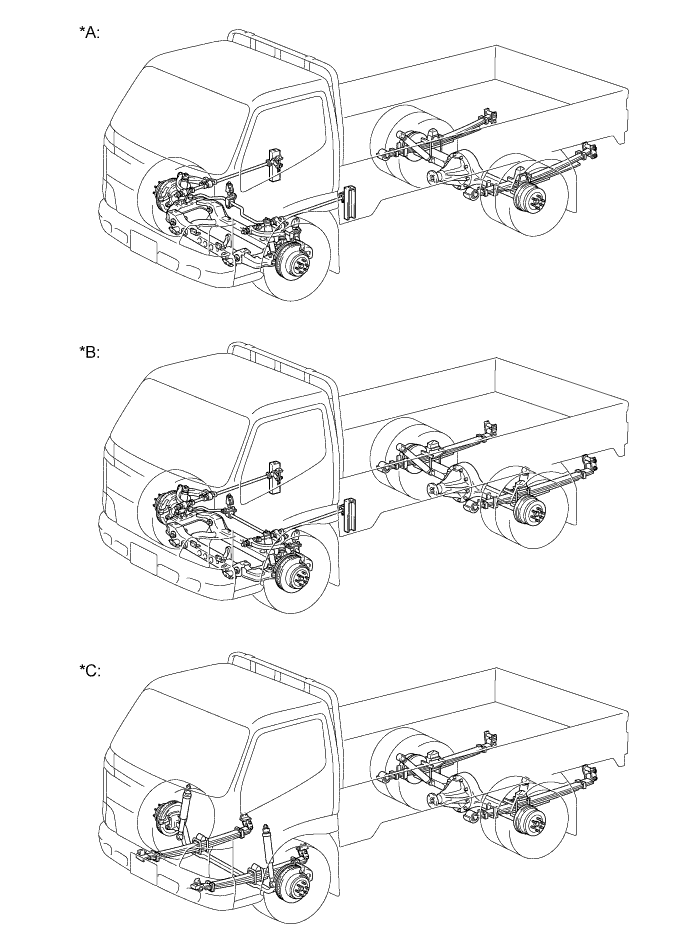
Text in Illustration *A Models for Europe *B Models for Australia *C Models for General Countries - -
-
-
Steering Wheel
-
A 2-spoke steering wheel is used to improve the visibility of the combination meter.
-
A steering wheel with an SRS airbag is optionally available only on the driver's side for Europe.
-
The steering wheel made of polypropylene is for general countries, and urethane is for Australia and Singapore.
-
The steering wheel for Europe is made of urethane and has a steering wheel pad with an EA (Energy Absorbing) feature.
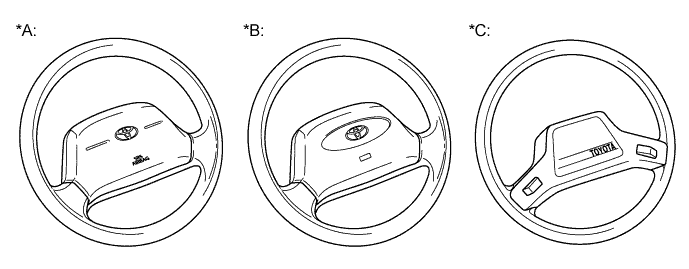
Text in Illustration *A Models with SRS Airbag for Europe *B
-
Models without SRS Airbag for Europe
-
All Models for Australia and Singapore
*C Models for General Countries except Singapore - - -
-
The installation angle of the steering wheel has been changed to achieve an optimal driving position thus improving drivability and comfort.
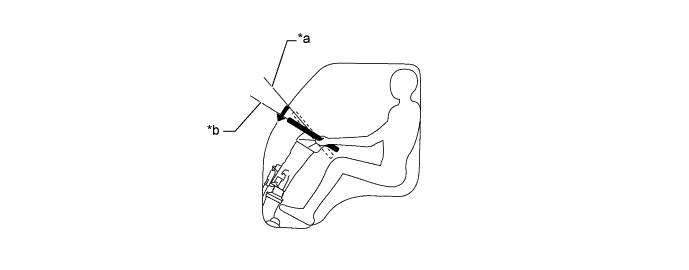
Text in Illustration *a New Model *b Previous Model
-
-
Steering Column
-
The fixed type steering column is for general countries and the tilt-and-telescopic steering column is for Europe, Australia and Singapore.
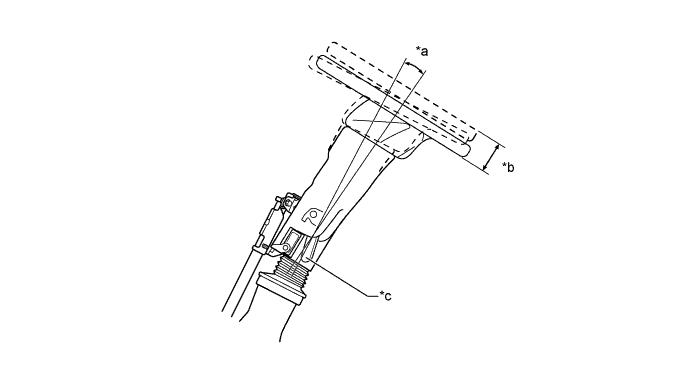
Text in Illustration *a 8.2°Compared to Previous (+ 1.8°) *b 35 mm Compared to Previous (+ 5 mm) *c Tilt-and Telescopic Lever - -
-
-
Brake
-
Ventilated disc brakes have been used for the front and drum brakes for the rear on all models.
-
An in-wheel parking brake has been used on the Dyna 100.
-
A center parking brake has been used on the Dyna 150.
-
A floor type parking brake lever has been incorporated for improved ease of use.
-
-
ABS
-
The ABS (Anti-lock Brake System) is provided on European models only. The short wheel base, complete model of the Dyna 100 is equipped with it as standard, and for the other European models, it is available as an option.
-
The ABS (Anti-lock Brake System) which prevent wheel locking during emergency braking, thus contributing to helping maintain vehicle behavior and steering performance has been adopted. This functions make it possible to ensure the excellent braking performance.
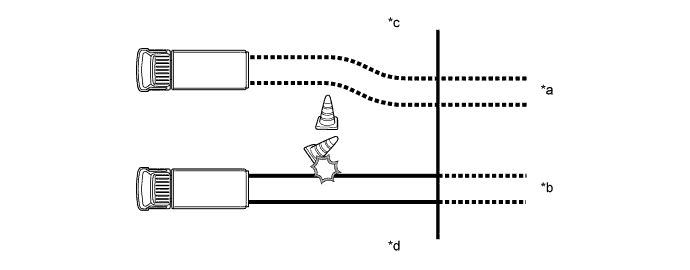
Text in Illustration *a Vehicle with ABS *b Vehicle without ABS *c Starting the Brake Application *d Conceptual Drawing
-
-
Cab
-
Ample cabin space has been achieved by increasing front head clearance (a) and the front pillar angle (b), thus achieving improved ergonomics.
-
(c) The opening angle of the door hinges and the opening area of the door have been increased to make it easier to get in and out.
-
(e) The European single-cabin model is provided with a tilt mechanism to ensure access for servicing the vehicle.
-
(d) The stepping area of the front step has been increased to make it easier to get in and out.
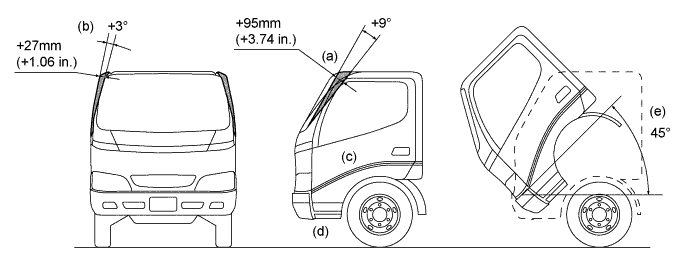
-
-
Deck
-
A steel deck comes on all complete models.
-
The header board has been kept from protruding out into the bed area, allowing it to lay flat, resulting in improved use of the bed.
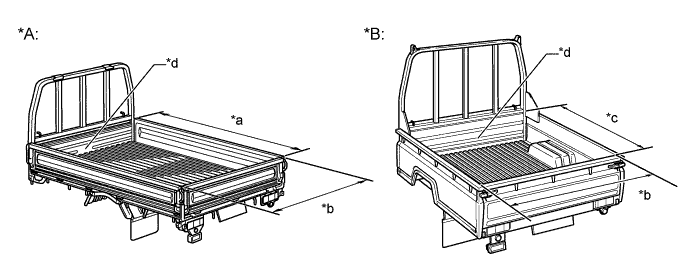
Text in Illustration *A Single Cab Model *B Double Cab Model *a
-
Short: 2850 mm (112.2 in.)
-
Long: 3110 mm (122.4 in.)
*b 1600 mm (63.0 in.) *c 2100 mm (82.7 in.) *d The header board has been kept from protruding out into the bed area, allowing it to lay flat, resulting in improved use of the bed. -
-
-
Frame
-
The frames have been designed exclusively for the IFS (Independent Front Suspension) model and the RFS (Rigid Front Suspension) model.
Destination Front Suspension Type Deck Type Wheel Base Europe Independent Steel High Deck Shot (2300 mm) Long (2545 mm) Extra Long (3350 mm) Super Long (3750 mm) Australia Independent Steel High Deck Shot (2300 mm) Long (2545 mm) General Countries Singapore Other Rigid Steel High Deck Shot (2300 mm) Long (2545 mm) Singapore Steel Flat Deck (Just Low) Long (2545 mm) Component Outline No. 2 Cross Member*1 Shaped to facilitate the installation of various types of wiring harnesses and pipes. No. 2 Cross Member*2 Located near the No. 1 spring bracket, this cross member is riveted to the top and bottom surfaces of the side rails in order to ensure the rigidity of the area where the suspension is mounted. No. 3 Cross Member The wall of the cross member has been made thicker to ensure its strength and rigidity for mounting the torsion bar anchor arm and the rear engine mount. No. 5 Cross Member This cross member is made of a pipe material that has been butted for weight reduction by decreasing the thickness of the pipe-wall in its midsection. No. 4 Cross Member It has a C-shape to improve the suspension performance of the brackets. Side Rail*1 It has a welded neck section until just before the No.3 cross member to ensure a highly rigid construction. Side Rail*2 It has been newly designed exclusively for the RFS frame to ensure a lightweight and highly rigid construction. Front Suspension Member In order to ensure a lightweight and highly rigid construction, support pipes have been attached to run between the mid-sections of the front and rear suspension members, resulting in the following shape: II. Front Cross Member*1 It has a C-shape cross-section to ensure a lightweight and highly rigid construction. Front Cross Member*2 Located at the front tip of the frame, this cross member is riveted to the top and bottom surfaces of the side rails to ensure a high level of rigidity.
-
*1: for IFS models
-
*2: for RFS models
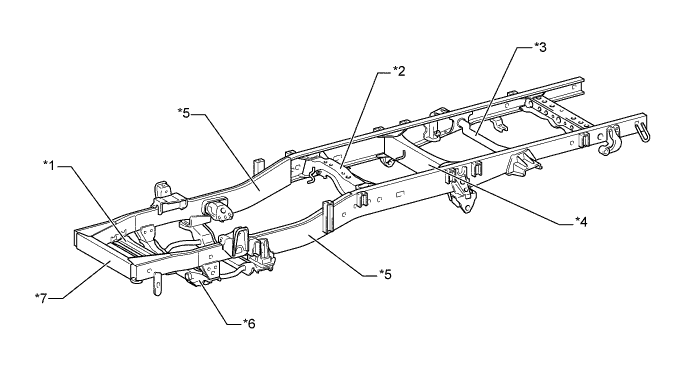
Text in Illustration (Frame for IFS) *1 No. 2 Cross Member *2 No. 3 Cross Member *3 No. 5 Cross Member *4 No. 4 Cross Member *5 Side Rail *6 Front Suspension Member *7 Front Cross Member - - 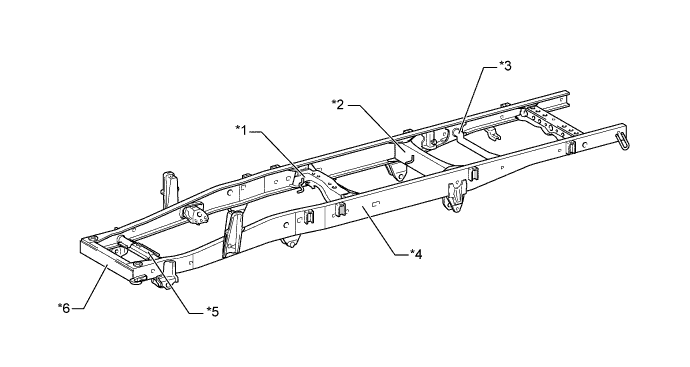
Text in Illustration (Frame for RFS) *1 No. 3 Cross Member *2 No. 4 Cross Member *3 No. 5 Cross Member *4 Side Rail *5 No. 2 Cross Member *6 Front Cross Member -
-
-
Improved Visibility
-
Front and side visibility have been improved by increasing the area of the windshield glass and by optimizing the driving position.
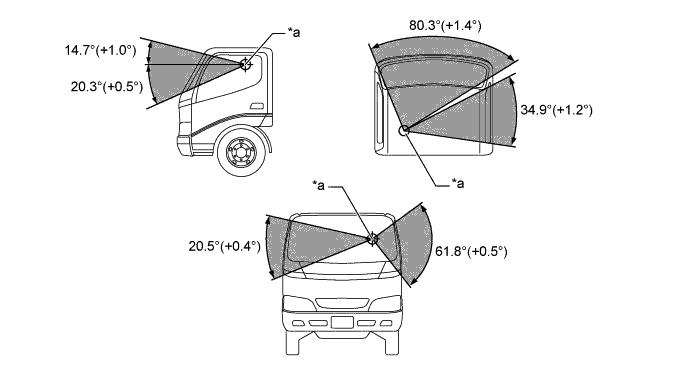
Text in Illustration *a Eye-point - -
-
-
High-strength Cab
-
A high-strength cab construction which help dampen the impact in the case of a collision has been achieved by adopting the effective floor side members.
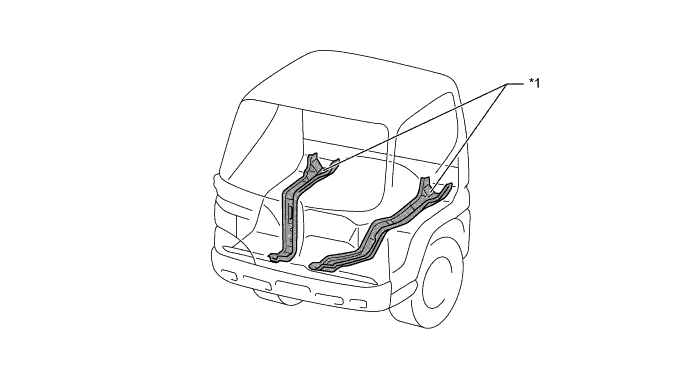
Text in Illustration *1 Floor Side-Members - -
-
-
Side Impact Protection Beam
-
A door side-impact beam is provided in the driver and front passenger door in order to achieve a high-strength door construction that helps reduce the impact to the occupants in the event of a side collision.
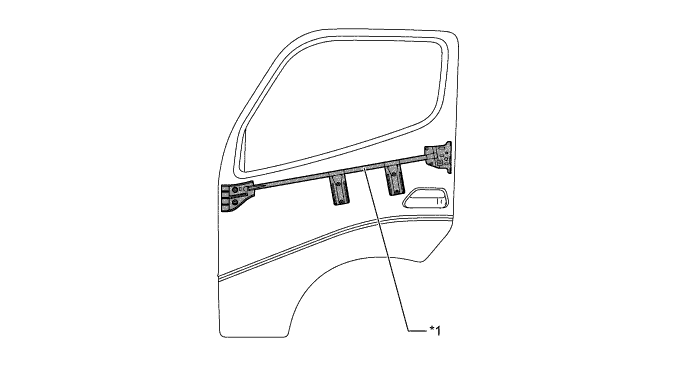
Text in Illustration *1 Side Impact Protection Beam - -
-
-
Front Cab Interior Design
-
The spacious cabin interior and the enlarged windshield create a bright and functional interior space.
-
The instrument panel is designed to extend from the shoulder of the door to achieve an open feeling.
-
The top of the instrument panel is kept low to improve visibility.
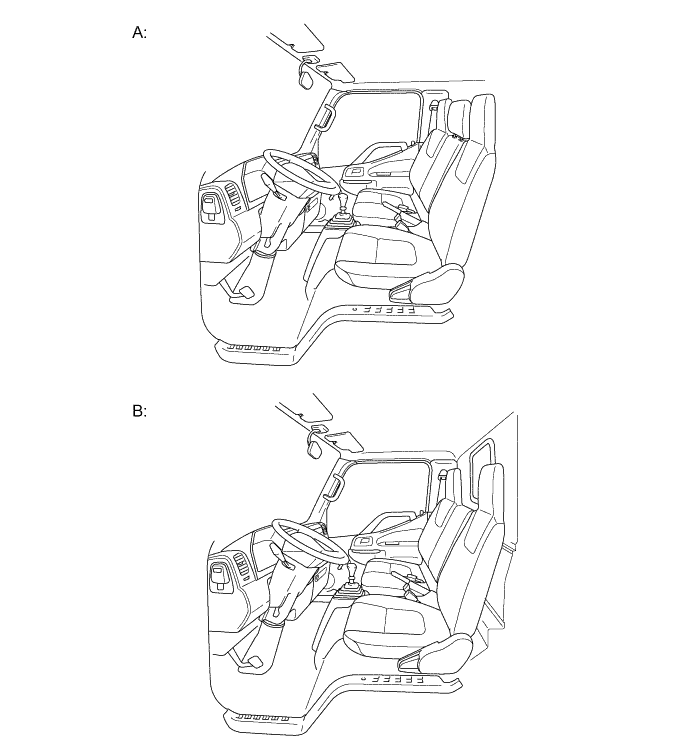
Text in Illustration *A Models for Europe *B Models except for Europe
-
-
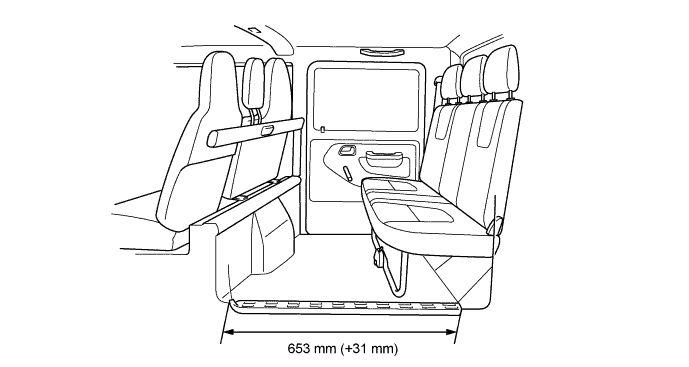
Rear Cab Interior Design (Double Cab Model)
-
The spacious cabin interior and the enlarged windshield create a bright and functional interior space.
-
The instrument panel is designed to extend from the shoulder of the door to achieve an open feeling.
-
The top of the instrument panel is kept low to improve visibility.
-
-