COMBUSTION TYPE POWER HEATER SYSTEM, Diagnostic DTC:012, 014, 015, 017

| DTC Code | DTC Name |
|---|---|
| 012 | Overheating |
| 014 | Difference Evaluation Overheating |
| 015 | Operating Block caused by Overheating |
| 017 | Hardware Overheating |
DESCRIPTION
| DTC Code | DTC Detection Condition | Trouble Area |
|---|---|---|
| 012 | The surface sensor or temperature control sensor detects a temperature of 125°C (257°F) or higher. |
|
| 014 | When the engine coolant temperature is 80°C (176°F) and the heater assembly is operating, the difference in temperatures detected by the surface sensor and temperature control sensor is 25°C (77°F) or higher. |
|
| 015 | The temperature control sensor detects overheating of the engine coolant, and the ECU stops the operation of the heater assembly (one or both of DTCs 012 and 014 are detected 10 times in a row). |
|
| 017 | When neither DTC 012 nor 014 is detected, the temperature control sensor or surface sensor detects a temperature of 130°C (266°F) or more. |
|
INSPECTION PROCEDURE
Tech Tips
Output of DTC 015 indicates that the heater assembly has been locked by the ECU and cannot be operated. Clear the DTCs by pressing the memory clear buttons on the DTC tester to unlock the ECU Click here.
PROCEDURE
-
INSPECT FOR ENGINE COOLANT LEAK
Note
Before performing the inspection, turn the A/C switch off.
-
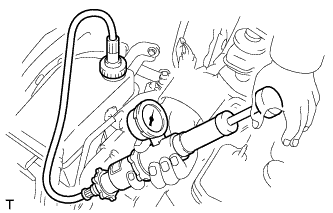
Remove the radiator reservoir cap.
CAUTION:
To avoid the danger of being burned, do not remove the radiator reservoir cap while the engine and radiator are still hot. Thermal expansion will cause hot engine coolant and steam to blow out from the radiator.
-
Fill the radiator with coolant, and then attach a radiator cap tester.
-
Warm up the engine.
-
Pump the radiator cap tester to 118 kPa (1.2 kgf/cm2, 17 psi), and then check that the pressure does not drop.
If the pressure drops, check the hoses, radiator and water pump for leakage.
If there are no signs of external coolant leaks, check the heater core, cylinder block and head.
OK The pressure does not drop.
NG 
REPAIR ENGINE COOLANT LEAK
OK 
-
-
INSPECT ENGINE COOLANT QUALITY
Note
Before performing the inspection, turn the A/C switch off.
-
Remove the radiator reservoir cap.
CAUTION:
To avoid the danger of being burned, do not remove the radiator reservoir cap while the engine and radiator are still hot. Thermal expansion will cause hot engine coolant and steam to blow out from the radiator.
-
Check for any excessive deposits of rust or scales around the radiator reservoir cap and radiator filler hole. The coolant should be free of oil.
OK Coolant is normal. Result Result Proceed to OK A NG (for 1AD-FTV) B NG (for 2AD-FHV) C
B
REPLACE ENGINE COOLANT Click here
C
REPLACE ENGINE COOLANT Click here
A
-
-
INSPECT THERMOSTAT
Tech Tips
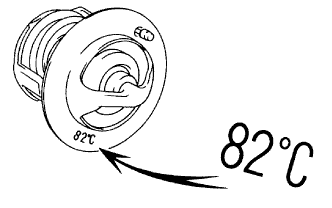
The valve opening temperature is inscribed on the thermostat.
-
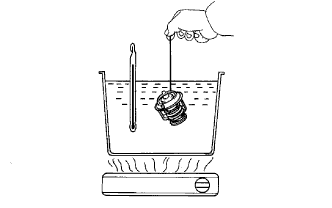
Immerse the thermostat in water, and then gradually heat the water.
-
Check the valve opening temperature of the thermostat.
Standard valve opening temperature 80 to 84°C (176 to 183°F) -
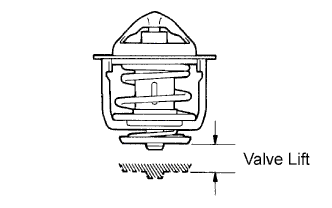
Check the valve lift.
Standard valve lift 10 to 14 mm (0.394 to 0.551 in.) at 95°C (203°F) -
Check that the valve is fully closed when the thermostat is at a low temperature (below 77°C [171°F]).
Result Result Proceed to The results are as specified A The results are not as specified (for 1AD-FTV) B The results are not as specified (for 2AD-FHV) C
B
REPLACE THERMOSTAT Click here
C
REPLACE THERMOSTAT Click here
A
-
-
INSPECT WATER PUMP ASSEMBLY
-
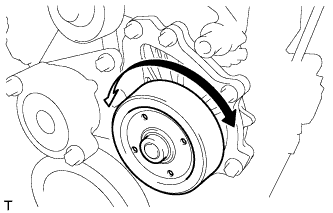
Turn the pulley and check that the water pump bearing moves smoothly and quietly.
-
Make sure that there are no drops of coolant on the water pump housing.
OK Water pump assembly is normal. Result Result Proceed to OK A NG (for 1AD-FTV) B NG (for 2AD-FHV) C
B
REPLACE WATER PUMP ASSEMBLY Click here
C
REPLACE WATER PUMP ASSEMBLY Click here
A 
REPLACE HEATER ASSEMBLY Click here
-