DOOR CONTROL TRANSMITTER(w/ Entry and Start System) INSPECTION
PROCEDURE
-
INSPECT ELECTRICAL KEY TRANSMITTER SUB-ASSEMBLY (for Type A)
-
Inspect the operation of the electrical key transmitter sub-assembly.
-
Remove the transmitter battery from the electrical key transmitter sub-assembly Click here.
Note
When replacing the transmitter battery, before starting work, remove static electricity that has built up in the body by touching, for example, the vehicle to prevent the electrical key transmitter from being damaged.
-
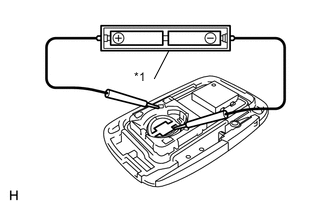
Text in Illustration *1 Dry Cell Batteries Install a new or normal transmitter battery Click here.
Note
When replacing the transmitter battery, before starting work, remove static electricity that has built up in the body by touching, for example, the vehicle to prevent the electrical key transmitter from being damaged.
Tech Tips
If a new or normal battery is not available, first connect 2 new dry cell batteries (1.5 V) in series. Then connect leads to the batteries and apply 3 V to the electrical key transmitter, as shown in the illustration.
-
From outside the vehicle, approximately 1 m (3.28 ft.) away from the driver side outside door handle, test the electrical key transmitter by pointing its key plate at the vehicle and pressing an electrical key transmitter switch.
OK The door lock can be operated via the electrical key transmitter. The LED comes on more than once.
-
The operational area differs depending on the user, the way the electrical key transmitter is held, and the location.
-
The electrical key transmitter sub-assembly weak radio waves may be affected if the area has strong radio waves or noise. The electrical key transmitter sub-assembly operation area may be shortened or the electrical key transmitter sub-assembly may not function.
-
-
-
Inspect the battery capacity.
-
Remove the transmitter battery Click here from the electrical key transmitter that does not operate.
-
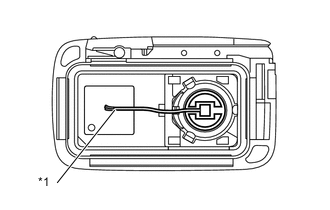
Text in Illustration *1 Lead Wire Attach a lead wire (0.60 mm (0.0236 in.) in diameter or less including wire sheath) with tape or equivalent to the negative terminal.
Note
-
Do not wrap the lead wire around a terminal, wedge it between the terminals, or solder it. The terminal may be deformed or damaged, and the battery will not be able to be installed correctly.
-
When replacing the transmitter battery, before starting work, remove static electricity that has built up in the body by touching, for example, the vehicle to prevent the electrical key transmitter from being damaged.
-
-
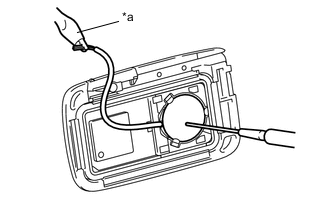
Text in Illustration *a GND Carefully pull the lead wire out from the position as shown in the illustration and install the previously removed transmitter battery.
-
Measure the voltage of the transmitter battery.
Standard Voltage Tester Connection Condition Specified Condition Transmitter battery positive (+) - Transmitter battery negative (-) Engine switch off, all doors closed and lock sensor touched 2.5 to 3.2 V If the result is not as specified, replace the transmitter battery.
Tech Tips
-
When measuring the battery voltage, bring the electrical key transmitter within the lock entry operating range while operating the lock sensor of a door handle to perform the measurement. For the entry lock operating range, refer to System Description Click here.
-
Perform the measurement when the key is at room temperature.
-
The key sends voltage information to the certification ECU (smart key ECU assembly) when it is transmitting. When this voltage is 2.4 V or less the Data List item "Key Low Battery" displays "Yes".
-
-
-
-
INSPECT TRANSMITTER BATTERY (for Type B)
-
Inspect the operation of the electrical key transmitter sub-assembly.
-
Remove the transmitter battery from the electrical key transmitter sub-assembly Click here.
Note
When replacing the transmitter battery, before starting work, remove static electricity that has built up in the body by touching, for example, the vehicle to prevent the electrical key transmitter from being damaged.
-
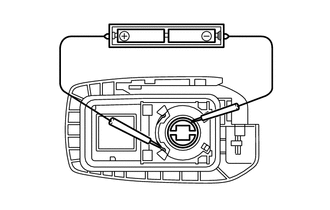
Install a new or normal transmitter battery Click here.
Note
When replacing the transmitter battery, before starting work, remove static electricity that has built up in the body by touching, for example, the vehicle to prevent the electrical key transmitter from being damaged.
Tech Tips
If a new or normal battery is not available, first connect 2 new 1.5 V batteries in series. Then connect leads to the batteries and apply 3 V to the electrical key transmitter, as shown in the illustration.
-
From outside the vehicle, approximately 1 m (3.28 ft.) away from the driver side outside door handle, test the electrical key transmitter by pointing its key plate at the vehicle and pressing an electrical key transmitter switch.
OK The door lock can be operated via the electrical key transmitter. The LED comes on more than once.
-
The operational area differs depending on the user, the way the electrical key transmitter is held, and the location.
-
The electrical key transmitter weak radio waves may be affected if the area has strong radio waves or noise. The electrical key transmitter operation area may be shortened or the electrical key transmitter may not function.
-
-
-
Inspect the battery capacity.
-
Remove the transmitter battery Click here from the electrical key transmitter that does not operate.
Note
-
Do not wrap the lead wire around a terminal, wedge it between the terminals, or solder it. The terminal may be deformed or damaged, and the battery will not be able to be installed correctly.
-
When replacing the transmitter battery, before starting work, remove static electricity that has built up in the body by touching, for example, the vehicle to prevent the electrical key transmitter from being damaged.
-
-
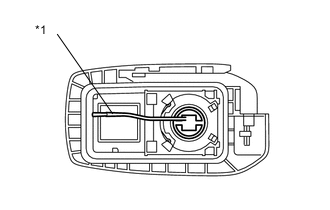
Text in Illustration *1 Lead Wire Attach a lead wire (0.6 mm (0.0236 in.) in diameter or less including wire sheath) with tape or equivalent to the negative terminal.
-
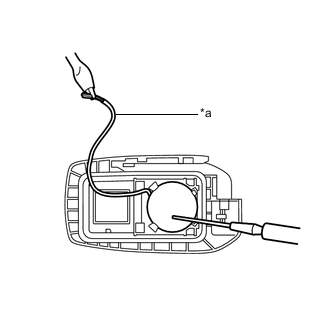
Text in Illustration *a GND Carefully pull the lead wire out from the position shown in the illustration and install the previously removed transmitter battery.
-
Check the transmitter battery voltage.
Standard Voltage Tester Connection Condition Specified Condition Transmitter battery positive (+) - Transmitter battery negative (-) Engine switch off, all doors closed and lock sensor touched 2.5 to 3.2 V If the result is not as specified, replace the transmitter battery.
Tech Tips
-
When measuring the battery voltage, bring the electrical key transmitter within the lock entry operating range while operating the lock sensor of a door handle to perform the measurement. For the entry lock operating range, refer to System Description Click here.
-
Perform the measurement when the key is at room temperature.
-
The key sends voltage information to the certification ECU (smart key ECU assembly) when it is transmitting. When this voltage is 2.4 V or less the Data List item "Key Low Battery" displays "Yes".
-
-
-