FRONT POWER SEAT CONTROL SYSTEM (for LHD), Diagnostic DTC:B2656

| DTC Code | DTC Name |
|---|---|
| B2656 | Rear Seat Lumbar Adjustment Sensor Malfunction |
DESCRIPTION
When the position control ECU assembly does not receive a sensor signal despite forward or backward movement of the seat by power seat motor operation, this DTC is stored.
| DTC Code | DTC Detection Condition | Trouble Area |
|---|---|---|
| B2656 | The forward and backward lock detection position of the sensor is the same. |
|
WIRING DIAGRAM
-
for Driver Side (Luxury Seat Type):
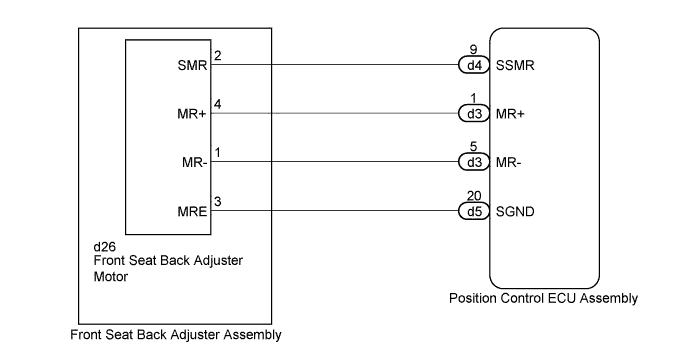
-
for Front Passenger Side (Luxury Seat Type):
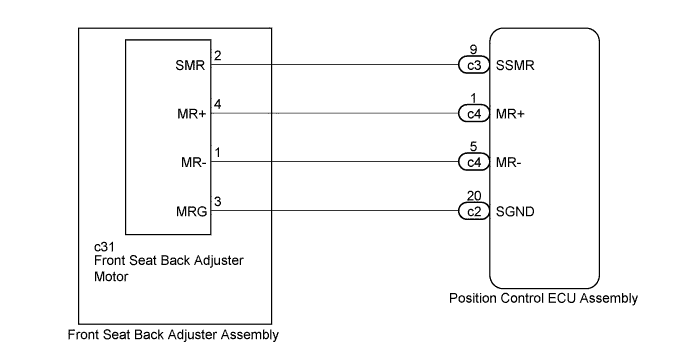
INSPECTION PROCEDURE
PROCEDURE
-
CHECK FOR DTC
-
Check the parts which the DTCs have been output from Click here.
Result Result Proceed to DTC output from "Driver Seat" A DTC output from "Passenger Seat" B
B 
PERFORM ACTIVE TEST USING GTS (REAR SEAT LUMBAR ADJUSTMENT) Click here
A 
-
-
PERFORM ACTIVE TEST USING GTS (REAR SEAT LUMBAR ADJUSTMENT)
-
Turn the power switch off.
-
Connect the GTS to the DLC3.
-
Turn the power switch on (IG).
-
Turn the GTS on.
-
Enter the following menus: Body Electrical / Driver Seat / Active Test.
-
Perform the Active Test according to the display on the GTS.
Driver Seat Tester Display Test Part Control Range Diagnostic Note Rear Seat Lumbar Adjustment Rear seat lumbar adjustment operation Front / OFF / Rear - OK Motor operates normally.
NG
INSPECT FRONT SEAT BACK ADJUSTER ASSEMBLY (FRONT SEAT BACK ADJUSTER MOTOR) Click here
OK
-
-
CHECK POSITION CONTROL ECU ASSEMBLY (FRONT SEAT BACK ADJUSTER MOTOR CIRCUIT)
-
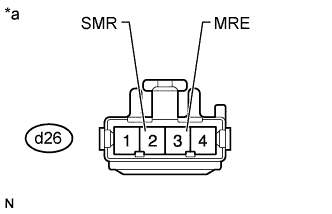
Text in Illustration *a Front view of wire harness connector
(to Front Seat Back Adjuster Assembly [Front Seat Back Adjuster Motor])
Disconnect the front seat back adjuster motor connector.
-
Measure the voltage according to the value(s) in the table below.
Standard Voltage Tester Connection Switch Condition Specified Condition d26-2 (SMR) - d26-3 (MRE) Front seat back adjuster switch on 4.8 to 5.1 V
NG
CHECK HARNESS AND CONNECTOR (POSITION CONTROL ECU ASSEMBLY - FRONT SEAT BACK ADJUSTER ASSEMBLY) Click here
OK
-
-
CHECK FRONT SEAT BACK ADJUSTER ASSEMBLY (FRONT SEAT BACK ADJUSTER MOTOR)
-
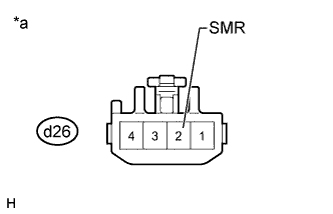
Text in Illustration *a Component with harness connected
(Front Seat Back Adjuster Assembly [Front Seat Back Adjuster Motor])
Reconnect the front seat back adjuster motor connector.
-
Measure the voltage according to the value(s) in the table below.
Standard Voltage Tester Connection Switch Condition Specified Condition d26-2 (SMR) - Body ground Front seat back adjuster switch on 4.5 to 4.8 V
NG 
REPLACE FRONT SEAT BACK ADJUSTER ASSEMBLY (FRONT SEAT BACK ADJUSTER MOTOR) Click here
OK 
REPLACE POSITION CONTROL ECU ASSEMBLY Click here
-
-
CHECK HARNESS AND CONNECTOR (POSITION CONTROL ECU ASSEMBLY - FRONT SEAT BACK ADJUSTER ASSEMBLY)
-
Disconnect the d4 and d5 position control ECU assembly connectors.
-
Measure the resistance according to the value(s) in the table below.
Standard Resistance Tester Connection Condition Specified Condition d4-9 (SSMR) - d26-2 (SMR) Always Below 1 Ω d5-20 (SGND) - d26-3 (MRE) Always Below 1 Ω d4-9 (SSMR) - Body ground Always 10 kΩ or higher d5-20 (SGND) - Body ground Always 10 kΩ or higher
NG
REPAIR OR REPLACE HARNESS OR CONNECTOR
OK
REPLACE POSITION CONTROL ECU ASSEMBLY Click here
-
-
INSPECT FRONT SEAT BACK ADJUSTER ASSEMBLY (FRONT SEAT BACK ADJUSTER MOTOR)
-
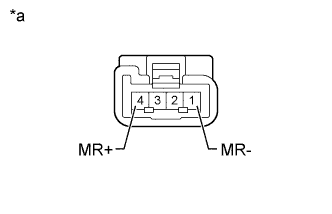
Text in Illustration *a Component without harness connected
(Front Seat Back Adjuster Assembly [Front Seat Back Adjuster Motor])
Disconnect the d26 front seat back adjuster motor connector.
-
Check if the front seat back adjuster motor moves smoothly when the battery is connected to the front seat back adjuster motor connector terminals.
OK Measurement Condition Operational Direction Battery positive (+) → 4 (MR+)
Battery negative (-) → 1 (MR-)
Forward Battery positive (+) → 1 (MR-)
Battery negative (-) → 4 (MR+)
Backward
NG
REPLACE FRONT SEAT BACK ADJUSTER ASSEMBLY (FRONT SEAT BACK ADJUSTER MOTOR) Click here
OK
-
-
CHECK HARNESS AND CONNECTOR (POSITION CONTROL ECU ASSEMBLY - FRONT SEAT BACK ADJUSTER ASSEMBLY)
-
Disconnect the d3 position control ECU assembly connector.
-
Measure the resistance according to the value(s) in the table below.
Standard Resistance Tester Connection Condition Specified Condition d3-1 (MR+) - d26-4 (MR+) Always Below 1 Ω d3-5 (MR-) - d26-1 (MR-) Always Below 1 Ω d3-1 (MR+) - Body ground Always 10 kΩ or higher d3-5 (MR-) - Body ground Always 10 kΩ or higher
NG
REPAIR OR REPLACE HARNESS OR CONNECTOR
OK
REPLACE POSITION CONTROL ECU ASSEMBLY Click here
-
-
PERFORM ACTIVE TEST USING GTS (REAR SEAT LUMBAR ADJUSTMENT)
-
Turn the power switch off.
-
Connect the GTS to the DLC3.
-
Turn the power switch on (IG).
-
Turn the GTS on.
-
Enter the following menus: Body Electrical / Passenger Seat / Active Test.
-
Perform the Active Test according to the display on the GTS.
Passenger Seat Tester Display Test Part Control Range Diagnostic Note Rear Seat Lumbar Adjustment Rear seat lumbar adjustment operation Front / OFF / Rear - OK Motor operates normally.
NG
INSPECT FRONT SEAT BACK ADJUSTER ASSEMBLY (FRONT SEAT BACK ADJUSTER MOTOR) Click here
OK
-
-
CHECK POSITION CONTROL ECU ASSEMBLY (FRONT SEAT BACK ADJUSTER MOTOR CIRCUIT)
-
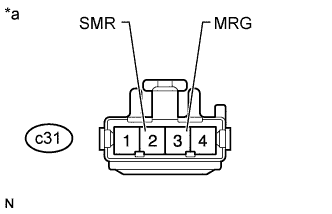
Text in Illustration *a Front view of wire harness connector
(to Front Seat Back Adjuster Assembly [Front Seat Back Adjuster Motor])
Disconnect the front seat back adjuster motor connector.
-
Measure the voltage according to the value(s) in the table below.
Standard Voltage Tester Connection Switch Condition Specified Condition c31-2 (SMR) - c31-3 (MRG) Front seat back adjuster switch on 4.8 to 5.1 V
NG
CHECK HARNESS AND CONNECTOR (POSITION CONTROL ECU ASSEMBLY - FRONT SEAT BACK ADJUSTER ASSEMBLY) Click here
OK
-
-
CHECK FRONT SEAT BACK ADJUSTER ASSEMBLY (FRONT SEAT BACK ADJUSTER MOTOR)
-
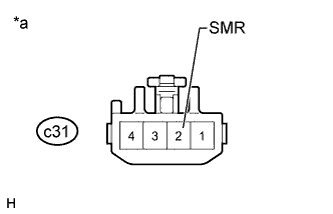
Text in Illustration *a Component with harness connected
(Front Seat Back Adjuster Assembly [Front Seat Back Adjuster Motor])
Reconnect the front seat back adjuster motor connector.
-
Measure the voltage according to the value(s) in the table below.
Standard Voltage Tester Connection Switch Condition Specified Condition c31-2 (SMR) - Body ground Front seat back adjuster switch on 4.5 to 4.8 V
NG
REPLACE FRONT SEAT BACK ADJUSTER ASSEMBLY (FRONT SEAT BACK ADJUSTER MOTOR) Click here
OK
REPLACE POSITION CONTROL ECU ASSEMBLY Click here
-
-
CHECK HARNESS AND CONNECTOR (POSITION CONTROL ECU ASSEMBLY - FRONT SEAT BACK ADJUSTER ASSEMBLY)
-
Disconnect the c2 and c3 position control ECU assembly connectors.
-
Measure the resistance according to the value(s) in the table below.
Standard Resistance Tester Connection Condition Specified Condition c3-9 (SSMR) - c31-2 (SMR) Always Below 1 Ω c2-20 (SGND) - c31-3 (MRG) Always Below 1 Ω c3-9 (SSMR) - Body ground Always 10 kΩ or higher c2-20 (SGND) - Body ground Always 10 kΩ or higher
NG
REPAIR OR REPLACE HARNESS OR CONNECTOR
OK
REPLACE POSITION CONTROL ECU ASSEMBLY Click here
-
-
INSPECT FRONT SEAT BACK ADJUSTER ASSEMBLY (FRONT SEAT BACK ADJUSTER MOTOR)
-
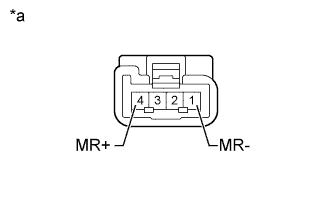
Text in Illustration *a Component without harness connected
(Front Seat Back Adjuster Assembly [Front Seat Back Adjuster Motor])
Disconnect the c31 front seat back adjuster motor connector.
-
Check if the front seat back adjuster motor moves smoothly when the battery is connected to the front seat back adjuster motor connector terminals.
OK Measurement Condition Operational Direction Battery positive (+) → 4 (MR+)
Battery negative (-) → 1 (MR-)
Forward Battery positive (+) → 1 (MR-)
Battery negative (-) → 4 (MR+)
Backward
NG
REPLACE FRONT SEAT BACK ADJUSTER ASSEMBLY (FRONT SEAT BACK ADJUSTER MOTOR) Click here
OK
-
-
CHECK HARNESS AND CONNECTOR (POSITION CONTROL ECU ASSEMBLY - FRONT SEAT BACK ADJUSTER ASSEMBLY)
-
Disconnect the c4 position control ECU assembly connector.
-
Measure the resistance according to the value(s) in the table below.
Standard Resistance Tester Connection Condition Specified Condition c4-1 (MR+) - c31-4 (MR+) Always Below 1 Ω c4-5 (MR-) - c31-1 (MR-) Always Below 1 Ω c4-1 (MR+) - Body ground Always 10 kΩ or higher c4-5 (MR-) - Body ground Always 10 kΩ or higher
NG
REPAIR OR REPLACE HARNESS OR CONNECTOR
OK
REPLACE POSITION CONTROL ECU ASSEMBLY Click here
-