ECD SYSTEM SYSTEM DESCRIPTION
-
ENGINE CONTROL SYSTEM
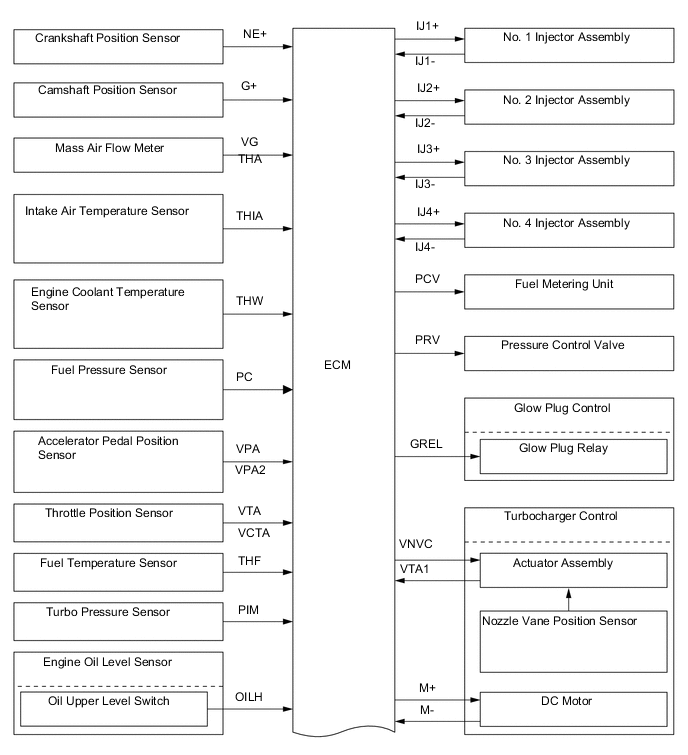
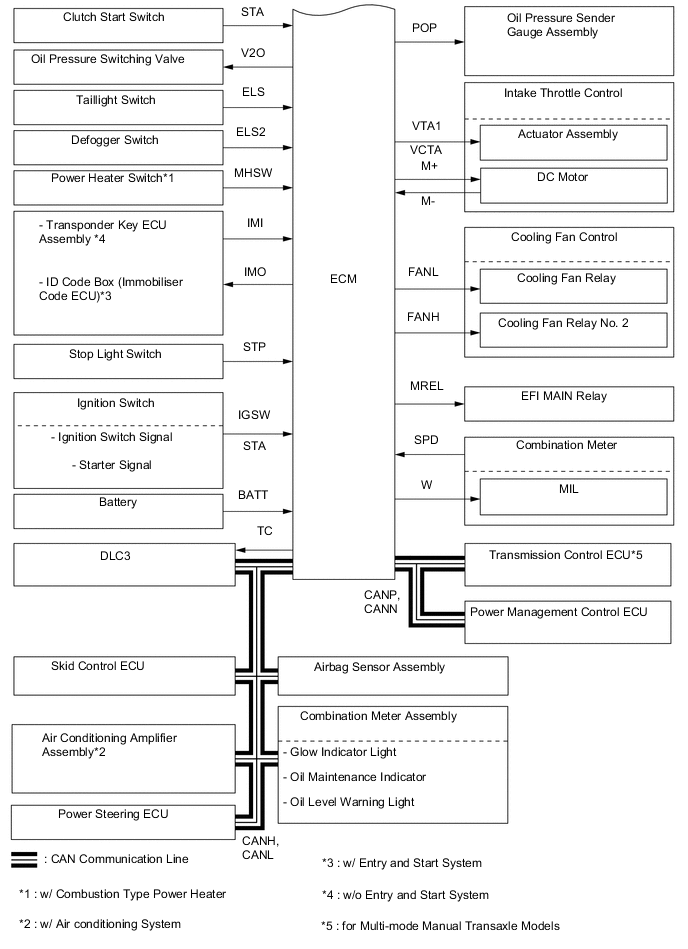
-
System Control Table
-
The engine control system of the 1ND-TV engine has the following systems.
System Description Fuel Injection Volume Control Based on the signals received from the various sensors, the ECM determines the fuel injection volume in accordance with the engine condition. Fuel Injection Timing Control Based on the signals received from the various sensors, the ECM determines the fuel injection timing in accordance with the engine condition. Fuel Pressure Control Based on the signals received from the various sensors, the ECM determines the fuel pressure via the fuel metering unit and pressure control valve in accordance with the engine condition. Idle Speed Control The ECM determines the idle speed in accordance with the engine condition, and controls the fuel injection volume in order to maintain the target idle speed. Pilot Injection Control Based on the signals received from the various sensors, the ECM determines pilot injection volume, timing, and interval (between pilot injection and main injection) in accordance with the engine condition. Glow Plug Control Controls the length of time when the current is applied to the glow plugs, in accordance with the engine coolant temperature. Turbocharger Control Based on signals from the various sensors, the ECM controls the turbocharger in accordance with engine condition by adjusting the nozzle vane. Intake Throttle Control Based on the signals received from the various sensors, the ECM determines throttle position in accordance with engine condition. Fully closes the diesel throttle control valve in order to reduce the vibration when the engine is stopped.
-
-
Fuel Injection Volume Control
-
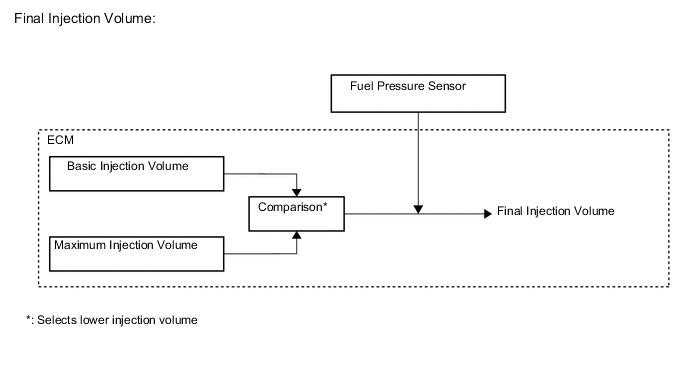
Fuel injection volume has two values, "Final Injection Volume", "Starting Injection Volume".
Final Injection Volume The ECM compares the basic and maximum injection volumes, and determines the smaller calculated value to be the final injection volume. The ECU reduces injection volume to ensure drivability when the clutch switch is ON (the clutch pedal is depressed). Starting Injection Volume The starting injection volume is determined in accordance with the crankshaft position sensor signal (cranking time) and engine coolant temperature sensor signal. When the engine is cold, the engine coolant temperature will be lower and the injection volume will be greater. 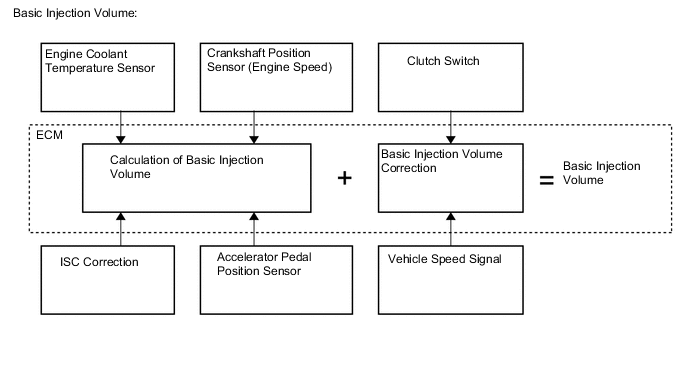
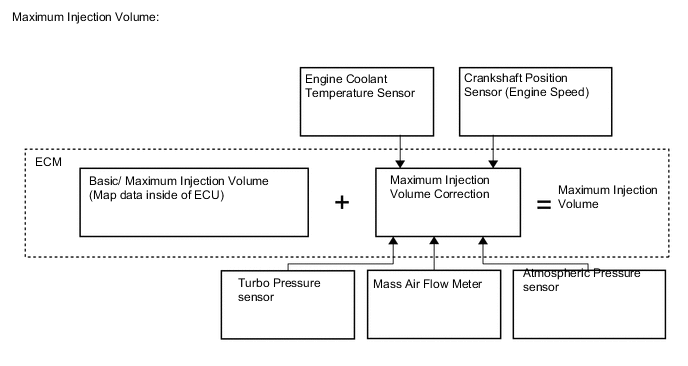
-
-
Fuel Injection Timing Control
-
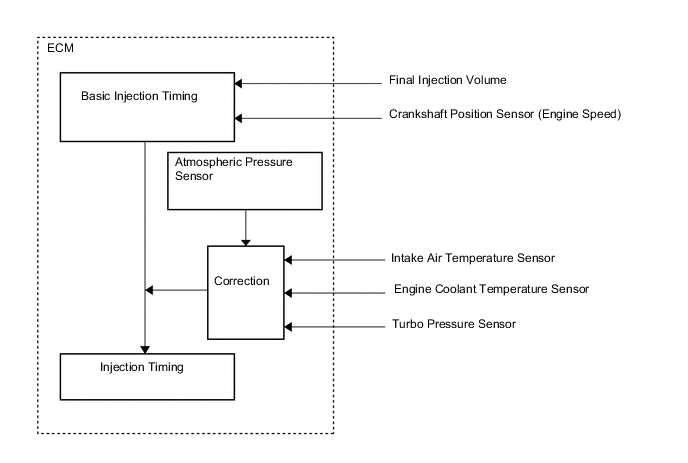
Fuel injection timing is controlled as shown below.
-
-
Fuel Pressure Control
-
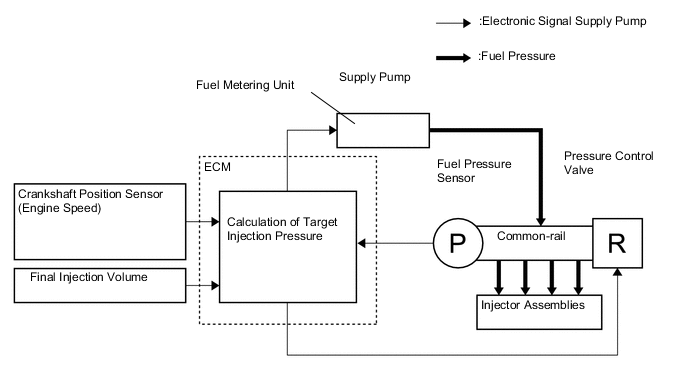
The ECM calculates the target injection pressure (30000 to 160000 kPa) based on the final injection volume and signals from the crankshaft position sensor.
-
To control fuel pressure, signals sent to fuel metering unit of the supply pump regulate the pumping volume and signals sent to pressure control valve of the common-rail regulate the discharge volume, so that the pressure detected by the fuel pressure sensor matches the target injection pressure.
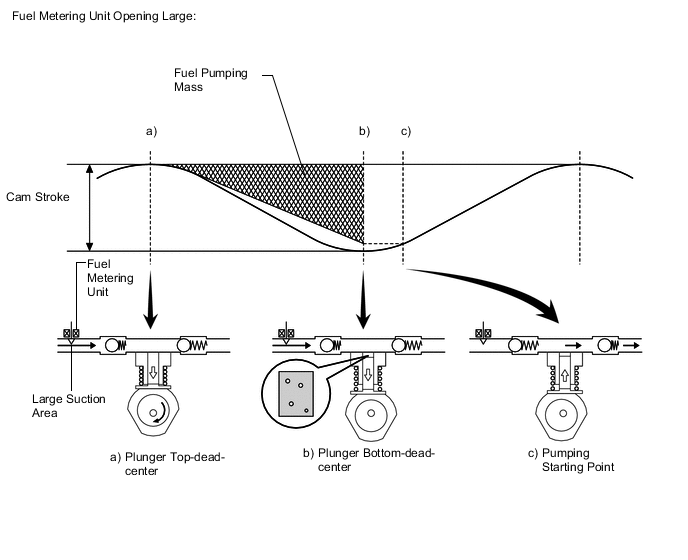
Fuel metering unit Control The ECM controls the fuel metering unit opening in order to regulate the fuel volume that is pumped by the supply pump to the common-rail. Consequently, the fuel pressure in the common-rail is controlled to the target injection pressure. Fuel metering unit Opening Small When the fuel metering unit opening is small, the fuel suction area is kept small, which decreases the transferable fuel quantity. The plunger strokes fully, however, the suction volume becomes small due to the small suction area. Pumping will start at the time when the fuel pressure has become higher than the common-rail pressure. Fuel metering unit Opening Large When the fuel metering unit opening is large, the fuel suction area is kept large, which increases the transferable fuel quantity. The plunger strokes fully, the suction volume will increase because the suction area is large. Pumping will start at the time when the fuel pressure has become higher than the common-rail pressure. 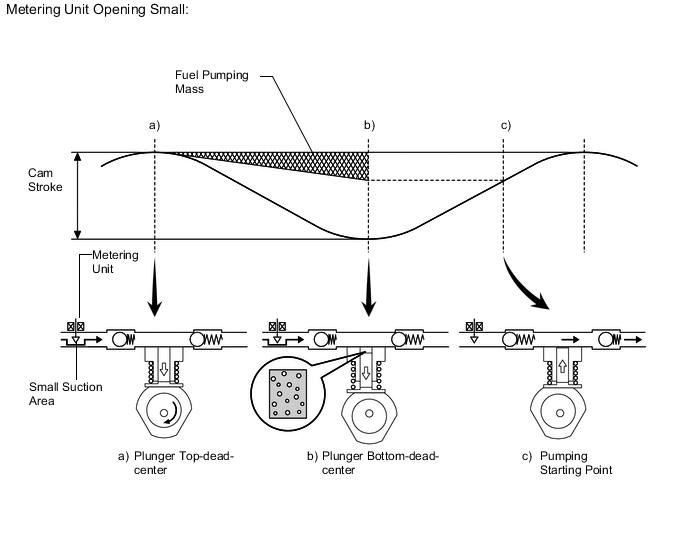
-
-
Idle Speed Control
-
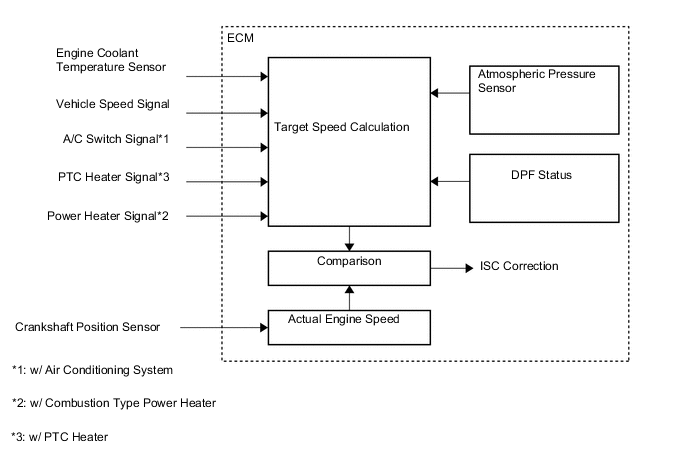
ISC correction is controlled as shown below.
-
-
Pilot Injection Control
-
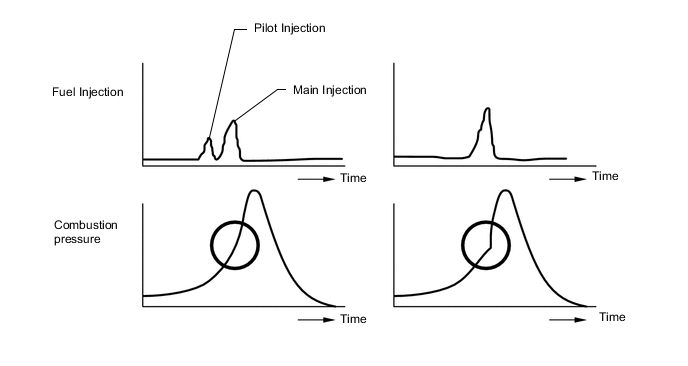
Pilot injection is a method that provides an auxiliary fuel injection before the main fuel injection takes place. The purpose of pilot injection is to gently start the combustion of the fuel of the main injection in order to reduce combustion noise.
-
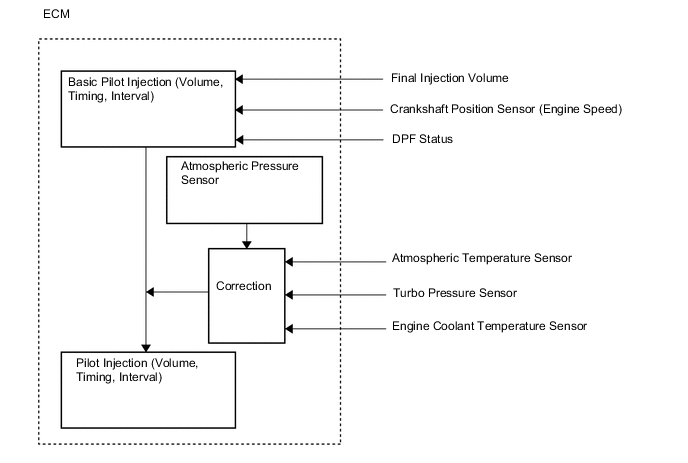
During pilot injection, the pilot injection volume, timing, and interval (between pilot injection and main injection) are controlled as shown below.
-
-
Turbocharger Control
-
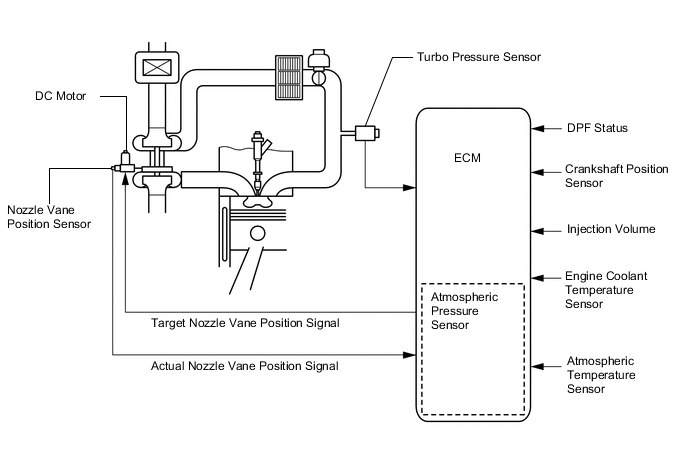
The ECM controls the nozzle vane position, in order to obtain the calculated target turbo pressure appropriate to the engine operating condition.
-
The ECM calculates the optimal nozzle vane position in accordance with the driving conditions (engine speed, injection volume, atmospheric pressure, and engine coolant temperature etc). The ECM controls the nozzle vane position in accordance with the target nozzle vane position calculated by the ECM and the actual nozzle vane position signal provided by the nozzle vane position sensor.
-
-
-
EMISSION CONTROL SYSTEM
-
System Control Table
-
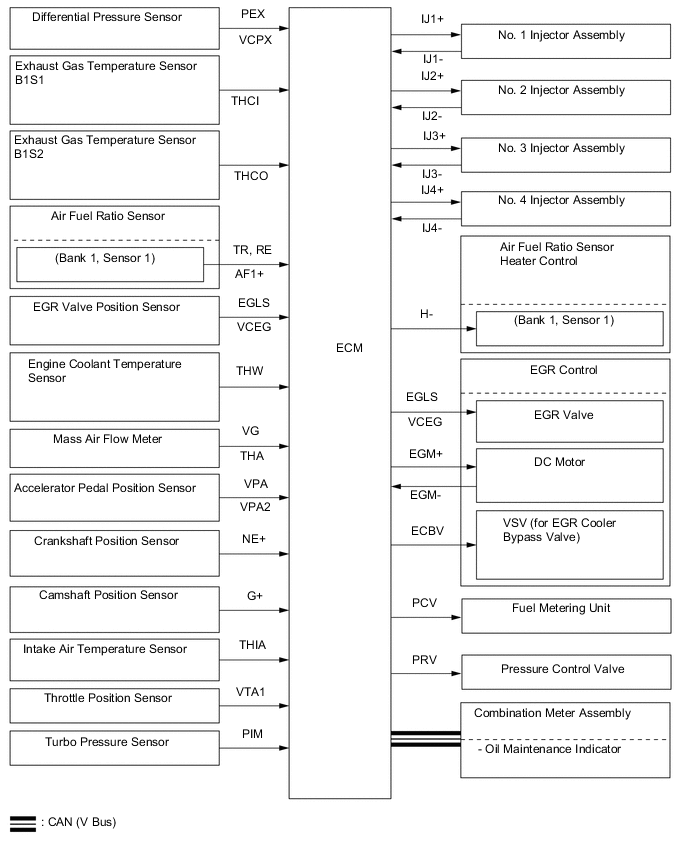
The emission control system of the 1ND-TV engine has the following systems.
System Description EGR Control Based on the signals received from the sensors, the ECM determines the EGR volume via EGR valve and throttle valve in accordance with the engine condition. Catalyst Support Control Based on the signals received from the sensors, the ECM controls the fuel injection from the injector assembly and the engine idle speed to purify PM. Air-fuel Ratio Sensor Heater Control Maintains the temperature of the air fuel ratio sensors at an appropriate level to increase accuracy of detection of the oxygen concentration in the exhaust gas.
-
-
EGR Control
-
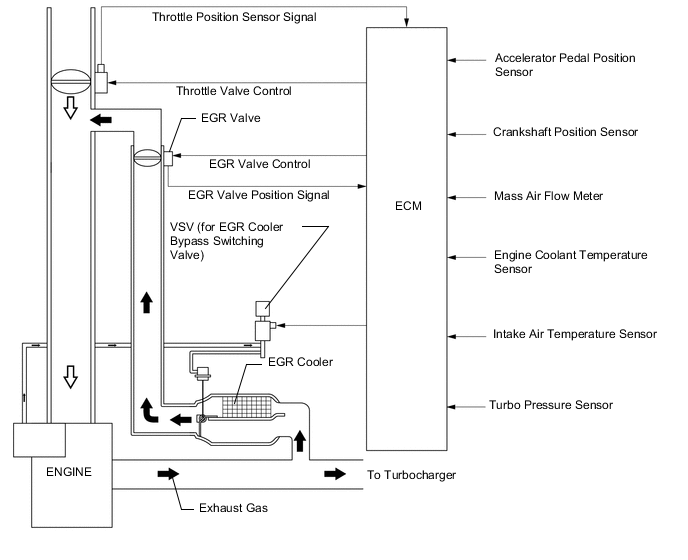
This system is designed to reduce and control NOx formation due to a reduction of peak temperature in the engine combustion chamber, which is accomplished by introducing an exhaust gas into intake manifold.
-
By sensing the engine driving conditions and actual amount of the EGR valve opening, the ECM operates the EGR valve and diesel throttle control motor, and regulates the amount of exhaust gas.
-
-
Catalyst Support Control
-
The ECM judges the DPF catalyst conditions, based on signals from the mass air flow meter, engine coolant temperature sensor, 2 exhaust gas temperature sensors, differential pressure sensor and air-fuel ratio sensor to control the fuel injection from the injector assemblies and the engine idle speed for the catalyst support control.
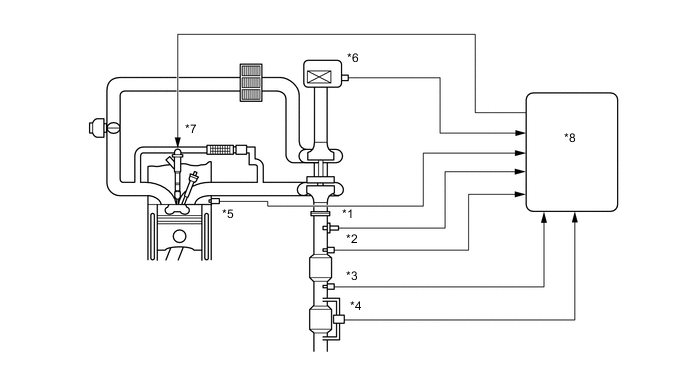
Text in Illustration *1 Air Fuel Ratio Sensor *2 Exhaust Gas Temperature Sensor B1S1 *3 Exhaust Gas Temperature Sensor B1S2 *4 Differential Pressure Sensor *5 Engine Coolant Temperature Sensor *6 Mass Air Flow Meter *7 Injector Assembly *8 ECM -
If the DPF catalyst temperature becomes low, catalyst performance decreases, resulting in an increase of the amount of PM stuck in the filter substrate. When the ECM detects clogs in the filter substrate by calculating the accumulated volume of PM discharged by the engine, after an injection and an idle-up control are performed to reduce PM. At the same time, filter substrate temperature becomes high and PM reacts with active oxygen and changes into CO2 for purification. Fuel efficiency drops during this control.
Tech Tips
In the after injection, fuel is injected into the cylinder at a timing at which the fuel is not combusted, sending the fuel into the CCo (Oxidation Catalyst) and increasing the exhaust gas temperature by catalytic oxidation reaction, resulting in increasing the catalyst temperature.
-
A small portion of the fuel injected by the after injection enters the crankcase via the cylinder walls, causing dilution of the engine oil. The oil level is less likely to increase during normal use, as the fuel in the oil evaporates with the increase in the engine oil temperature.
However, the engine oil is gradually diluted after consecutive driving of which the running distance per single trip is short, which results in reducing the lubricating performance. In an attempt to prevent this, the oil level sensor detects the engine oil level and turns on/blinks the oil maintenance indicator to urge the driver to change the engine oil.
-
-
-
FUEL SYSTEM
-
Fuel System Description
-
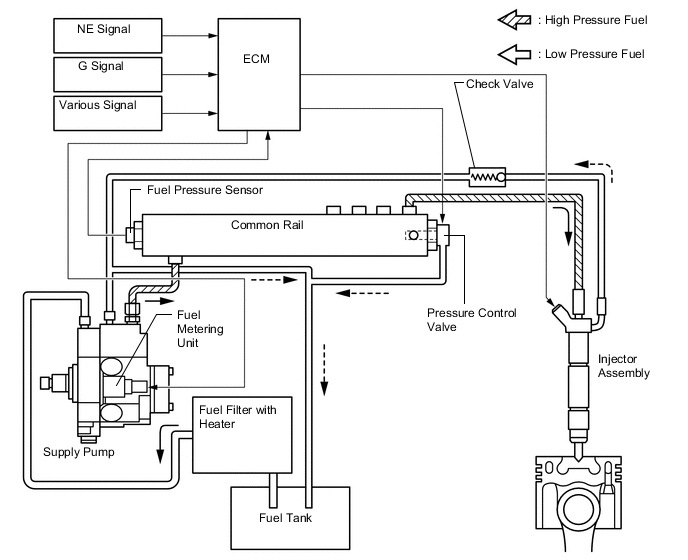
A common-rail system manufactured by BOSCH is used in the fuel injection system. In this system, the highly pressurized fuel that is supplied by the supply pump is stored in the common rail, and ECM sends signals to the injector assemblies in order to control the injection timing and injection volume.
-
A piezo type injector assembly is used to precisely control the fuel injection volume and timing.
-
The quick connectors are used to connect the fuel pipe with the fuel hose for excellent serviceability.
-
A fuel filter with a fuel heater is used.
-
-
Supply Pump
-
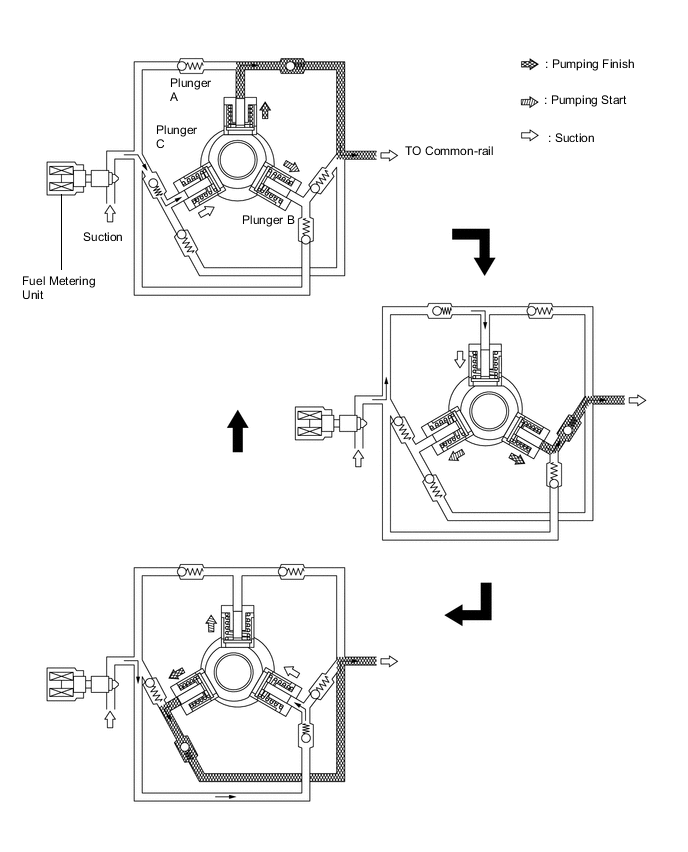
Due to the rotation of the inner cam (eccentric cam), the outer cam pushes plunger "A" upward as illustrated below. The force of the spring pulls plunger "C". As a result, plunger "C" draws fuel in, and plunger "A" pumps fuel at the same time.
-
-
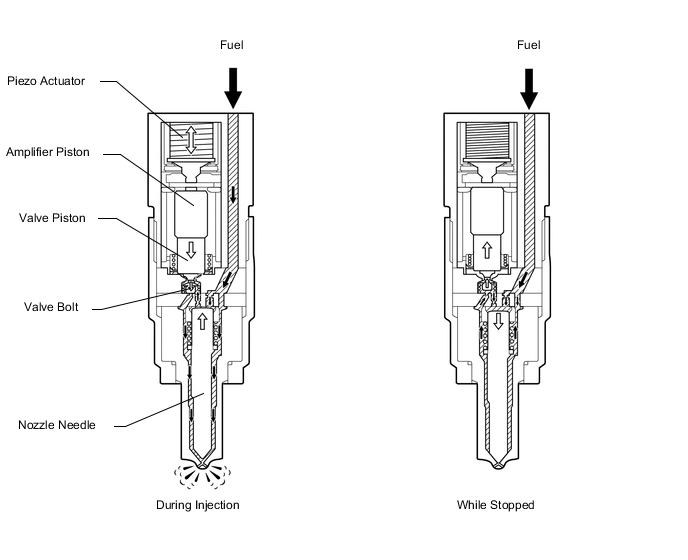
Injector Assembly : Needle Opening (During Injection)
-
The actuator is activated.
-
Valve bolt opens (moves downwards) due to actuator lift.
-
Pressure of nozzle needle tip decreases.
-
Nozzle needle opens (moves upwards).
-
-
Injector Assembly : Needle Closing (While Stopped)
-
The actuator is deactivated.
-
Valve bolt closes (moves upwards) due to the valve spring.
-
Pressure of nozzle needle tip increases.
-
Nozzle needle closes (moves downwards).
-
-