IGNITION SYSTEM ON-VEHICLE INSPECTION

Note
In this section, the terms "Cold" and "Hot" refer to the temperature of the sensor. "Cold" means approximately -10 to 50°C (14 to 122°F). "Hot" means approximately 50 to 100°C (122 to 212°F).
-
CHECK IGNITION COIL ASSEMBLY AND PERFORM SPARK TEST
-
Check for DTCs.
Note
If any DTC is present, perform troubleshooting in accordance with the procedure for that DTC.
-
Check that sparks occur.
-
Remove the ignition coils.
-
Using a 16 mm plug wrench, remove the spark plugs.
-
Install a spark plug to each ignition coil, and connect the ignition coil connectors.
-
Disconnect the 6 injector connectors.
-
Ground the spark plugs.
-
Check if sparks occur at each spark plug while the engine is being cranked.
Note
-
Be sure to ground the spark plugs when checking them.
-
Replace the ignition coil if it receives an impact.
-
Do not crank the engine for more than 2 seconds.
Tech Tips
-
If sparks occur, skip the spark test flowchart.
-
If sparks do not occur, proceed to the spark test flowchart.
-
-
-
Spark test flowchart.
-
Check that the wire harness side connector of the ignition coil with igniter is securely connected.
Result Result Proceed to NG Connect securely OK Go to next step -
Perform the spark test on each ignition coil with igniter.
1. Replace the ignition coil with igniter with a normal one.
2. Perform the spark test again.
Result Result Proceed to OK Replace ignition coil with igniter NG Go to next step -
Check the power supply to the ignition coil.
1. Turn the ignition switch ON.
2. Check that there is battery positive (+) voltage at the ignition coil positive (+) terminal.
Result Result Proceed to NG Check wiring between ignition switch and ignition coil assembly OK Go to next step -
Check the resistance of the VVT sensor output voltage (see step Click here).
Result Result Proceed to NG Check that there is resistance between ECM and VVT sensor. If there is no resistance, replace VVT sensor. If there is resistance, repair wiring between VVT sensor and ECM OK Go to next step -
Check the resistance of the crankshaft position sensor.
Standard resistance Standard Condition Specified Condition Cold 1,630 to 2,740 Ω Hot 2,065 to 3,225 Ω Result Result Proceed to NG Replace crankshaft position sensor OK Go to next step -
Check the IGT signal from the ECM Click here.
Result Result Proceed to NG Check ECM
OK Repair wiring between ignition coil and ECM
-
-
Using a 16 mm plug wrench, install the spark plugs.
- Torque:
- 20 N*m { 204 kgf*cm, 13 ft.*lbf }
-
Install the ignition coils.
- Torque:
- 9.0 N*m { 92 kgf*cm, 80 in.*lbf }
-
-
CHECK VVT SENSOR OUTPUT VOLTAGE
-
Check the VVT sensor output voltage Click here.
-
-
CHECK SPARK PLUG
Note
-
Never use a wire brush for cleaning.
-
Never attempt to adjust the electrode gap on a used spark plug.
-
Remove the engine cover.
-
Remove the air cleaner.
-
Remove the ignition coil.
-
Remove the spark plug.
-
Check the electrode.
-
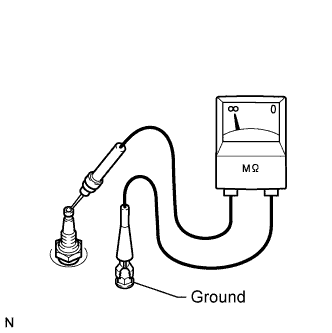
Using a megohmmeter, measure the insulation resistance.
Correct insulation resistance 10 MΩ or more If the resistance is below the specified range, remove the spark plug.
Tech Tips
If a megohmmeter is not available, perform the following simple inspection instead.
-
-
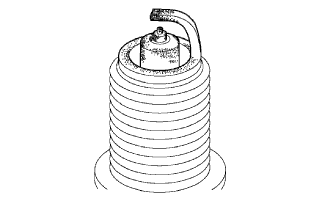
Alternative inspection method:
-
Quickly accelerate the engine to 4,000 rpm 5 times.
-
Remove the spark plug.
-
Visually check the spark plug.
If the electrode is dry, the spark plug is functioning properly. If the electrode is damp, proceed to the next step.
-
-
Check the spark plug for any damage on its threads and insulator.
If there is damage, replace the spark plug. If not, reinstall the spark plug.
Recommended spark plug Manufacturer Spark Plug Type DENSO K20HR-U11 -
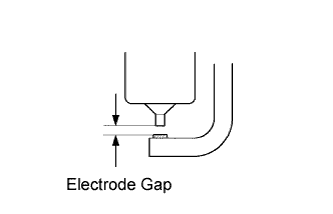
Check the spark plug electrode gap.
Standard electrode gap 1.0 to 1.1 mm (0.039 to 0.043 in.) If the electrode gap is not within the specified range, replace the spark plug.
-
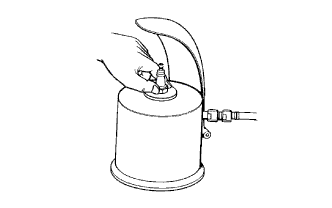
Clean the spark plugs.
If the electrode has traces of wet carbon, clean the electrode with a spark plug cleaner and then dry it.
Standard air pressure 588 kPa (6 kgf/cm2, 85 psi) Standard duration 20 seconds or less Tech Tips
Only use the spark plug cleaner when the electrode is free of oil. If the electrode has traces of oil, use gasoline to clean off the oil before using the spark plug cleaner.
-