EXHAUST HEAT RECIRCULATION SYSTEM ON-VEHICLE INSPECTION

-
INSPECT CENTER EXHAUST PIPE ASSEMBLY
-
Inspect exhaust flow control valve operation.
-
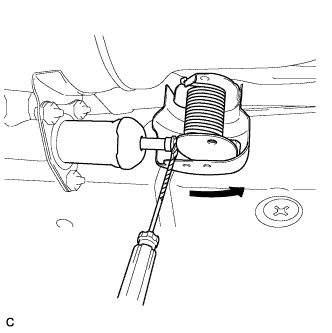
Using a screwdriver, move the exhaust flow control valve from the bottom of the vehicle. Check that the valve moves smoothly.
OK Valve moves smoothly. -
If the valve is stuck or does not move smoothly, replace the center exhaust pipe assembly Click here.
Note
When removing or installing the exhaust pipe gas control actuator, do not subject the temperature switch to impacts.
-
-
Inspect the exhaust pipe gas control actuator.
-
Connect the intelligent tester to the DLC3.
-
Turn the power switch on (IG) and turn the tester on.
-
Enter the following menus: Powertrain / Engine and ECT / Data List / Coolant Temp.
-
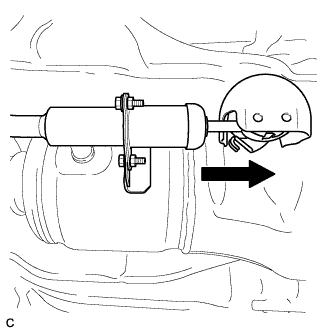
While checking the engine coolant temperature with the intelligent tester, check the operation of the exhaust pipe gas control actuator rod when the temperature rises.
Standard Condition Rod Operation Cold (below approx. 71°C (160°F)) → Warmed up (approx. 80°C (176°F) or more) Rod gradually extends as the temperature rises. Tech Tips
-
After the engine has warmed up (thermostat temperature is approximately 80°C (176°F) or more), the rod should be extended approximately 7.2 mm (0.284 in.) or more compared to when the engine is cold (thermostat temperature is below 71°C (160°F)).
-
The water temperature shown in the Data List may slightly deviate from the thermostat temperature. This is because the Data List value indicates the temperature detected by the water temperature sensor, which is mounted on the engine, while the thermostat is positioned in the exhaust pipe gas control actuator.
-
If it is difficult to check if the rod is operating, allow the engine to cool down until the water temperature matches the ambient temperature and then check for the rod operation again.
-
-
If the exhaust pipe gas control actuator rod does not move smoothly, replace the exhaust pipe gas control actuator Click here.
-
Check for any cracks or damage on the exhaust pipe gas control actuator rod.
OK No cracks or damage is found. -
If any cracks or damage is found, replace the center exhaust pipe assembly Click here.
-
-
-
INSPECT FOR ENGINE COOLANT LEAK FROM EXHAUST CENTER PIPE ASSEMBLY (for Engine)
CAUTION:
Do not remove the radiator cap while the engine and radiator are still hot. Pressurized hot engine coolant and steam may be released and cause serious burns.
Note
Be sure to turn the A/C switch off before starting the following inspection.
-
Turn the power switch off. Check for engine coolant leaks from the center exhaust pipe assembly and the heater hose around the water temperature switch.
-
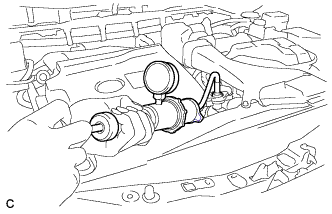
Add engine coolant to the radiator and install the radiator cap tester.
-
Pump it to 118 kPa (1.2 kgf/cm2, 17 psi), then check that the pressure does not drop.
If the reading drops, check for leaks from the center exhaust pipe assembly and the heater hose around the water temperature switch.
-