СИСТЕМА ЗАЖИГАНИЯ ПРОВЕРКА БЕЗ СНЯТИЯ С АВТОМОБИЛЯ
-
INSPECT SPARK PLUG
-
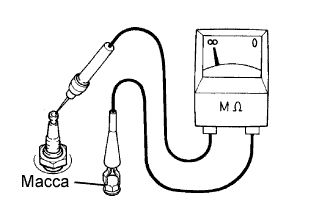
Check the electrode using a megohmmeter:
-
Using a megohmmeter, measure the insulation resistance.
Standard Insulation Resistance 10 MΩ or more If the result is below 10 MΩ, clan the plug and measure the resistance again.
-
-
Check the electrode without using a megohmmeter:
-
Quickly accelerate the engine to 4000 rpm 5 times.
-
Remove the spark plug.
-
Visually check the spark plug.
If the electrode is dry, the spark plug is functioning properly. If the electrode is damp, proceed to the next step.
-
-
Check the spark plug for any damage to its threads and insulator.
If there is any damage, replace the spark plug.
Recommended Spark Plug Manufacturer Spark Plug Type DENSO SK16HR11 -
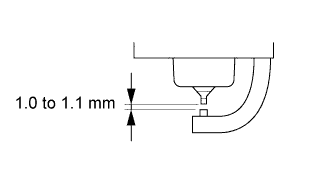
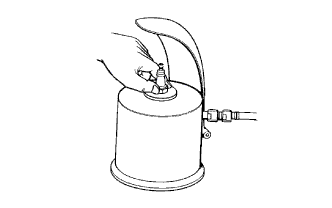
Check the spark plug electrode gap.
Maximum Electrode Gap for Used Spark Plug 1.3 mm (0.05118 in.) If the gap is greater than the maximum, replace the spark plug.
Electrode Gap for New Spark Plug 1.0 to 1.1 mm (0.03937 to 0.04331 in.) If the electrode has traces of wet carbon, clean the electrode with a spark plug cleaner and then dry it.
Standard Air Pressure 588 kPa (6 kgf/cm2, 85 psi) Standard Duration 20 seconds or less Tech Tips
Only use the spark plug cleaner when the electrode is free of oil. If the electrode has traces of oil, use gasoline to clean off the oil before using the spark plug cleaner.
-