BRAKE MASTER CYLINDER (for RHD) INSTALLATION

-
INSPECT AND ADJUST BRAKE BOOSTER PUSH ROD
Note
Make the adjustment with no vacuum in the brake booster assembly. (Depress the brake pedal several times with the engine stopped.)
Tech Tips
-
Adjustment of the brake booster push rod is required when the brake master cylinder sub-assembly is replaced with a new one.
-
Adjustment is not necessary when the removed brake master cylinder sub-assembly is reused and the brake booster assembly is replaced with a new one.
-
Apply chalk to the tip of the accessory tool.
Tech Tips
An accessory tool is enclosed with a new brake master cylinder sub-assembly.
-
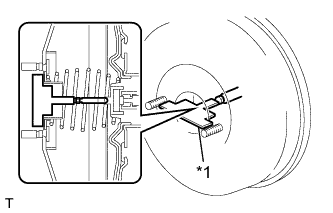
Text in Illustration *1 Accessory Tool Place the accessory tool on the brake booster assembly.
-
Measure the clearance between the brake booster push rod and accessory tool.
Standard clearance 0 mm (0 in.) Tech Tips
Adjust the clearance in the following cases:
-
If there is a clearance between the accessory tool and the shell of the brake booster (floating accessory tool), the push rod is protruding too far.
-
If the chalk does not stick on the tip of the brake booster push rod, the push rod protrusion is insufficient.
-
-
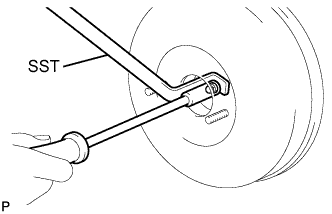
If the clearance is not as specified, adjust the push rod length by holding the rod using SST and turning the tip of the rod using a socket driver (7 mm).
- SST
- 09737-00020
Tech Tips
Check the push rod clearance again after adjustment.
-
-
INSTALL BRAKE MASTER CYLINDER SUB-ASSEMBLY (w/o Stop and Start System)
-
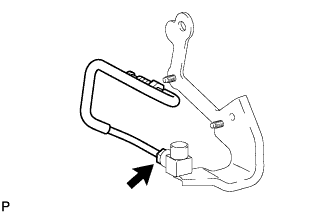
Temporarily install the No. 9 brake tube and No. 1 brake tube way.
-
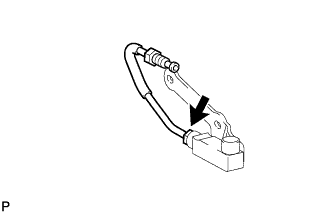
Temporarily install the No. 8 brake tube and No. 2 brake tube way.
-
Install a new O-ring to the brake master cylinder sub-assembly.
-
Install the brake master cylinder sub-assembly onto the brake booster assembly.
Note
-
The master cylinder requires careful handling. Do not allow the master cylinder to receive any impact, such as from being dropped. Do not reuse a master cylinder that has been dropped.
-
Do not strike or pinch the master cylinder piston, and do not cause any damage to the master cylinder piston by any other means.
-
When installing the master cylinder to the brake booster, or when removing the master cylinder from the brake booster, make sure that the master cylinder is kept horizontal or its tip faces downward (the piston faces upward) to prevent the master cylinder piston from falling off.
-
Do not allow any foreign objects to contaminate the master cylinder piston. If a foreign object gets on the piston, remove it by using a piece of cloth and then apply an even layer of lithium soap base glycol grease around the circumference (sliding part) of the piston.
-
Do not use any other type of grease or fluid.
-
-
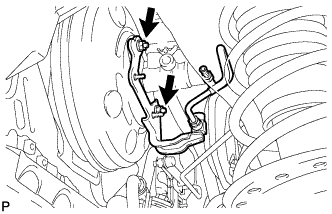
Temporarily install the No. 9 brake tube and No. 1 brake tube way onto the brake master cylinder sub-assembly.
-
Install the 2 nuts.
- Torque:
- 13 N*m { 127 kgf*cm, 9 ft.*lbf }
-
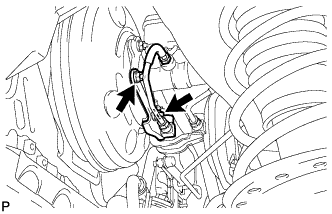
Temporarily install the No. 8 brake tube and No. 2 brake tube way onto the No. 1 brake tube way.
-
Install the 2 nuts.
- Torque:
- 8.8 N*m { 90 kgf*cm, 78 in.*lbf }
-
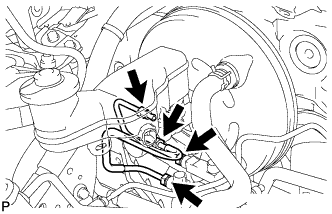
Using a union nut wrench (12 mm), fully tighten the No. 8 brake tube and No. 9 brake tube.
- Torque:
- 20 N*m { 200 kgf*cm, 14 ft.*lbf }
Note
Use the formula to calculate special torque values for situations where a union nut wrench is combined with a torque wrench Click here.
-
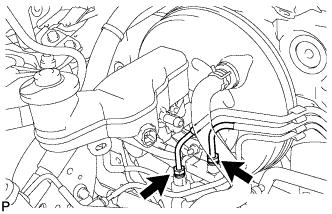
Using a union nut wrench (12 mm), connect the 2 brake tubes to the No. 1 brake tube way and No. 2 brake tube way.
- Torque:
- 20 N*m { 200 kgf*cm, 14 ft.*lbf }
Note
Use the formula to calculate special torque values for situations where a union nut wrench is combined with a torque wrench Click here.
-
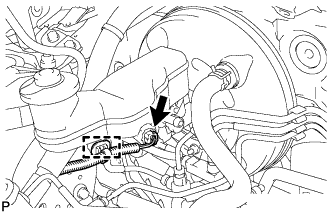
Engage the clamp and connect the brake fluid level warning switch connector.
-
-
INSTALL BRAKE MASTER CYLINDER SUB-ASSEMBLY (w/ Stop and Start System)
-
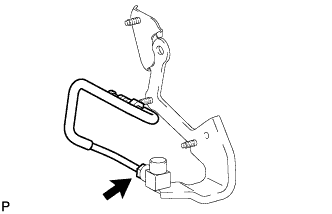
Temporarily install the No. 9 brake tube and No. 1 brake tube way.
-
Temporarily install the No. 8 brake tube and No. 2 brake tube way.
-
Install a new O-ring to the brake master cylinder sub-assembly.
-
Install the brake master cylinder sub-assembly onto the brake booster assembly.
Note
-
The master cylinder requires careful handling. Do not allow the master cylinder to receive any impact, such as from being dropped. Do not reuse a master cylinder that has been dropped.
-
Do not strike or pinch the master cylinder piston, and do not cause any damage to the master cylinder piston by any other means.
-
When installing the master cylinder to the brake booster, or when removing the master cylinder from the brake booster, make sure that the master cylinder is kept horizontal or its tip faces downward (the piston faces upward) to prevent the master cylinder piston from falling off.
-
Do not allow any foreign objects to contaminate the master cylinder piston. If a foreign object gets on the piston, remove it by using a piece of cloth and then apply an even layer of lithium soap base glycol grease around the circumference (sliding part) of the piston.
-
Do not use any other type of grease or fluid.
-
-
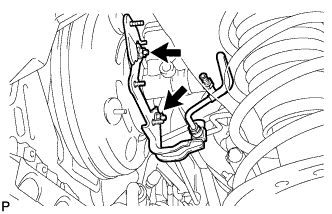
Temporarily install the No. 9 brake tube and No. 1 brake tube way onto the brake master cylinder sub-assembly.
-
Install the 2 nuts.
- Torque:
- 13 N*m { 127 kgf*cm, 9 ft.*lbf }
-
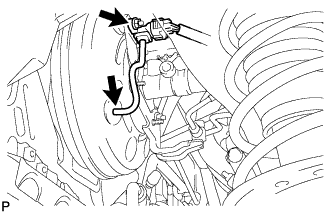
Install the nut and vacuum sensor assembly.
- Torque:
- 5.0 N*m { 51 kgf*cm, 44 in.*lbf }
-
Connect the vacuum hose.
-
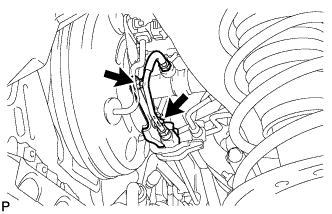
Temporarily install the No. 8 brake tube and No. 2 brake tube way onto the No. 1 brake tube way.
-
Install the 2 nuts.
- Torque:
- 8.8 N*m { 90 kgf*cm, 78 in.*lbf }
-
Using a union nut wrench (12 mm), fully tighten the No. 8 brake tube and No. 9 brake tube.
- Torque:
- 20 N*m { 200 kgf*cm, 14 ft.*lbf }
Note
Use the formula to calculate special torque values for situations where a union nut wrench is combined with a torque wrench Click here.
-
Using a union nut wrench (12 mm), connect the 2 brake tubes to the No. 1 brake tube way and No. 2 brake tube way.
- Torque:
- 20 N*m { 200 kgf*cm, 14 ft.*lbf }
Note
Use the formula to calculate special torque values for situations where a union nut wrench is combined with a torque wrench Click here.
-
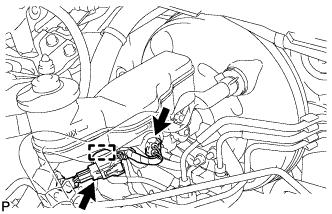
Engage the clamp and connect the brake fluid level warning switch connector and vacuum sensor wire connector.
-
-
CONNECT CLUTCH RESERVOIR TUBE (for Manual Transaxle)
-
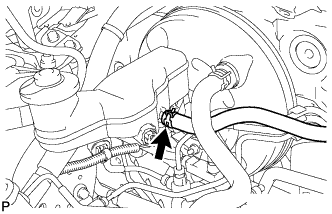
Connect the clutch reservoir tube to the brake master cylinder reservoir assembly with the clip.
-
-
FILL RESERVOIR WITH BRAKE FLUID
-
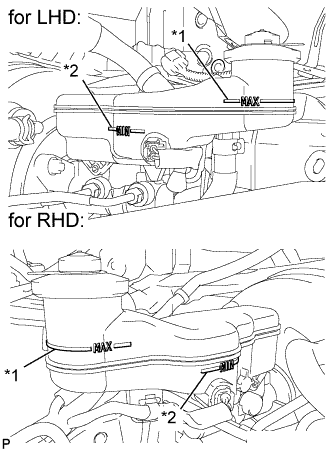
Text in Illustration *1 MAX Line *2 MIN Line Fill the reservoir with brake fluid.
Brake Fluid SAE J1703 or FMVSS No. 116 DOT 3 Note
Add brake fluid to keep the level between the MIN and MAX lines of the reservoir while bleeding the brakes.
-
-
BLEED CLUTCH LINE (for EE65)
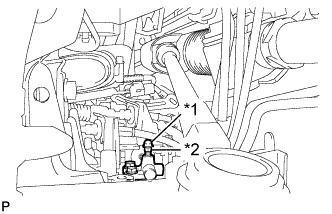
Text in Illustration *1 Bleeder plug cap *2 Bleeder plug Tech Tips
In case of clutch fluid replacement, make sure that the old fluid is replaced in the clutch line between the reservoir and the bleeder before bleeding.
-
Remove the bleeder plug cap.
-
Connect a vinyl tube to the bleeder plug.
-
Depress the clutch pedal 5 times, and then loosen the bleeder plug while the pedal is depressed.
-
When fluid no longer comes out, tighten the bleeder plug, and then release the clutch pedal.
-
Repeat both of the previous 2 steps 6 times.
-
Tighten the bleeder plug.
- Torque:
- 8.4 N*m { 86 kgf*cm, 74 in.*lbf }
-
Depress the clutch pedal 10 times or more and confirm its operation.
Note
This must be performed before the engine is started.
-
Install the bleeder plug cap.
-
Check that all the air has been bled from the clutch line.
-
-
BLEED CLUTCH LINE (for EE53)
Text in Illustration *1 Bleeder plug cap *2 Bleeder plug Tech Tips
In case of clutch fluid replacement, make sure that the old fluid is replaced in the clutch line between the reservoir and the bleeder before bleeding.
-
Remove the bleeder plug cap.
-
Connect a vinyl tube to the bleeder plug.
-
Depress the clutch pedal 5 times, and then loosen the bleeder plug while the pedal is depressed.
-
When fluid no longer comes out, tighten the bleeder plug, and then release the clutch pedal.
-
Repeat both of the previous 2 steps 6 times.
-
Tighten the bleeder plug.
- Torque:
- 8.4 N*m { 86 kgf*cm, 74 in.*lbf }
-
Depress the clutch pedal 10 times or more and confirm its operation.
Note
This must be performed before the engine is started.
-
Install the bleeder plug cap.
-
Check that all the air has been bled from the clutch line.
-
-
BLEED CLUTCH LINE (for EE63)
Text in Illustration *1 Bleeder plug cap *2 Bleeder plug Tech Tips
In case of clutch fluid replacement, make sure that the old fluid is replaced in the clutch line between the reservoir and the bleeder before bleeding.
-
Remove the bleeder plug cap.
-
Connect a vinyl tube to the bleeder plug.
-
Depress the clutch pedal 5 times, and then loosen the bleeder plug while the pedal is depressed.
-
When fluid no longer comes out, tighten the bleeder plug, and then release the clutch pedal.
-
Repeat both of the previous 2 steps 6 times.
-
Tighten the bleeder plug.
- Torque:
- 8.4 N*m { 86 kgf*cm, 74 in.*lbf }
-
Depress the clutch pedal 10 times or more and confirm its operation.
Note
This must be performed before the engine is started.
-
Install the bleeder plug cap.
-
Check that all the air has been bled from the clutch line.
-
-
BLEED BRAKE MASTER CYLINDER
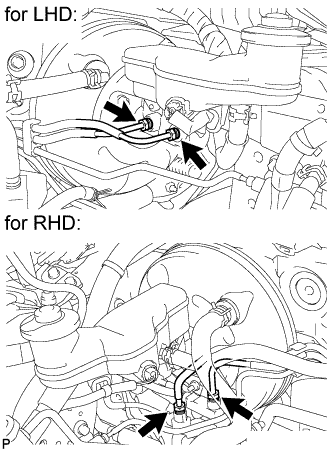
Note
-
If the master cylinder is reinstalled or if the reservoir becomes empty, bleed the master cylinder.
-
To prevent brake fluid from damaging painted surfaces, cover any surrounding parts with a piece of cloth.
-
Using a union nut wrench (12 mm), disconnect the 2 brake tubes from the master cylinder.
-
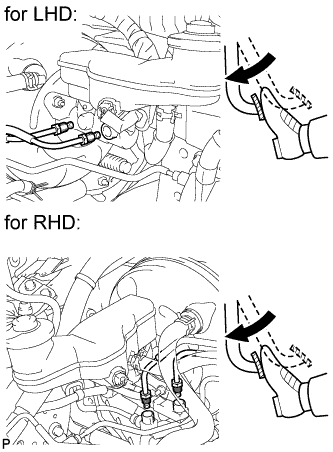
Slowly depress the brake pedal and hold it (Procedure 1).
-
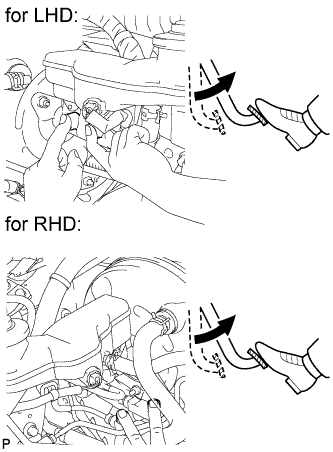
Cover the 2 outer holes with fingers, and release the brake pedal (Procedure 2).
-
Repeat (Procedure 1) and (Procedure 2), 3 or 4 times.
-
Using a union nut wrench (12 mm), connect the 2 brake tubes to the master cylinder.
- Torque:
- 20 N*m { 200 kgf*cm, 14 ft.*lbf }
Note
Use the formula to calculate special torque values for situations where a union nut wrench is combined with a torque wrench Click here.
-
-
BLEED BRAKE LINE
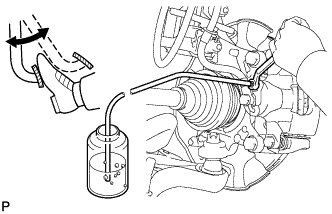
Note
-
Bleed the brake line of the wheel farthest from the master cylinder first.
-
Add brake fluid to keep the level between the MIN and MAX lines of the reservoir while bleeding the brakes.
-
Connect a vinyl tube to the bleeder plug.
-
Depress the brake pedal several times, and then loosen the bleeder plug with the pedal depressed (Procedure 1).
-
When fluid stops coming out, tighten the bleeder plug, and then release the brake pedal (Procedure 2).
-
Repeat (Procedure 1) and (Procedure 2) until all the air in the fluid is completely bled out.
-
Tighten the bleeder plug completely.
- Torque:
- Front bleeder plug
- 8.3 N*m { 85 kgf*cm, 73 in.*lbf }
- Rear bleeder plug (for Disc Brake)
- 11 N*m { 112 kgf*cm, 8 ft.*lbf }
- Rear bleeder plug (for Drum Brake)
- 8.5 N*m { 87 kgf*cm, 75 in.*lbf }
-
Repeat the above procedure at each wheel to bleed the brake line.
-
-
BLEED BRAKE ACTUATOR
Note
-
After bleeding the air from the regular brake system, if the correct height or feel of the brake pedal cannot be obtained, perform air bleeding again by following the procedure below.
-
Bleeding air without the intelligent tester may lead to an injury or accident. When performing this procedure, always bleed air using the intelligent tester.
-
With the ignition switch off, depress the brake pedal several times to eliminate the vacuum pressure inside the booster.
-
Connect the intelligent tester to the DLC3 with the ignition switch off.
-
Turn the ignition switch to ON.
Note
Do not start the engine.
-
Turn the intelligent tester on.
-
Enter the following menus: Chassis / ABS/VSC/TRC / Utility / Air Bleeding.
-
Perform the bleeding at the right front wheel and left rear wheel (Procedure 1).
-
Bleed the Decrease Line.
-
Select "Decrease Line" on the intelligent tester menu display.
-
Depress the brake pedal.
-
Using the intelligent tester, operate the solenoid and at the same time, completely depress the brake pedal within 5 seconds.
Tech Tips
After operating the solenoid, the motor in the actuator operates for 5 seconds and during this time the brake pedal is pushed out.
-
Loosen the bleeder plug at the right front wheel.
Note
-
Loosen the bleeder plug at only one place.
-
Completely depress the brake pedal.
-
-
Tighten the bleeder plug, and then release the brake pedal.
- Torque:
- Front bleeder plug
- 8.3 N*m { 85 kgf*cm, 73 in.*lbf }
-
-
Bleed the Increase Line.
-
Perform brake line air bleeding at the right front wheel by depressing the brake pedal (Procedure 2).
-
Repeat (Procedure 2) until all air is completely bled out.
-
Perform the same procedure used at the right front wheel at the left rear wheel.
- Torque:
- Front bleeder plug
- 8.3 N*m { 85 kgf*cm, 73 in.*lbf }
- Rear bleeder plug (for Disc Brake)
- 11 N*m { 112 kgf*cm, 8 ft.*lbf }
- Rear bleeder plug (for Drum Brake)
- 8.5 N*m { 87 kgf*cm, 75 in.*lbf }
-
-
-
Repeat (Procedure 1) until the air is completely bled out.
-
Perform the same procedures for the left front wheel and right rear wheel line.
-
Repeat the brake line air bleeding procedure by depressing the brake pedal.
Note
Repeat the brake line air bleeding procedure at each wheel until the air is bled out.
-
-
INSPECT FOR BRAKE FLUID LEAK
-
INSPECT BRAKE FLUID LEVEL
-
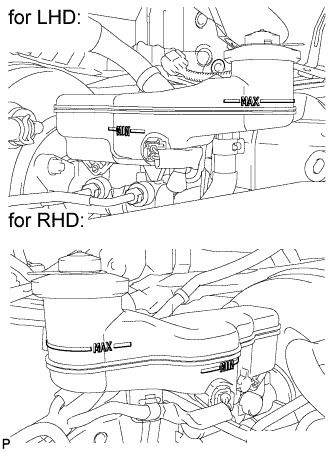
Check the brake fluid level.
If brake fluid level is lower than the MIN line, check for leaks and inspect the disc brake pads. If necessary, refill the reservoir with brake fluid to the MAX line after repair or replacement.
Brake Fluid SAE J1703 or FMVSS No. 116 DOT 3
-
-
INSTALL WINDSHIELD WIPER MOTOR AND LINK ASSEMBLY
-
Install the windshield wiper motor and link assembly Click here.
-