BRAKE MASTER CYLINDER (for RHD) REMOVAL

Note
Release the vacuum from the booster by depressing the brake pedal several times. Then remove the brake master cylinder from the brake booster.
-
REMOVE WINDSHIELD WIPER MOTOR AND LINK ASSEMBLY
-
Remove the windshield wiper motor and link assembly Click here.
-
-
DRAIN BRAKE FLUID
Note
If brake fluid leaks onto any painted surface, immediately wash it off.
-
DISCONNECT CLUTCH RESERVOIR TUBE (for Manual Transaxle)
-
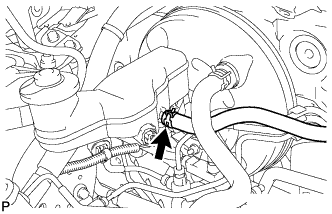
Move the clip and disconnect the clutch reservoir tube.
-
-
REMOVE BRAKE MASTER CYLINDER SUB-ASSEMBLY (w/o Stop and Start System)
-
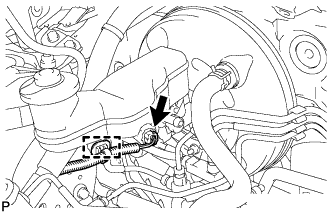
Disconnect the brake fluid level warning switch connector and disengage the clamp.
-
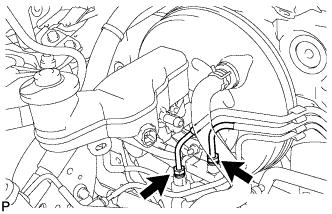
Using a union nut wrench (12 mm), disconnect the 2 brake tubes from the No. 1 brake tube way and No. 2 brake tube way.
-
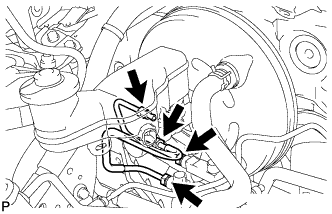
Using a union nut wrench (12 mm), loosen the No. 8 brake tube and No. 9 brake tube.
-
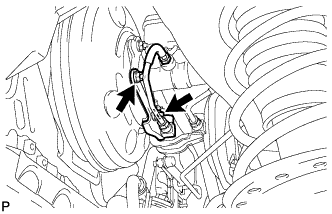
Remove the 2 nuts.
-
Remove the No. 8 brake tube and No. 2 brake tube way.
-
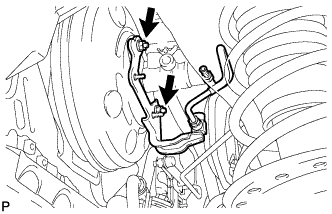
Remove the 2 nuts.
-
Remove the No. 9 brake tube and No. 1 brake tube way.
-
Remove the brake master cylinder sub-assembly.
-
Remove the O-ring from the brake master cylinder sub-assembly.
Note
-
The master cylinder requires careful handling. Do not allow the master cylinder to receive any impact, such as from being dropped. Do not reuse a master cylinder that has been dropped.
-
Do not strike or pinch the master cylinder piston, and do not cause any damage to the master cylinder piston by any other means.
-
Release the vacuum from the booster by depressing the brake pedal several times. Then remove the brake master cylinder from brake booster.
-
When installing the master cylinder to the brake booster, or when removing the master cylinder from the brake booster, make sure that the master cylinder is kept horizontal or its tip faces downward (the piston faces upward) to prevent the master cylinder piston from falling off.
-
Do not allow any foreign objects to contaminate the master cylinder piston. If a foreign object gets on the piston, remove it by using a piece of cloth and then apply an even layer of lithium soap base glycol grease around the circumference (sliding part) of the piston.
-
Do not use any other type of grease or fluid.
-
-
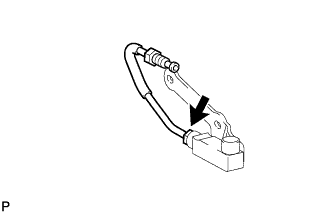
Remove the No. 8 brake tube from the No. 2 brake tube way.
-
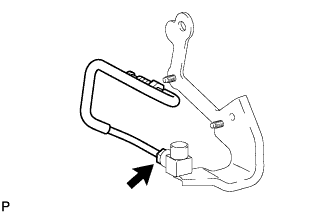
Remove the No. 9 brake tube from the No. 1 brake tube way.
-
-
REMOVE BRAKE MASTER CYLINDER SUB-ASSEMBLY (w/ Stop and Start System)
-
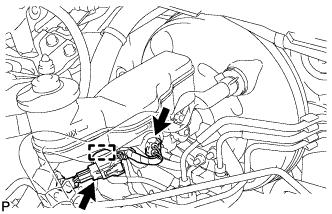
Disconnect the brake fluid level warning switch connector and the vacuum sensor wire connector, and disengage the clamp.
-
Using a union nut wrench (12 mm), disconnect the 2 brake tubes from the No. 1 brake tube way and No. 2 brake tube way.
-
Using a union nut wrench (12 mm), loosen the No. 8 brake tube and No. 9 brake tube.
-
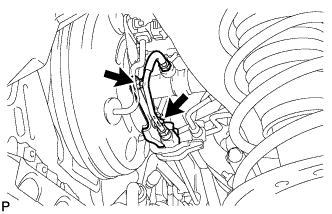
Remove the 2 nuts.
-
Remove the No. 8 brake tube and No. 2 brake tube way.
-
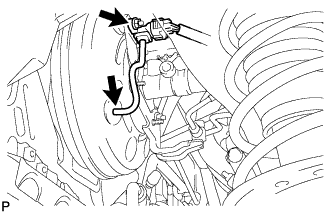
Disconnect the vacuum hose.
-
Remove the nut and vacuum sensor assembly.
-
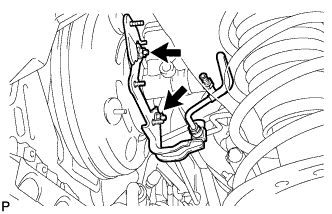
Remove the 2 nuts.
-
Remove the No. 9 brake tube and No. 1 brake tube way.
-
Remove the brake master cylinder sub-assembly.
-
Remove the O-ring from the brake master cylinder sub-assembly.
Note
-
The master cylinder requires careful handling. Do not allow the master cylinder to receive any impact, such as from being dropped. Do not reuse a master cylinder that has been dropped.
-
Do not strike or pinch the master cylinder piston, and do not cause any damage to the master cylinder piston by any other means.
-
Release the vacuum from the booster by depressing the brake pedal several times. Then remove the brake master cylinder from brake booster.
-
When installing the master cylinder to the brake booster, or when removing the master cylinder from the brake booster, make sure that the master cylinder is kept horizontal or its tip faces downward (the piston faces upward) to prevent the master cylinder piston from falling off.
-
Do not allow any foreign objects to contaminate the master cylinder piston. If a foreign object gets on the piston, remove it by using a piece of cloth and then apply an even layer of lithium soap base glycol grease around the circumference (sliding part) of the piston.
-
Do not use any other type of grease or fluid.
-
-
Remove the No. 8 brake tube from the No. 2 brake tube way.
-
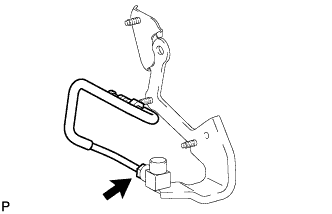
Remove the No. 9 brake tube from the No. 1 brake tube way.
-