ENGINE ASSEMBLY INSTALLATION

Note
-
When the transaxle is removed, be sure to use a new clutch release with bearing cylinder and new installation bolts. Removal of the transaxle allows the compressed clutch release with bearing cylinder to return to its original position, and dust from the moving section could damage the seal of the clutch release with bearing cylinder, possibly causing clutch fluid leaks.
-
After replacing the engine assembly, perform the both "injector Compensation" and "Pilot Quantity Learning Values Reset" functions using the intelligent tester.
-
INSTALL TRANSVERSE ENGINE ENGINE MOUNTING INSULATOR
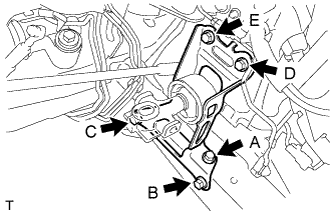
-
Temporarily tighten the bolt A.
-
Temporarily tighten the bolt E.
-
Tighten the bolt B and bolt C.
- Torque:
- 52 N*m { 530 kgf*cm, 38 ft.*lbf }
-
Tighten the bolt A.
- Torque:
- 52 N*m { 530 kgf*cm, 38 ft.*lbf }
-
Tighten the bolt D and bolt E and install the transverse engine engine mounting insulator.
- Torque:
- 52 N*m { 530 kgf*cm, 38 ft.*lbf }
-
-
INSTALL REAR BATTERY BRACKET REINFORCEMENT
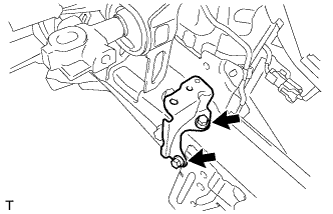
-
Install the rear battery bracket reinforcement with the 2 bolts.
- Torque:
- 17 N*m { 175 kgf*cm, 13 ft.*lbf }
-
-
INSTALL DRIVE PLATE AND RING GEAR SUB-ASSEMBLY (for CVT)
-
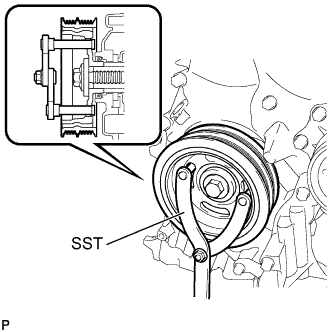
Using SST, hold the crankshaft.
- SST
- 09960-10010 ( 09962-01000, 09963-01000 )
-
Clean the 6 bolts and the 6 bolt holes.
-
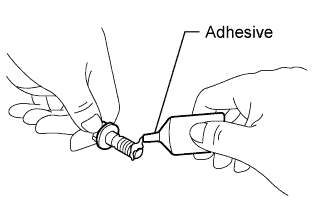
Apply adhesive to 2 or 3 threads of the bolt end.
Adhesive Toyota Genuine Adhesive 1324, Three Bond 1324 or equivalent. -
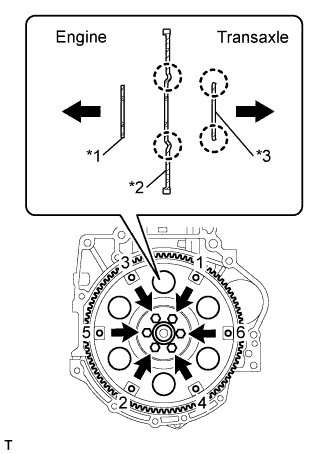
Text in Illustration *1 Front Drive Spacer *2 Drive Plate *3 Rear Drive Plate Spacer Install the front drive plate spacer.
Tech Tips
The front spacer is reversible.
-
Install the drive plate and rear drive plate spacer onto the crankshaft.
-
In several steps, uniformly install and tighten the 6 bolts in the sequence shown in the illustration.
- Torque:
- 78 N*m { 800 kgf*cm, 58 ft.*lbf }
-
-
INSTALL CONTINUOUSLY VARIABLE TRANSAXLE ASSEMBLY (for CVT)
-
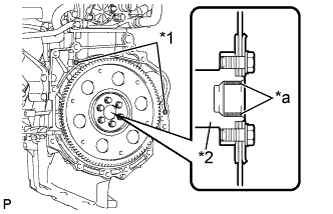
Text in Illustration *1 Knock Pin *2 Crankshaft *a Contacts Torque Converter Assembly Centerpiece Apply clutch spline grease to the circumference of the crankshaft that contacts the torque converter assembly centerpiece.
Clutch spline grease Toyota Genuine Clutch Spline Grease or equivalent Maximum grease amount Approximately 1 g (0.0353 oz) -
Confirm that the 2 knock pins are installed on the engine assembly and are not damaged.
-
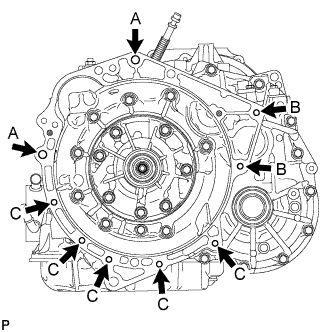
Install the continuously variable transaxle assembly to the engine assembly with the 9 bolts.
- Torque:
- Bolt A
- 64 N*m { 653 kgf*cm, 47 ft.*lbf }
- Bolt B
- 37 N*m { 377 kgf*cm, 27 ft.*lbf }
- Bolt C
- 39 N*m { 398 kgf*cm, 29 ft.*lbf }
Note
-
Make sure that the wire harness or similar items are not pinched between the contact surfaces.
-
Do not use excess force when installing the continuously variable transaxle assembly.
-
When mounting the continuously variable transaxle assembly to the engine assembly, make sure to securely fit the knock pins into the knock holes.
-
Check that the torque converter assembly rotates.
-
When tightening the bolts, be sure that the mating surfaces of the engine assembly and the continuously variable transaxle assembly are in close contact with one another.
Tech Tips
-
Bolt A: 45 mm (1.77 in.)
-
Bolt B: 45 mm (1.77 in.)
-
Bolt C: 35 mm (1.38 in.)
Bolt length
-
-
INSTALL DRIVE PLATE AND TORQUE CONVERTER CLUTCH SETTING BOLT (for CVT)
-
Clean and degrease the 6 drive plate and torque converter setting bolts.
-
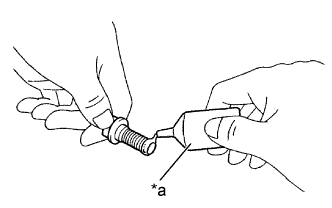
Text in Illustration *a Adhesive Apply adhesive to 2 or 3 threads on the ends of the 6 drive plate and torque converter setting bolts.
Adhesive Toyota Genuine Adhesive 1324, Three Bond 1324 or equivalent Note
To prevent contamination by foreign matter, install immediately after applying adhesive.
-
Use SST to hold the crankshaft pulley in place.
- SST
- 09960-10010 ( 09962-01000, 09963-01000 )
-
Install the 6 drive plate and torque converter setting bolts.
- Torque:
- 28 N*m { 286 kgf*cm, 21 ft.*lbf }
Note
-
First install the black-colored bolt, and then the remaining 5 silver-colored bolts.
-
Do not start the engine for at least 1 hour after installing the drive plate and torque converter setting bolts.
-
-
INSTALL STARTER ASSEMBLY
-
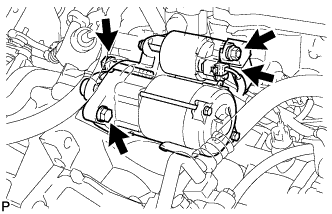
Install the starter assembly with the 2 bolts.
- Torque:
- 37 N*m { 377 kgf*cm, 27 ft.*lbf }
-
Connect the connector.
-
Connect the cable to terminal 30 with the nut.
- Torque:
- 9.8 N*m { 100 kgf*cm, 87 in.*lbf }
-
Close the terminal cap.
-
-
INSTALL FLYWHEEL SUB-ASSEMBLY (for Manual Transaxle)
-
Using SST, hold the crankshaft.
- SST
- 09960-10010 ( 09962-01000, 09963-01000 )
-
Clean the 6 bolts and the 6 bolt holes.
-
Apply adhesive to 2 or 3 threads of the bolt end.
Adhesive Toyota Genuine Adhesive 1324, Three Bond 1324 or equivalent. -
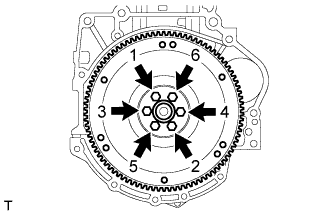
Install the flywheel sub-assembly with the 6 bolts in the order shown in the illustration.
- Torque:
- 78 N*m { 800 kgf*cm, 58 ft.*lbf }
-
-
INSTALL CLUTCH DISC ASSEMBLY (for Manual Transaxle)
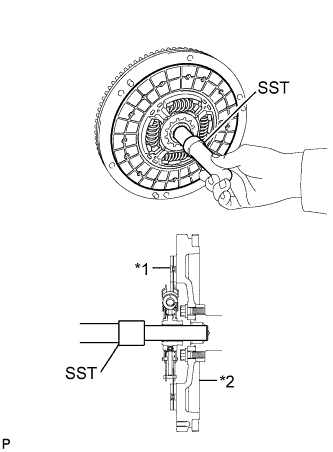
Text in Illustration *1 Clutch disc *2 Flywheel
-
Insert SST into the clutch disc assembly, and then insert them both into the flywheel sub-assembly.
- SST
- 09301-00210
Note
Insert the clutch disc assembly in the correct direction.
-
-
INSTALL CLUTCH COVER ASSEMBLY (for Manual Transaxle)
Text in Illustration *1 Matchmark
-
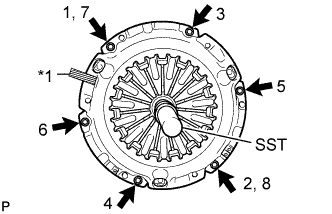
Align the matchmark on the clutch cover assembly with that on the flywheel sub-assembly.
-
Following the procedures shown in the illustration, tighten the 6 bolts in order, starting with the bolt located near the knock pin at the top.
- SST
- 09301-00210
- Torque:
- 19 N*m { 195 kgf*cm, 14 ft.*lbf }
Tech Tips
-
Following the order in the illustration, tighten the bolts evenly one at a time.
-
Move SST up and down, right and left lightly after checking that the disc is in the center, and tighten the bolts.
-
-
INSPECT AND ADJUST CLUTCH COVER ASSEMBLY (for Manual Transaxle)
-
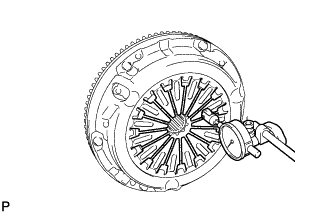
Using a dial indicator with a roller instrument, check the diaphragm spring tip alignment.
Maximum non-alignment 0.5 mm (0.020 in.) -
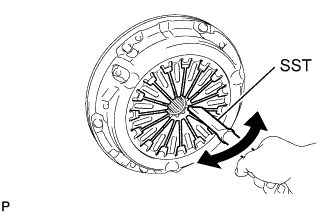
If the alignment is not as specified, using SST, adjust the diaphragm spring tip alignment.
- SST
- 09333-00013
-
-
INSTALL CLUTCH RELEASE WITH BEARING CYLINDER ASSEMBLY (for Manual Transaxle)
-
Clean and degrease all installation surfaces for the clutch release with bearing cylinder assembly.
-
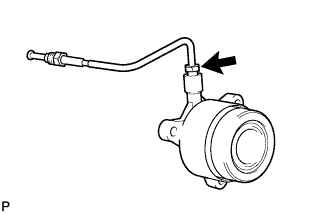
Temporarily tighten the bleeder clutch release tube onto the clutch release with bearing cylinder assembly.
-
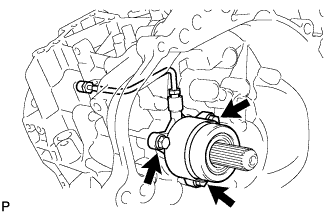
Install the new clutch release with the bearing cylinder with the 3 new bolts.
Note
-
The clutch release with bearing cylinder assembly and installation bolts cannot be reused and must be replaced with new ones.
-
Clean and degrease all installation surfaces and make sure the clutch release with bearing cylinder assembly fits securely with the transaxle during installation. The first bolt should be tightened by hand the clutch release with bearing cylinder assembly.
-
Ensure that none of the clutch disc spline grease adheres to the clutch release with bearing cylinder assembly.
-
The clutch release with bearing cylinder assembly cannot be disassembled.
- Torque:
- 23 N*m { 229 kgf*cm, 17 ft.*lbf }
-
-
Install the clutch tube boot onto the transaxle.
-
Install the release cylinder bleeder plug onto the clutch release bleeder.
- Torque:
- 8.4 N*m { 86 kgf*cm, 74 in.*lbf }
-
Install the release cylinder bleeder plug cap.
-
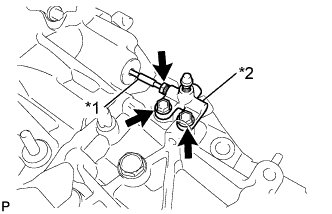
Text in Illustration *1 Bleeder clutch release tube *2 Clutch release bleeder Temporarily tighten the bleeder clutch release tube onto the clutch release bleeder.
-
Temporarily tighten the 2 bolts and install the clutch release bleeder.
-
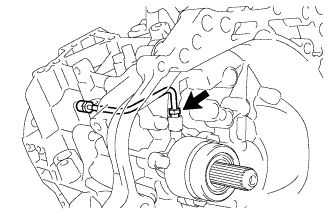
Using a union nut wrench 10 mm, install the bleeder clutch release tube.
- Torque:
- 15 N*m { 155 kgf*cm, 11 ft.*lbf }
Note
Use the formula to calculate special torque values for situations when union nut wrench is combined with a torque wrench Click here.
-
-
INSTALL CLUTCH RELEASE BLEEDER SUB-ASSEMBLY (for Manual Transaxle)
-
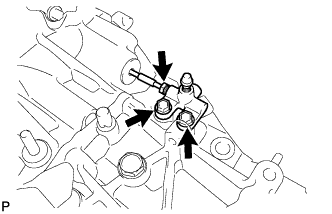
Separate the bleeder clutch release tube from the clutch release bleeder.
-
Remove the 2 bolts and the clutch release bleeder.
-
-
INSPECT CLUTCH PIPE LINE (for Manual Transaxle)
-
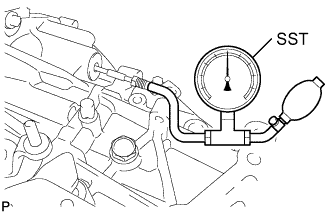
Using SST, apply pressure of 0.1 MPa to the clutch pipe location shown in the illustration and confirm that pressure is maintained for 15 seconds or more.
- SST
- 09992-00242
If the pressure drops, replace the bleeder clutch release tube.
-
-
INSTALL CLUTCH RELEASE BLEEDER SUB-ASSEMBLY (for Manual Transaxle)
-
Text in Illustration *1 Bleeder clutch release tube *2 Clutch release bleeder Temporarily tighten the bleeder clutch release tube onto the clutch release bleeder.
-
Install the 2 bolts and clutch release bleeder.
- Torque:
- 17 N*m { 170 kgf*cm, 12 ft.*lbf }
-
Using a union nut wrench 10 mm, install the bleeder clutch release tube.
- Torque:
- 15 N*m { 155 kgf*cm, 11 ft.*lbf }
Note
Use the formula to calculate special torque values for situations when union nut wrench is combined with a torque wrench Click here.
-
-
INSTALL BLEEDER TO ACCUMULATOR TUBE (for Manual Transaxle)
-
Install the bleeder clutch release tube with the bolt.
- Torque:
- 12 N*m { 122 kgf*cm, 9 ft.*lbf }
-
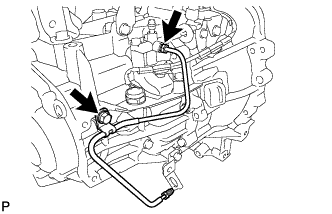
Using a union nut wrench 10 mm, install the bleeder clutch release tube.
- Torque:
- 15 N*m { 155 kgf*cm, 11 ft.*lbf }
Note
Use the formula to calculate special torque values for situations when union nut wrench is combined with a torque wrench Click here.
-
-
INSTALL MANUAL TRANSAXLE ASSEMBLY (for Manual Transaxle)
-
Make sure that the knock pins are not loose, bent, damaged or scratched and then install the transaxle onto the engine with the contact surfaces of the engine and transaxle flat against each other.
-
Align the input shaft with the clutch disc and install the manual transaxle onto the engine.
-
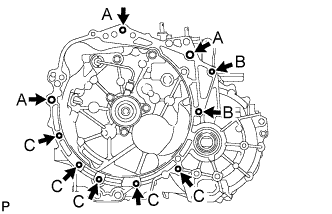
Install the 10 bolts.
- Torque:
- Bolt A
- 64 N*m { 653 kgf*cm, 47 ft.*lbf }
- Bolt B
- 37 N*m { 377 kgf*cm, 27 ft.*lbf, (for Flange Bolt) }
- 33 N*m { 337 kgf*cm, 24 ft.*lbf, (for Bolt with Washer) }
- Bolt C
- 39 N*m { 398 kgf*cm, 29 ft.*lbf }
Note
Insert knock pins into the knock pin holes securely so that the end face of the transaxle assembly fits close against the engine assembly before tightening the bolts.
-
-
INSTALL EXHAUST MANIFOLD
-
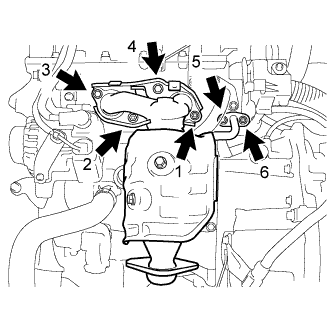
Place the 2 new gaskets and install the exhaust manifold, tightening the nuts and bolts in the sequence shown in the illustration.
- Torque:
- 28 N*m { 286 kgf*cm, 21 ft.*lbf }
-
-
INSTALL NO. 1 EXHAUST MANIFOLD HEAT INSULATOR
-
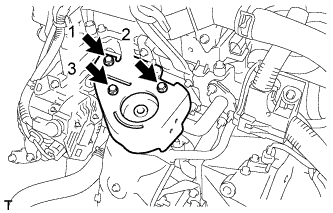
Install the No. 1 exhaust manifold heat insulator, tightening the nuts and bolts in the sequence shown in the illustration.
- Torque:
- 8.5 N*m { 87 kgf*cm, 75 in.*lbf }
-
-
INSTALL AIR FUEL RATIO SENSOR
-
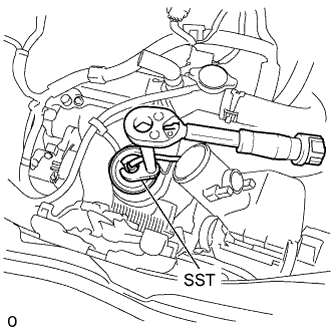
Using SST, install the air fuel ratio sensor to the exhaust manifold.
- SST
- 09224-00010
- Torque:
- without SST
- 44 N*m { 449 kgf*cm, 32 ft.*lbf }
- with SST
- 40 N*m { 408 kgf*cm, 30 ft.*lbf }
Note
-
The "with SST" torque value is effective when using SST with a fulcrum length of 30 mm (1.18 in.).
-
The "with SST" torque value is effective when using a torque wrench with a fulcrum length of 300 mm (11.81 in.) Click here.
-
This torque value is effective when SST is parallel to the torque wrench.
-
Install the wire harness clamp and connect the air fuel ratio sensor connector.
-
-
INSTALL MANIFOLD STAY
-
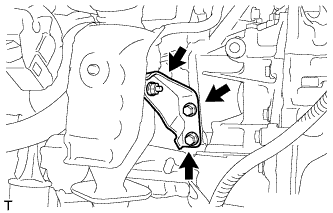
After temporarily tightening the manifold stay until the nut is firm against the exhaust manifold, fully tighten the manifold stay to the block with the 2 bolts and then fully tighten the nut on the exhaust manifold side.
- Torque:
- 24 N*m { 245 kgf*cm, 18 ft.*lbf }
-
-
INSTALL ENGINE ASSEMBLY WITH TRANSAXLE
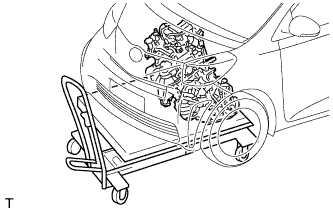
-
Set the engine assembly with transaxle on the engine lifter.
-
Operate the engine lifter and lift the engine assembly with transaxle to the position where the engine mounting insulator RH and transverse engine engine mounting insulator can be installed.
CAUTION:
Do not raise the engine more than necessary. If the engine is raised excessively, the vehicle may also be lifted up.
Note
-
Make sure that the engine is clear of all wiring and hoses.
-
While raising the engine into the vehicle, do not allow it to contact the vehicle.
-
-
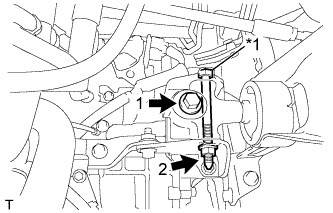
Text in Illustration *1 Through Bolt Temporarily install the transverse engine engine mounting insulator with the through bolt.
-
Tighten the through bolt and bolt in the order shown in the illustration.
- Torque:
- Through bolt
- 52 N*m { 530 kgf*cm, 38 ft.*lbf }
- Torque:
- Bolt
- 64 N*m { 653 kgf*cm, 47 ft.*lbf }
-
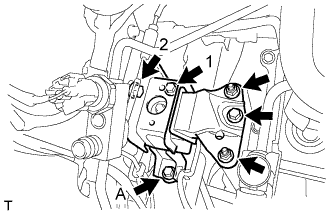
Temporarily tighten the bolt A.
-
Tighten the 2 bolts on the vehicle side in the sequence shown in the illustration.
- Torque:
- 52 N*m { 530 kgf*cm, 38 ft.*lbf }
-
Fully tighten the bolt A.
- Torque:
- 52 N*m { 530 kgf*cm, 38 ft.*lbf }
-
Tighten the bolt and the 2 nuts on the engine side and install the engine mounting insulator RH.
- Torque:
- 52 N*m { 530 kgf*cm, 38 ft.*lbf }
-
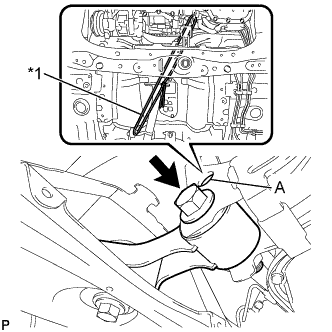
Text in Illustration *1 Rope Secure the hole (A) shown in the illustration and the body with a piece of rope.
Note
When installing the engine assembly with the transaxle, make sure that the engine assembly does not move to the vehicle front, to prevent it from contacting other parts.
-
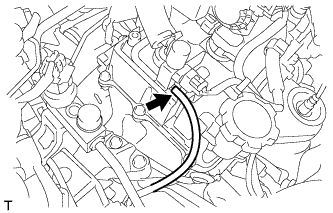
Connect the vacuum hose to the vacuum switching valve.
-
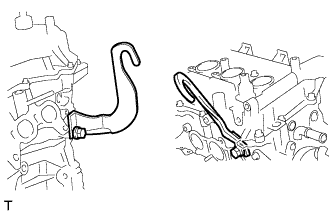
Remove the 2 bolts and the 2 engine hangers.
-
-
INSTALL ENGINE MOVING CONTROL ROD
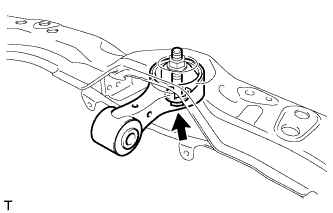
-
Install the engine moving control rod with the bolt.
- Torque:
- 100 N*m { 1020 kgf*cm, 74 ft.*lbf }
-
-
INSTALL ENGINE MOVING CONTROL ROD COVER (for Cold Area)
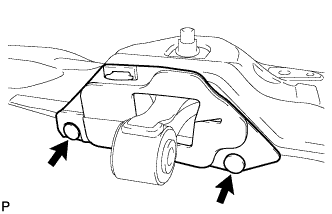
-
Install the engine moving control rod cover with the 2 clips.
-
-
INSTALL COOLER COMPRESSOR ASSEMBLY
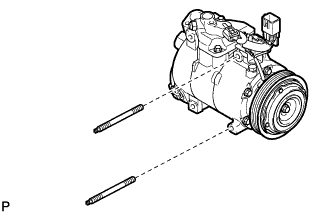
-
Using a "TORX" socket wrench (E8), install the compressor with the 2 stud bolts.
- Torque:
- 15 N*m { 153 kgf*cm, 11 ft.*lbf }
-
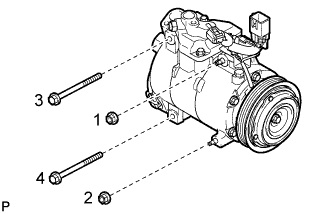
Install the compressor with the 2 bolts and the 2 nuts.
- Torque:
- 25 N*m { 250 kgf*cm, 18 ft.*lbf }
Tech Tips
Tighten the bolts and the nuts in the order shown in the illustration.
-
Connect the connector.
-
-
INSTALL DISCHARGE HOSE SUB-ASSEMBLY
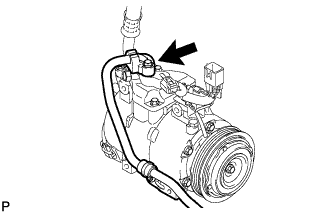
-
Remove the attached vinyl tape from the discharge hose.
-
Sufficiently apply compressor oil to a new O-ring and the fitting surface of the cooler compressor.
Compressor oil ND-OIL 8 or equivalent -
Install the O-ring onto the discharge hose.
-
Connect the discharge hose to the cooler compressor with the bolt.
- Torque:
- 9.8 N*m { 100 kgf*cm, 87 in.*lbf }
-
Install the discharge hose bracket installing bolt.
- Torque:
- 9.8 N*m { 100 kgf*cm, 87 in.*lbf }
-
-
INSTALL SUCTION HOSE SUB-ASSEMBLY
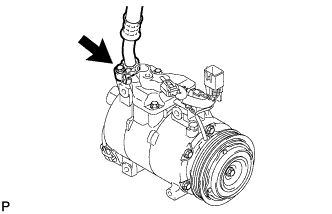
-
Remove the attached vinyl tape from the suction hose.
-
Sufficiently apply compressor oil to a new O-ring and the fitting surface of the cooler compressor.
Compressor oil ND-OIL 8 or equivalent -
Install the O-ring onto the suction hose.
-
Connect the suction hose to the cooler compressor with the bolt.
- Torque:
- 9.8 N*m { 100 kgf*cm, 87 in.*lbf }
-
-
INSTALL FRONT FRAME ASSEMBLY
-
Support the front frame assembly with 4 wooden blocks and the jack.
-
Provisionally install the front frame assembly onto the body with the 6 bolts.
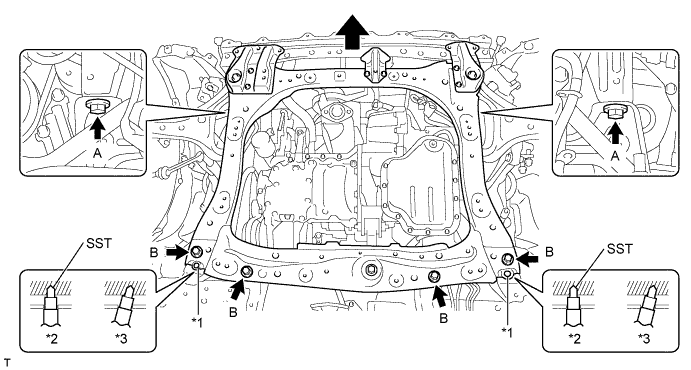
Text in Illustration *1 Datum Hole *2 OK *3 NG Bolt Underhead Length (mm) A 38 B 69 -
By inserting SST into the datum holes in the front frame assembly RH and LH alternately, tighten bolts A and B on both sides to the specified torque, in several steps.
- SST
- 09670-00011
- Torque:
- 108 N*m { 1101 kgf*cm, 80 ft.*lbf, for bolt A }
- 120 N*m { 1224 kgf*cm, 89 ft.*lbf, for bolt B }
Note
-
Insert SST into the datum hole in a vertical orientation.
-
If SST can not be inserted into the datum hole vertically, loosen all the bolts and then insert SST again.
-
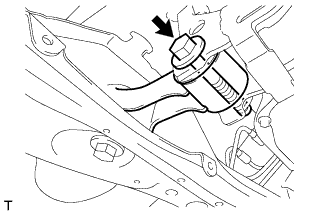
Install the engine moving control rod to engine mounting control bracket with the bolt.
- Torque:
- 120 N*m { 1224 kgf*cm, 89 ft.*lbf }
-
Remove the strong rope from engine mounting control bracket and body.
-
-
INSTALL FRONT DRIVE SHAFT ASSEMBLY LH
-
Coat the spline of the inboard joint with gear oil.
-
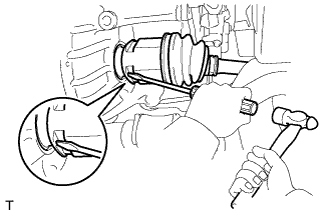
Align the inboard joint splines and install the drive shaft with a screwdriver and hammer.
Note
-
Face the cut area of the front drive inboard joint hole snap ring downward.
-
Do not damage the oil seal.
-
Do not damage the inboard joint boot.
Tech Tips
Confirm whether the drive shaft is securely driven in by checking the reaction force and sound.
-
-
-
INSTALL FRONT DRIVE SHAFT ASSEMBLY RH
-
Coat the spline of the inboard joint shaft assembly with gear oil.
-
Install the drive shaft assembly.
-
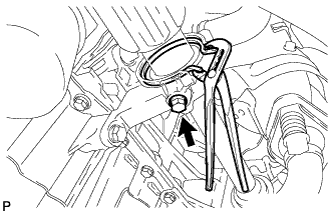
Using water pump pliers, install a new bearing bracket hole snap ring.
Note
Do not damage the boot and oil seal.
-
Install a new bolt.
- Torque:
- 32 N*m { 330 kgf*cm, 24 ft.*lbf }
Note
Before installing a new bolt, check that there is no rubber on the tip.
-
-
INSTALL FRONT AXLE ASSEMBLY LH
-
Push the front axle out of the vehicle to align the splines of the drive shaft with the front axle and insert the front axle.
Note
-
Do not push the front axle further out of the vehicle than is necessary.
-
Do not damage the outboard joint boot.
-
Check for any foreign matter on the speed sensor rotor and insertion area.
-
Do not damage the speed sensor rotor.
-
-
-
INSTALL FRONT AXLE ASSEMBLY RH
Tech Tips
The installation procedure for the RH side is the same as that for the LH side.
-
INSTALL FRONT NO. 1 SUSPENSION ARM SUB-ASSEMBLY LOWER LH
-
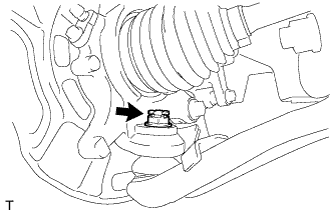
Install the lower arm onto the steering knuckle with a new castle nut.
- Torque:
- 98 N*m { 999 kgf*cm, 72 ft.*lbf }
Note
If the holes for the clip are not aligned, tighten the nut by a further turn of up to 60°.
-
Install a new clip.
-
-
INSTALL FRONT NO. 1 SUSPENSION ARM SUB-ASSEMBLY LOWER RH
Tech Tips
The installation procedure for the RH side is the same as that for the LH side.
-
INSTALL FRONT STABILIZER LINK ASSEMBLY LH
-
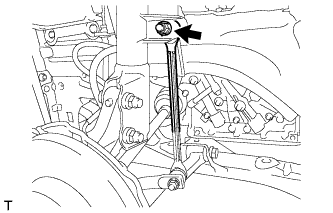
Install the stabilizer link with the nut.
- Torque:
- 74 N*m { 755 kgf*cm, 55 ft.*lbf }
Tech Tips
If the ball joint turns together with the nut, use a socket hexagon wrench 6 to hold the stud.
-
-
INSTALL FRONT STABILIZER LINK ASSEMBLY RH
Tech Tips
The installation procedure for the RH side is the same as that for the LH side.
-
INSTALL FRONT SPEED SENSOR LH
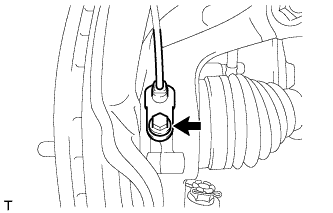
-
Install the speed sensor onto the steering knuckle with the bolt.
- Torque:
- 8.5 N*m { 87 kgf*cm, 75 in.*lbf }
Note
-
Check that the speed sensor tip and installation area are free of foreign matter.
-
Install the speed sensor without turning it from its original installation angle.
-
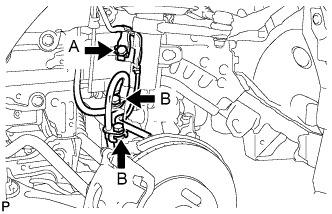
Install the flexible hose and speed sensor with the bolt.
- Torque:
- Bolt A
- 29 N*m { 296 kgf*cm, 21 ft.*lbf }
- Bolt B
- 29 N*m { 300 kgf*cm, 22 ft.*lbf }
Note
Install the flexible hose and speed sensor without twisting them.
-
-
INSTALL FRONT SPEED SENSOR RH
Tech Tips
The installation procedure for the RH side is the same as that for the LH side.
-
INSTALL FRONT AXLE SHAFT LH NUT
-
Clean the threaded parts on the drive shaft and axle hub nut using a non-residue solvent.
Note
-
Be sure to perform this work for a new drive shaft.
-
Keep the threaded part free of oil and foreign objects.
-
-
Using a 30 mm deep socket wrench, install a new axle hub nut.
- Torque:
- 216 N*m { 2203 kgf*cm, 159 ft.*lbf }
-
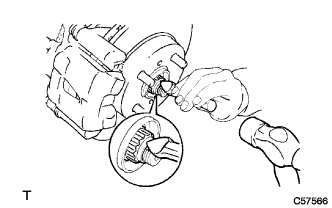
Using a chisel and hammer, stake the axle hub nut.
-
-
INSTALL FRONT AXLE SHAFT RH NUT
Tech Tips
The installation procedure for the RH side is the same as that for the LH side.
-
INSTALL UNION TO CHECK VALVE HOSE
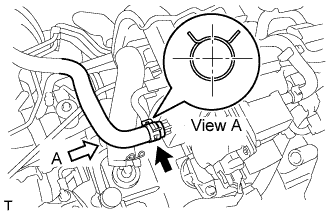
-
Install the union to check valve hose with the clip.
Tech Tips
Install the clip as shown in the illustration.
-
-
INSTALL NO. 1 FUEL VAPOR FEED HOSE
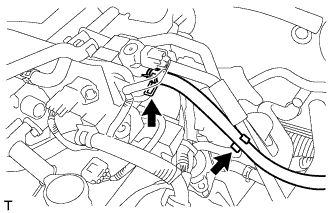
-
Install the No. 1 fuel vapor feed hose with the clip.
-
Install the No. 1 fuel vapor feed hose to the hose clamp.
-
-
INSTALL NO. 1 CLUTCH HOSE (for Manual Transaxle)
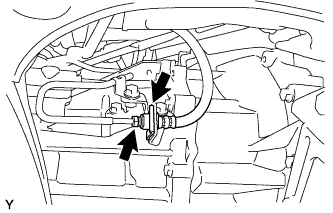
-
Install the a new clip.
-
Using a union nut wrench 10 mm, connect the No. 1 clutch hose to the clutch release cylinder to flexible hose tube.
- Torque:
- 15 N*m { 155 kgf*cm, 11 ft.*lbf }
Note
Use the formula to calculate special torque values for situations where union nut wrench is combined with a torque wrench Click here.
-
-
INSTALL TRANSMISSION CONTROL CABLE ASSEMBLY (for CVT)
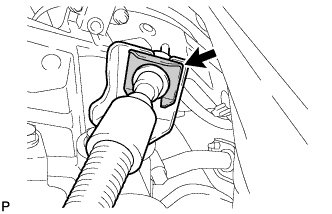
-
Install the transmission control cable to the No. 1 transmission control cable bracket, using a new clip.
-
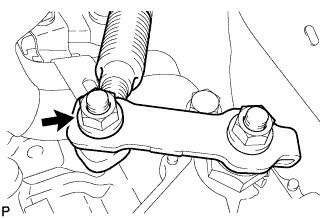
Using the nut, connect the transmission control cable to the transmission control shaft lever.
- Torque:
- 12 N*m { 122 kgf*cm, 9 ft.*lbf }
-
-
INSTALL TRANSMISSION CONTROL CABLE ASSEMBLY (for Manual Transaxle)
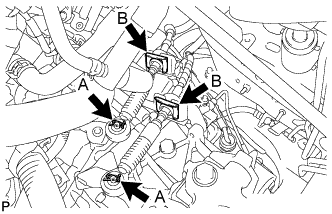
-
Install the 2 new clips <B> onto the transmission control cable.
-
Connect the transmission control cable with the 2 clips <A> onto the transaxle.
-
-
INSTALL HEATER WATER HOSE OUTLET
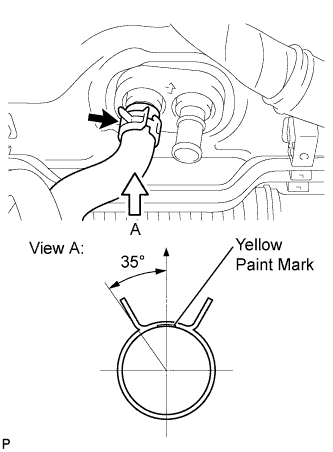
-
Install the heater water outlet hose onto the heater unit.
Tech Tips
Perform the installation with the hose clip and mark at the correct angle.
-
-
INSTALL HEATER WATER HOSE INLET
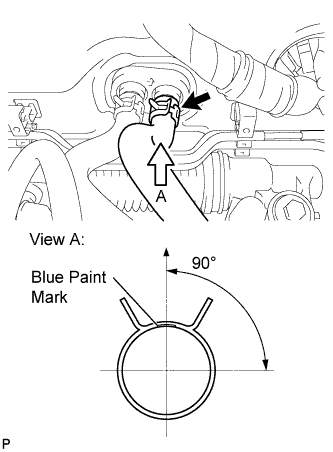
-
Install the heater water inlet hose onto the heater unit.
Tech Tips
Perform the installation with the hose clip and mark at the correct angle.
-
-
INSTALL FUEL TUBE SUB-ASSEMBLY
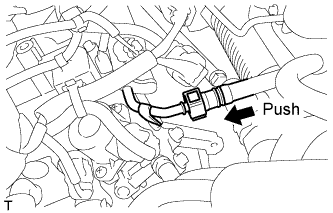
-
Push the tube connector into the pipe until the tube connector makes a "click" sound.
Note
-
Check whether there is any damage or foreign matter on the connected part of the fuel pipe.
-
Check that the fuel tube connector and the pipe are securely connected by pulling on them after connecting.
-
-
-
INSTALL EFI FUEL PIPE CLAMP
-
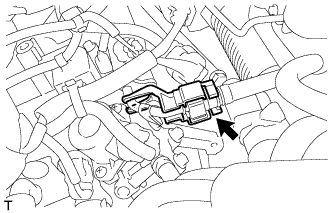
Install the No. 1 fuel pipe clamp.
-
-
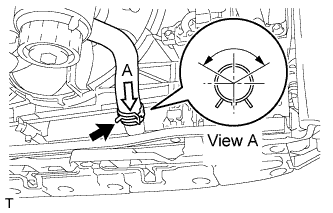
CONNECT NO. 2 RADIATOR HOSE
-
Connect the No. 2 radiator hose with the clip.
Tech Tips
Install the clip as shown in the illustration.
-
-
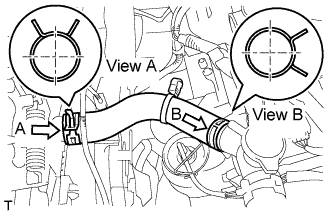
INSTALL NO. 3 RADIATOR HOSE
-
Install the No. 3 radiator hose with the 2 clips.
Tech Tips
Install the clip as shown in the illustration.
-
-
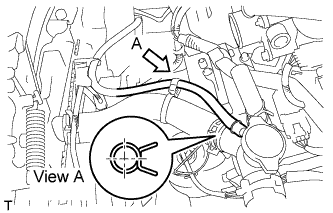
CONNECT RADIATOR RESERVOIR TANK HOSE
-
Connect the radiator reservoir tank hose with the clip.
Tech Tips
Install the clip as shown in the illustration.
-
-
INSTALL FRONT BUMPER COVER
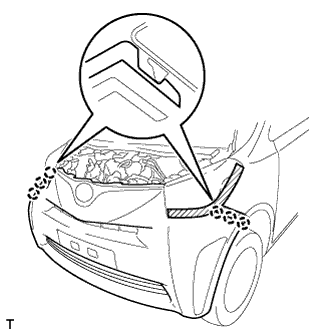
-
Engage the 6 claws and install the front bumper cover.
-
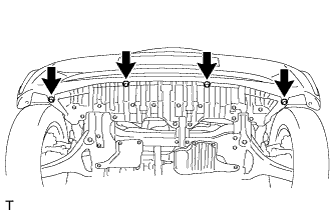
Tighten the 4 screws.
-
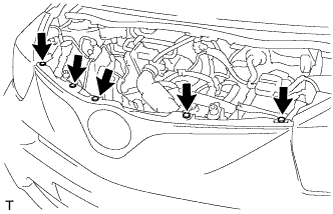
Install the 5 clips.
-
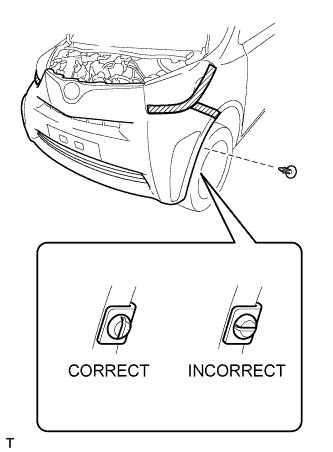
Install the pin hold clip.
Note
Insert the pin hold clip with the slot aligned vertically. Do not rotate the clip after inserting it. After installation, confirm that the slot is vertically.
Tech Tips
Use the same procedure for the RH and LH sides.
-
-
INSTALL ENGINE WIRE
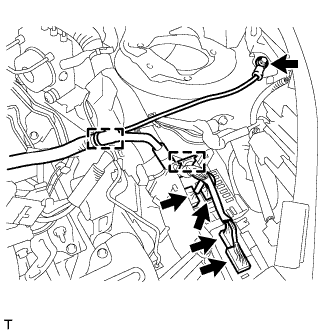
-
Connect the earth wire with the bolt.
- Torque:
- 8.0 N*m { 82 kgf*cm, 71 in.*lbf }
-
Connect the 4 engine wire connectors and 2 clamps to the engine room junction block.
-
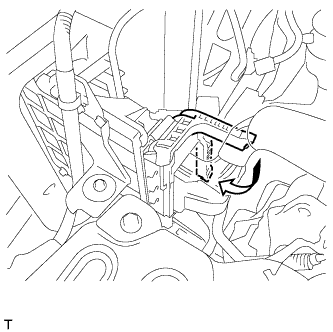
Connect the engine wire connector to the ECM.
-
Turn the lever and connect the ECM connector.
-
-
INSTALL AIR CLEANER FILTER ELEMENT SUB-ASSEMBLY
-
INSTALL AIR CLEANER AND HOSE
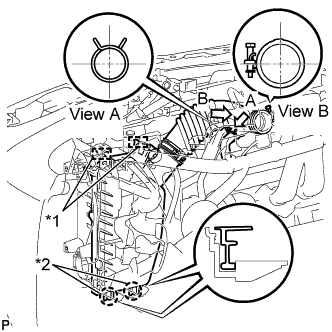
Text in Illustration *1 Clamp *2 Guide
-
Align the 2 hinges with the case guide, to insert the case into the groove, and engage the 2 clamps to install the air cleaner cap.
-
Connect the air cleaner hose with the hose clamp.
- Torque:
- 3.0 N*m { 31 kgf*cm, 27 in.*lbf }
Tech Tips
Install the clip as shown in the illustration.
-
Connect the ventilation hose with the clip
Tech Tips
Install the clip as shown in the illustration.
-
-
INSTALL NO. 2 BATTERY CARRIER
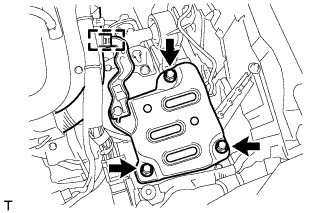
-
Install the No. 2 battery carrier with the 3 bolts.
- Torque:
- 17 N*m { 75 kgf*cm, 13 ft.*lbf }
-
Install the harness clamp.
-
-
INSTALL BATTERY TRAY
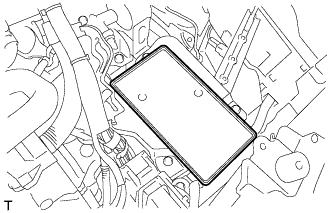
-
Install the battery tray.
-
-
INSTALL BATTERY
-
Install the battery onto the vehicle.
-
Install the battery clamp with the 2 nuts.
- Torque:
- 3.5 N*m { 36 kgf*cm, 35 in.*lbf }
-
Connect the cable to the battery terminal.
- Torque:
- 5.0 N*m { 55 kgf*cm, 43 in.*lbf }
-
-
INSTALL FAN AND GENERATOR V BELT
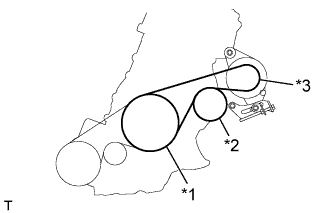
Text in Illustration *1 Crankshaft Pulley *2 Water Pump Assembly *3 Generator Assembly
-
Temporarily install the V-ribbed belt onto each pulley.
Note
-
Before installing the V-ribbed belt, check each pulley for any kind of liquid and chips.
-
Check that the ribs of the V-ribbed belt are correctly fitted into the grooves of the pulleys.
-
-
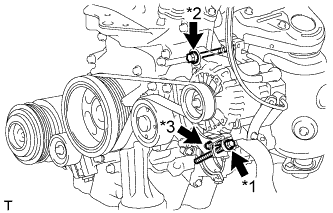
Text in Illustration *1 Bolt B *2 Bolt A *3 Bolt C Turn the bolt B to adjust the tension of the V-ribbed belt.
-
Tighten fixing bolts A and C.
- Torque:
- Bolt A
- 54 N*m { 551 kgf*cm, 40 ft.*lbf }
- Bolt C
- 21 N*m { 214 kgf*cm, 15 ft.*lbf }
-
-
INSTALL NO. 1 V (COOLER COMPRESSOR TO CRANKSHAFT PULLEY) BELT
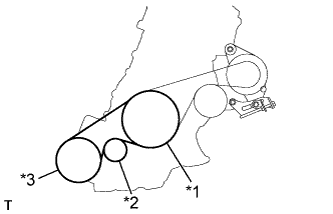
Text in Illustration *1 Crankshaft Pulley *2 Idler Pulley *3 Cooler Compressor Assembly
-
Temporarily install the V-ribbed belt onto each pulley.
Note
-
Before installing the V-ribbed belt, check each pulley for any kind of liquid and chips.
-
Check that the ribs of the V-ribbed belt are correctly fitted into the grooves of the pulleys.
-
-
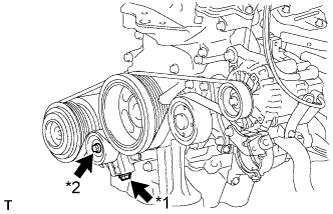
Text in Illustration *1 Bolt B *2 Bolt A Turn the bolt B to adjust the tension of the V-ribbed belt.
-
Tighten bolt A.
-
-
INSPECT FAN AND GENERATOR V BELT
-
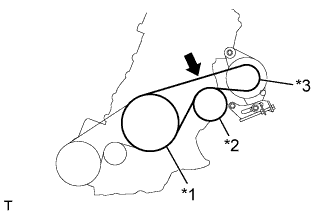
Text in Illustration *1 Crankshaft Pulley *2 Water Pump Pulley *3 Generator Pulley 
Specified Point Check the fan and generator V-ribbed belt deflection (when inspecting a vehicle without the No. 1 engine cover installed).
Deflection Pressing Force
N (kg, Ib)
New Belt
mm (in.)
Used Belt
mm (in.)
10
(10, 22)
8.0 to 10.5
(0.315 to 0.413)
11.0 to 14.0
(0.433 to 0.551)
Note
-
Check the belt deflection between the pulleys at the indicated measurement point (directly between the pulleys).
-
When installing a new belt, set its deflection value as specified.
-
When checking a belt used for over 5 minutes, confirm that the deflection value is within the specified range for a used belt.
-
When reinstalling a belt used for over 5 minutes, check whether its deflection value is within the specified range for a used belt.
-
-
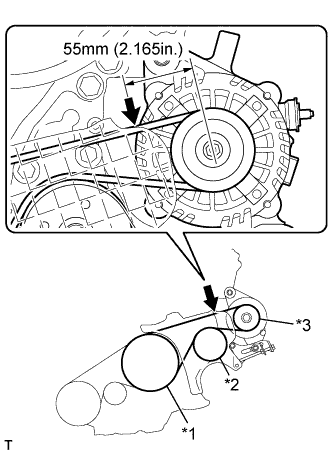
Text in Illustration *1 Crankshaft Pulley *2 Water Pump Pulley *3 Generator Pulley Specified Point Check the fan and generator V-ribbed belt deflection (when inspecting a vehicle while the No. 1 engine cover is installed).
Deflection Pressing Force
N (kg, Ib)
New Belt
mm (in.)
Used Belt
mm (in.)
10
(10, 22)
4.5 to 6.0
(0.177 to 0.236)
6.5 to 7.5
(0.256 to 0.295)
Note
-
Check the belt deflection between the pulleys at the indicated measurement point (on the left side of the generator pulley, 55 mm (2.165 in.) from the center of the pulley).
-
When installing a new belt, set its deflection value as specified.
-
When checking a belt used for over 5 minutes, confirm that the deflection value is within the specified range for a used belt.
-
When reinstalling a belt used for over 5 minutes, check whether its deflection value is within the specified range for a used belt.
-
-
-
INSPECT NO. 1 V (COOLER COMPRESSOR TO CRANKSHAFT PULLEY) BELT
-
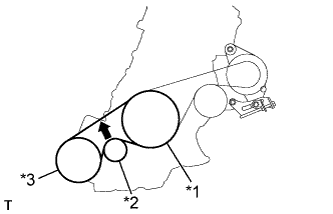
Text in Illustration *1 Crankshaft Pulley *2 Idler Pulley *3 Cooler Compressor Assembly Specified Point Check the No. 1 (cooler compressor to crankshaft pulley) belt.
Deflection Pressing Force
N (kg, Ib)
New Belt
mm (in.)
Used Belt
mm (in.)
10
(10, 22)
8.0 to 10.0
(0.315 to 0.394)
11.0 to 14.0
(0.433 to 0.551)
Note
-
Check the No. 1 (cooler compressor to crankshaft pulley) belt deflection at the specified point.
-
When installing a new belt, set its deflection value as specified.
-
When checking a belt used for over 5 minutes, confirm that the deflection value is within the specified range for a used belt.
-
When reinstalling a belt used for over 5 minutes, check whether its deflection value is within the specified range for a used belt.
-
-
-
INSTALL FRONT EXHAUST PIPE ASSEMBLY
-
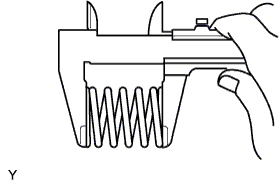
Using a vernier caliper, measure the free length of the compression springs.
Minimum Length Item Length Front 41.5 mm (1.634 in.) Tech Tips
If the length is not as specified, replace the compression spring.
-
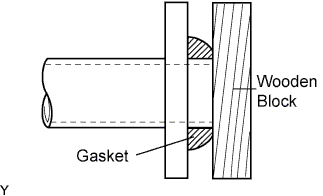
Using a plastic hammer and a wooden block, tap in a new exhaust pipe gasket until its surface is flush with the exhaust manifold.
Note
-
Install the gasket in the correct direction.
-
Do not reuse the gasket.
-
Do not damage the gasket by dropping it, etc.
-
Do not damage the outer surface of the gasket.
-
Do not push in the gasket with the exhaust pipe when connecting it.
-
After the installation, check that the gaps between the flanges of the exhaust manifold and front exhaust pipe assembly are consistent front-to-rear and left-to-right.
-
-
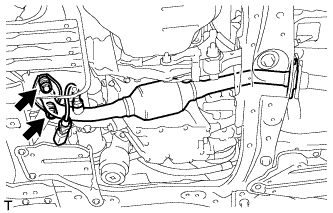
Install the front exhaust pipe assembly to the exhaust manifold with the 2 bolts and the 2 compression springs.
- Torque:
- 43 N*m { 438 kgf*cm, 32 ft.*lbf }
-
Using a vernier caliper, measure the free length of the compression springs.
Minimum Length Item Length Rear 38.5 mm (1.594 in.) Tech Tips
If the length is not as specified, replace the compression spring.
-
Using a plastic hammer and a wooden block, tap in a new exhaust pipe gasket until its surface is flush with the exhaust manifold.
Note
-
Install the gasket in the correct direction.
-
Do not reuse the gasket.
-
Do not damage the gasket by dropping it, etc.
-
Do not damage the outer surface of the gasket.
-
Do not push in the gasket with the exhaust pipe when connecting it.
-
After the installation, check that the gaps between the flanges of the front exhaust pipe assembly and tail exhaust pipe assembly are consistent front-to-rear and left-to-right.
-
-
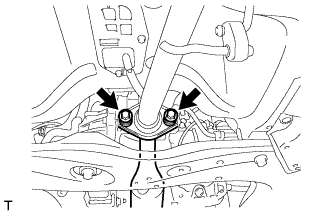
Install the front exhaust pipe assembly to the tail exhaust pipe assembly with the 2 bolts and the 2 compression springs.
- Torque:
- 43 N*m { 438 kgf*cm, 32 ft.*lbf }
-
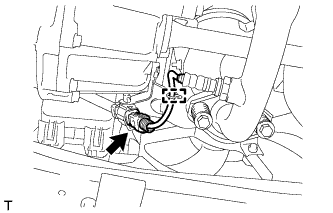
Connect the oxygen sensor connector and engage the clamp.
-
-
INSTALL FRONT WHEELS
-
ADD ENGINE COOLANT
-
Tighten the radiator drain cock plug.
-
Remove the water filler cap sub-assembly.
-
Slowly fill the radiator with TOYOTA Super Long Life Coolant (SLLC).
Standard Capacity Item Capacity for Manual Transaxle 4.3 liters (4.5 US qts, 3.8 Imp. qts) for CVT 4.5 liters (4.8 US qts, 4.0 Imp. qts) Note
Never use water as a substitute for engine coolant.
Tech Tips
TOYOTA vehicles are filled with TOYOTA SLLC at the factory. In order to avoid damage to the engine cooling system and other technical problems, only use TOYOTA SLLC or similar high quality ethylene glycol based non-silicate, non-amine, non-nitrite, non-borate coolant with long-life hybrid organic acid technology (coolant with long-life hybrid organic acid technology is a combination of low phosphates and organic acids).
-
Squeeze the inlet and outlet radiator hoses several times by hand, and then check the level of the coolant.
If the coolant level is low, add coolant.
-
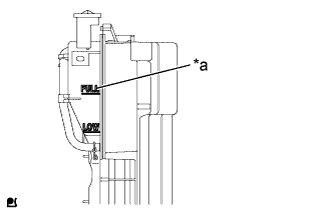
Text in Illustration *a FULL Line Fill the radiator reserve tank with coolant to the FULL level.
-
Install the water filler cap sub-assembly.
-
Start the engine and warm it up.
-
Bleed air from the cooling system.
Note
-
Before starting the engine, turn the A/C switch off.
-
Adjust the air conditioning temperature setting to MAX (HOT).
-
Adjust the air conditioning blower setting to LO.
-
Warm up the engine until the thermostat opens. While the thermostat is open, allow the coolant to circulate for several minutes.
Tech Tips
Thermostat opening timing can be determined by squeezing the inlet radiator hose, and sensing vibrations when the engine coolant starts to flow inside the hose.
CAUTION:
When squeezing the radiator hoses:
-
Wear protective gloves.
-
Be careful as the radiator hoses are hot.
-
Keep your hands away from the radiator fan.
-
-
-
Stop the engine, and wait until the engine coolant cools down.
-
Remove the water filler cap sub-assembly and check the coolant level.
If the coolant level is below the LOW line, repeat all of the procedures above.
-
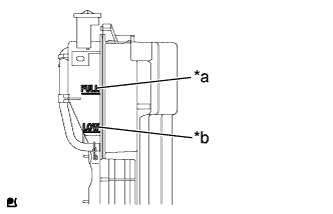
Text in Illustration *a FULL Line *b LOW Line When the coolant level stops going down, check that the coolant level is between the FULL and LOW lines.
If the coolant level is low, add coolant to the reservoir tank FULL line.
-
-
ADD ENGINE OIL
-
INSPECT FOR ENGINE COOLANT LEAK
CAUTION:
To avoid the danger of being burned, do not remove the water filler cap sub-assembly while the engine and radiator assembly are still hot. Thermal expansion will cause hot engine coolant and steam to blow out from the radiator assembly.
-
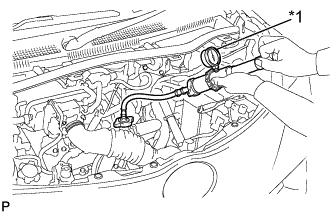
Text in Illustration *1 Radiator Cap Tester Fill the radiator assembly with engine coolant, and attach a radiator cap tester.
-
Pump the tester to 118 kPa (1.2 kgf/cm2, 17.1 psi), and then check that the pressure does not drop.
If the pressure drops, check the hoses, radiator assembly and water pump assembly for leaks. If there are no signs or traces of external engine coolant leaks, check the heater core, cylinder block and head.
-
-
INSPECT FOR MANUAL TRANSAXLE OIL LEAK
-
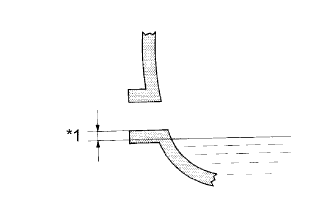
Text in Illustration *1 0 to 5 mm (0 to 0.20 in.) Check that the oil surface is within 5 mm (0.20 in.) of the bottom of the manual transmission filler plug opening.
Note
Excessively large or small amounts of oil may cause problems.
-
Check for oil leakage when the oil level is low.
-
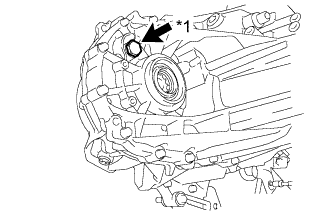
Text in Illustration *1 Filler plug Install the manual transmission filler plug and a new gasket.
- Torque:
- 39 N*m { 400 kgf*cm, 29 ft.*lbf }
-
-
INSPECT FOR ENGINE OIL LEAK
-
INSPECT FOR EXHAUST GAS LEAK
-
INSPECT FOR FUEL LEAK
-
INSPECT IGNITION TIMING
Note
-
Turn all the electrical systems and the air conditioning off.
-
Inspect the ignition timing with the cooling fan off.
-
When checking the ignition timing, shift the transmission to the neutral position.
-
When using the intelligent tester:
-
Warm up and stop the engine.
-
Connect the intelligent tester to the DLC3.
-
Turn the ignition switch to ON.
-
Enter the following menus: Powertrain / Engine and ECT / Active Test / TE1 (TC) / ON.
Tech Tips
Refer to the intelligent tester operator's manual for further information regarding the selection of Active Test.
-
Inspect the ignition timing during idling.
Ignition timing 8 to 12° BTDC -
Enter the following menus: Powertrain / Engine and ECT / Active Test / TE1 (TC) / OFF.
-
Turn the ignition switch off.
-
Disconnect the intelligent tester from the DLC3.
-
-
When not using the intelligent tester:
-
Remove the No. 3 engine under cover Click here.
-
Remove the No. 1 engine cover Click here.
-
Warm up and stop the engine.
-
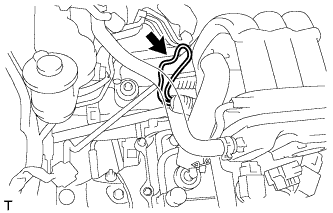
Install the tester terminal of a timing light onto the position shown in the illustration.
Note
-
Use a timing light that detects the first signal.
-
Wrap the wire harness with tape after checking.
-
-
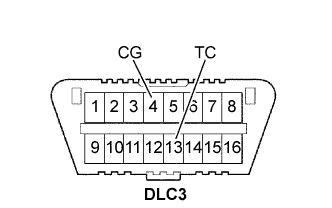
Using SST, connect terminals 13 (TC) and 4 (CG) of the DLC3.
- SST
- 09843-18040
Note
Check the terminal numbers before connecting them. Connecting the wrong terminals could damage the engine.
-
Turn the ignition switch to ON.
-
Inspect the ignition timing during idling.
Ignition timing 8 to 12° BTDC Tech Tips
Run the engine speed at 1000 to 1300 rpm for 5 seconds and then check that the engine speed returns to the idling speed.
-
Disconnect terminals 13 (TC) and 4 (CG) of the DLC3.
-
Turn the ignition switch off.
-
Remove the timing light.
-
Install the No. 1 engine cover Click here.
-
Install the No. 3 engine under cover Click here.
-
-
-
INSPECT ENGINE IDLING SPEED
Note
-
Turn all the electrical systems and the air conditioning off.
-
Inspect the engine idling speed with the cooling fan off.
-
When checking the idling speed, shift the transmission to the neutral position.
-
Warm up and stop the engine.
-
When using the intelligent tester:
-
Connect the intelligent tester to the DLC3.
-
Turn the ignition switch to ON.
-
Enter the following menus: Powertrain / Engine and ECT / Data List / Engine SPD.
Tech Tips
Refer to the intelligent tester operator's manual for further information regarding the selection of Data List.
-
Inspect the engine idling speed.
Idling speed 650 to 800 rpm -
Turn the ignition switch off.
-
Disconnect the intelligent tester from the DLC3.
-
-
When not using an intelligent tester:
-
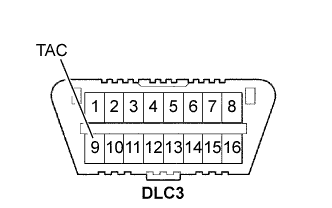
Install SST to terminal 9 (TAC) of the DLC3, and then connect a tachometer.
- SST
- 09843-18040
Note
Check the terminal numbers before connecting them. Connecting the wrong terminals could damage the engine.
-
Turn the ignition switch to ON.
-
Inspect the engine idling speed.
Idling speed 650 to 800 rpm -
Turn the ignition switch off.
-
Disconnect the tachometer.
-
Remove SST from terminal 9 (TAC).
-
-
-
INSPECT CO/HC
Tech Tips
The ECM controls the concentration of CO/HC in the emission gas.
-
Start the engine.
-
Run the engine at 2500 rpm for approximately 180 seconds.
-
Insert the CO/HC meter testing probe at least 40 cm (1.3 ft) into the tailpipe during idling.
-
Check the CO/HC concentration during idling and when running at 2500 rpm.
Standard CO concentration 0.2 % or less HC concentration 70 ppm or less If the CO/HC concentration does not comply with the regulations, troubleshoot in the order given below.
-
Check the heated oxygen sensor operation Click here.
-
See the table below for possible causes, and then inspect the applicable parts and repair them if necessary.
CO HC Problem Cause Normal High Rough idling
-
Faulty ignition:
-
Fouled, shorted or improperly gapped plugs
-
Incorrect valve clearance
-
Leakage from intake and exhaust valves
-
Leakage from cylinders
Low High Rough idling
(Fluctuating HC reading)
-
Lean mixture causing misfire
-
Faulty SFI systems:
-
Faulty pressure regulator
-
Faulty engine coolant temperature sensor
-
Faulty mass air flow meter
-
Faulty ECM
-
Faulty injectors
-
Faulty throttle body
High High Rough idling
(Black smoke from exhaust)
-
Faulty SFI systems:
-
Faulty pressure regulator
-
Faulty engine coolant temperature sensor
-
Faulty mass air flow meter
-
Faulty ECM
-
Faulty injectors
-
Faulty throttle body
-
-
-
INSPECT AND ADJUST FRONT WHEEL ALIGNMENT
-
INSTALL NO. 1 ENGINE COVER
-
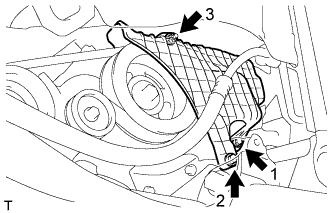
Temporarily install the No. 1 engine cover with the 2 bolts and nut.
-
Fully tighten the 2 bolts and nut in the order shown in the illustration.
- Torque:
- 10 N*m { 102 kgf*cm, 7 ft.*lbf }
-
-
INSTALL NO. 1 COOLER COVER
-
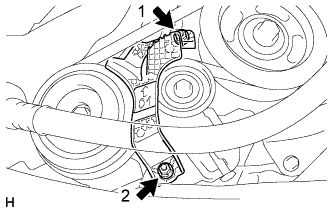
Temporarily install the No. 1 cooler cover with the 2 nuts.
-
Fully tighten the 2 nuts in the order shown in the illustration.
- Torque:
- 9.8 N*m { 100 kgf*cm, 87 in.*lbf }
-
-
INSTALL NO. 3 ENGINE UNDER COVER
-
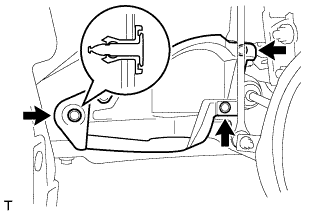
Install the No. 3 engine under cover with the 3 clips.
-
-
INSTALL NO. 1 ENGINE UNDER COVER
-
INSTALL NO. 2 ENGINE UNDER COVER
-
INSTALL FRONT FLOOR COVER RH
-
INSTALL FRONT FLOOR COVER LH
-
INSTALL WINDSHIELD WIPER MOTOR AND LINK