BRAKE ACTUATOR INSTALLATION

-
INSTALL BRAKE ACTUATOR ASSEMBLY WITH BRACKET
-
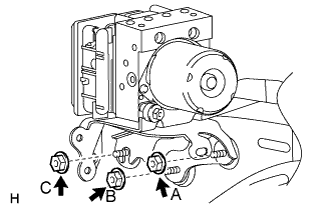
Install the brake actuator with bracket with the 3 nuts. Tighten the 3 nuts uniformly in alphabetical order.
- Torque:
- 19 N*m { 194 kgf*cm, 14 ft.*lbf }
Note
-
Be careful not to damage the brake tubes.
-
Do not drop the actuator. If dropped, replace it.
-
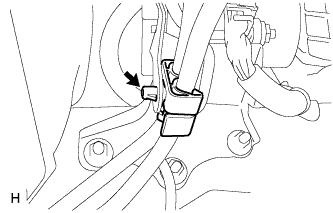
Connect a new brake tube clamp to the brake actuator bracket.
-
-
CONNECT BRAKE LINE
-
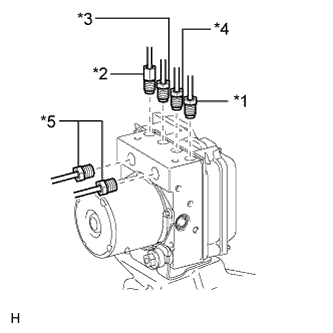
Set each brake line in the correct position on the brake actuator as shown in the illustration.
Tech Tips
-
*1: to front wheel cylinder RH
-
*2: to front wheel cylinder LH
-
*3: to rear wheel cylinder RH
-
*4: to rear wheel cylinder LH
-
*5: from master cylinder
-
-
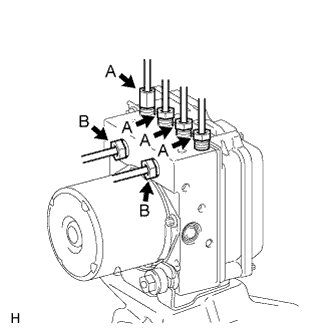
Using a union nut wrench, connect the 6 brake lines to the brake actuator.
- Torque:
- for flare nut A
- 15 N*m { 155 kgf*cm, 11 ft.*lbf }
- for flare nut B
- 20 N*m { 199 kgf*cm, 14 ft.*lbf }
Note
Use the formula to calculate special torque values for situations where a union nut wrench is combined with a torque wrench Click here.
-
-
CONNECT CONNECTOR
-
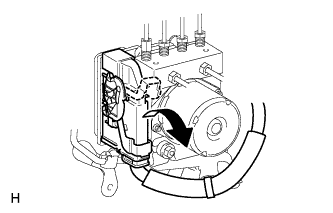
Connect the connector and push the lock lever downward.
-
-
INSTALL FUEL FILTER ELEMENT ASSEMBLY
-
for 1AD-FTV:
Install the fuel filter element assembly Click here.
-
for 2AD-FHV:
Install the fuel filter element assembly Click here.
-
for 2AD-FTV:
Install the fuel filter element assembly Click here.
-
-
CONNECT CABLE TO NEGATIVE BATTERY TERMINAL
Note
When disconnecting the cable, some systems need to be initialized after the cable is reconnected Click here.
-
REMOVE CENTER COWL TOP VENTILATOR LOUVER
-
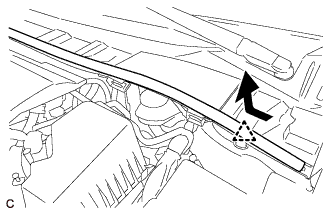
Slide the hood to cowl top seal and detach the clip as shown in the illustration.
-
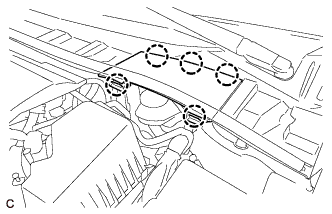
Detach the 5 claws and remove the center cowl top ventilator louver.
-
-
FILL RESERVOIR WITH BRAKE FLUID
-
Fill the reservoir with brake fluid.
Brake Fluid SAE J1704 or FMVSS No. 116 DOT 4 Note
Add brake fluid to keep the level between the MIN and MAX lines of the reservoir while bleeding the brakes.
-
-
BLEED AIR FROM BRAKE MASTER CYLINDER
Note
-
If the master cylinder is reinstalled or if the reservoir becomes empty, bleed the master cylinder.
-
To prevent brake fluid from damaging painted surfaces, cover any surrounding parts with a piece of cloth.
-
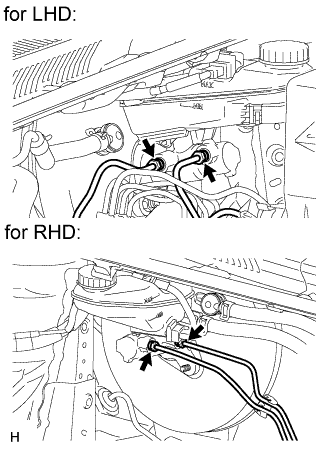
Using a union nut wrench, disconnect the 2 brake lines from the master cylinder.
-
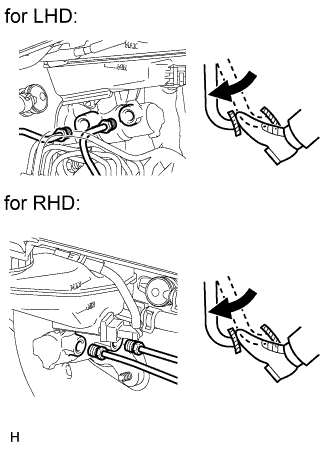
Slowly depress the brake pedal and hold it.*1
-
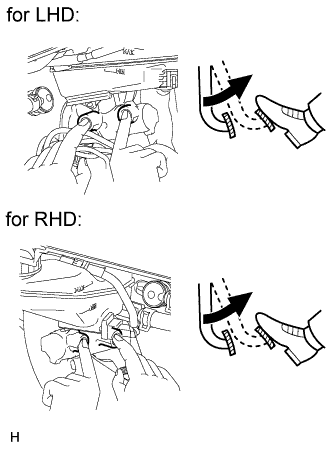
Cover the 2 outer holes with fingers and release the brake pedal.*2
-
Repeat *1 and *2 3 or 4 times.
-
Using a union nut wrench, connect the 2 brake lines to the master cylinder.
- Torque:
- 15 N*m { 155 kgf*cm, 11 ft.*lbf }
Note
Use the formula to calculate special torque values for situations where a union nut wrench is combined with a torque wrench Click here.
-
-
BLEED AIR FROM BRAKE LINE
Note
-
Bleed the brake line of the wheel farthest from the master cylinder first.
-
Add brake fluid to keep the level between the MIN and MAX lines of the reservoir while bleeding the brakes.
-
Connect a vinyl tube to the bleeder plug.
-
Depress the brake pedal several times, and then loosen the bleeder plug with the pedal depressed.*1
-
When fluid stops coming out, tighten the bleeder plug, and then release the brake pedal.*2
-
Repeat *1 and *2 until all the air in the fluid is completely bled out.
-
Tighten the bleeder plug completely.
- Torque:
- 10 N*m { 102 kgf*cm, 7 ft.*lbf }
-
Repeat the above procedure for each wheel to bleed the brake line.
-
-
CHECK BRAKE FLUID LEVEL IN RESERVOIR
-
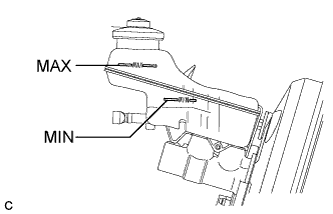
Check the fluid level.
If the brake fluid level is lower than the MIN line, check for leaks and inspect the disc brake pads. If necessary, refill the reservoir with brake fluid to the MAX line after repair or replacement.
Brake Fluid SAE J1704 or FMVSS No. 116 DOT 4
-
-
INSPECT FOR BRAKE FLUID LEAK
-
INSTALL CENTER COWL TOP VENTILATOR LOUVER
-
Attach the 5 claws to install the center cowl top ventilator louver.
-
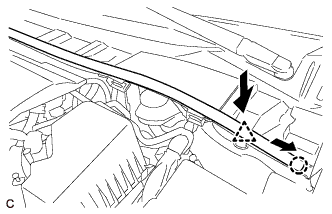
Push and attach the clip, and slide and attach the claw of the hood to cowl top seal as shown in the illustration.
-
-
CHECK BRAKE ACTUATOR ASSEMBLY WITH INTELLIGENT TESTER
-
Check the brake actuator with the intelligent tester Click here.
-