COOLANT(for Inverter) ON-VEHICLE INSPECTION
CAUTION / NOTICE / HINT
CAUTION:
To avoid the danger of being burned, do not remove the reserve tank cap while the coolant (for inverter) is still hot. Pressurized, hot coolant (for inverter) and steam may be released and cause serious burns.
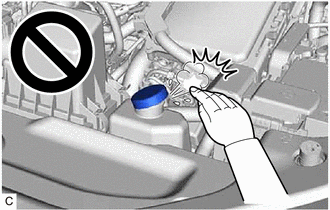
PROCEDURE
-
INSPECT FOR COOLANT LEAK (for Inverter)
CAUTION:
To avoid the danger of being burned, do not remove the reserve tank cap while the coolant (for inverter) is still hot. Pressurized, hot coolant (for inverter) and steam may be released and cause serious burns.
-
Remove the reserve tank cap from the inverter reserve tank assembly.
-
Add coolant to the FULL line of the inverter reserve tank assembly.
-
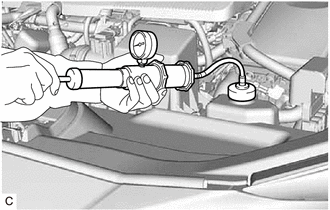
Install a radiator cap tester to the inverter reserve tank assembly.
-
Pump the radiator cap tester to 122 kPa (1.2 kgf/ cm2, 18 psi), and then check that the pressure does not drop.
Tech Tips
-
If the pressure drops, check the hoses, radiator assembly, inverter water pump assembly, hybrid vehicle transaxle assembly, and inverter with converter assembly for leaks.
-
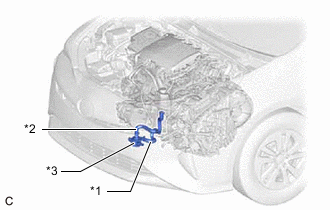
*1 Outlet No. 1 Hybrid Water Pump Hose *2 Inlet Hybrid Water Pump Hose *3 Inverter Water Pump Assembly If there are signs of coolant leakage between the inverter water pump assembly and water hose (for Inverter), replace the inverter water pump assembly, outlet No. 1 hybrid water pump hose and hybrid water pump inlet hose.
-
-
Reinstall the reserve tank cap to the inverter reserve tank assembly.
-
-
INSPECT COOLANT LEVEL IN RESERVE TANK (for Inverter)
-
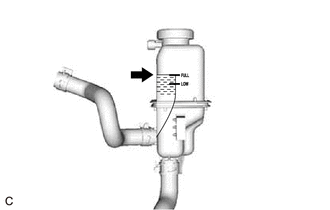
The coolant should be between the LOW and FULL lines when the coolant (for inverter) is cold.
Tech Tips
If the coolant level is low, check for leaks and add TOYOTA Super Long Life Coolant (SLLC) or similar high quality ethylene glycol based non-silicate, non-amine, non-nitrite, and non-borate coolant with long-life hybrid organic acid technology up to the FULL line.
-
-
INSPECT COOLANT QUALITY (for Inverter)
-
Remove the reserve tank cap from the inverter reserve tank assembly.
CAUTION:
To avoid the danger of being burned, do not remove the reserve tank cap while the coolant (for inverter) is still hot.
-
Check for excessive deposits of rust or scale on and around the reserve tank cap and its opening.
Tech Tips
If excessively dirty, replace the coolant (for inverter).
-
Reinstall the reserve tank cap to the inverter reserve tank assembly.
-
-
INSPECT RESERVE TANK CAP (for Inverter)
-
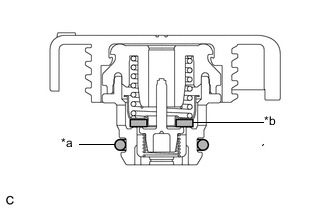
*a O-ring *b Rubber Packing Inspect the reserve tank cap.
-
If there are water stains or foreign matter on the O-ring, clean it with water and finger scouring.
Note
Do not use any tools.
-
Check that the O-ring is not deformed, cracked, or damaged.
-
Check that the O-ring is not swollen.
-
-
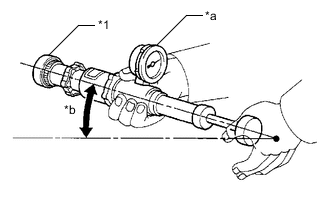
*1 Reserve Tank Cap *a Radiator Cap Tester *b 30° or more Check the reserve tank cap operation.
-
Apply coolant to the O-ring and rubber packing before using a radiator cap tester.
-
Install the reserve tank cap to the radiator cap tester.
-
Pump the radiator cap tester several times and check the maximum pressure.
Judgment Criterion Standard Value (for Brand-new Cap) 94 to 122 kPa (1.0 to 1.2 kgf/cm2, 13.6 to 18 psi)
Minimum Standard Value (for Used Cap) 94 kPa (1.0 kgf/cm2, 13.6 psi)
Pump Speed 1 pump per second Note
When using the radiator cap tester, tilt it upward 30° or more.
Tech Tips
If the maximum pressure is less than the minimum standard value, replace the reserve tank cap.
-
-