AUTOMATIC TRANSMISSION SYSTEM(for 2GR-FKS) PRECAUTION
-
PRECAUTION FOR DISCONNECTING CABLE FROM NEGATIVE BATTERY TERMINAL
Note
When disconnecting the cable from the negative (-) battery terminal, initialize the following system(s) after the cable is reconnected:
System See Procedure Air Conditioning System Variable Gear Ratio Steering System Parking Assist Monitor System -
PROCEDURES NECESSARY WHEN ECU OR OTHER PARTS ARE REPLACED
Note
-
If any parts are replaced, perform the following procedures as necessary referring to the table below.
Replaced Part Reset Memory*1 Set Transmission Compensation Code Learning by Driving (Road Test) Automatic transmission assembly -*2 Perform*3 Perform
-
Transmission valve body assembly
-
Shift solenoid valve SL1, 2, 3, 4 and 5
- - Perform ECM
(If possible, read the transmission compensation code from the previous ECM)
Possible - Perform*4 Perform Impossible - Perform*5 Perform Engine assembly Perform - Perform Tech Tips
-
*1: Reset Memory cannot be completed by only disconnecting and reconnecting the cable to the negative (-) battery terminal.
-
*2: When "Set Transmission Compensation Code" is performed, "Reset Memory" is automatically completed.
-
*3: Set the transmission compensation code for the new automatic transmission.
-
*4: Read the transmission compensation code from the previous ECM, then transfer it to the new ECM.
-
*5: Set the transmission compensation code of the current automatic transmission.
-
Registration of the transmission compensation code.
-
Learning by driving (Road Test).
-
Reset Memory.
-
-
Before replacing the ECM, refer to Service Bulletin (for Immobiliser System).
-
Perform Registration (VIN registration) when replacing the ECM.
-
-
HANDLING PRECAUTIONS
CAUTION:
-
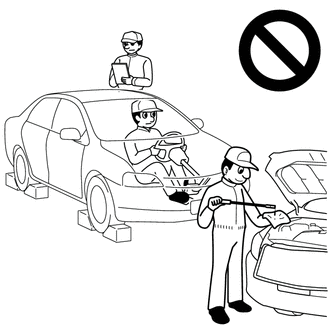
Do not perform a stall test if there are any people or objects near the vehicle.
-
The vehicle could begin moving suddenly, resulting in a serious accident.
-
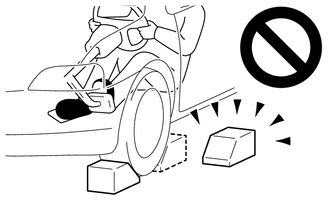
Do not perform a stall test if any wheel chocks are out of position.
-
The vehicle could begin moving suddenly, resulting in a serious accident.
-
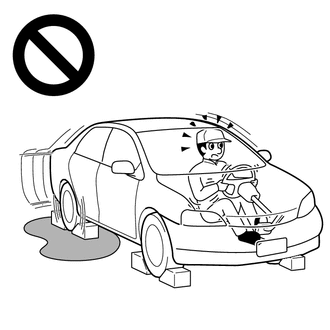
Do not perform the stall test on a slippery or low-friction surface that could allow the tires to spin.
-
The vehicle could begin moving suddenly, resulting in a serious accident.
-
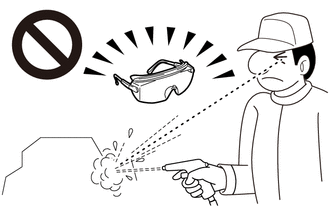
Do not blow compressed air without wearing safety glasses.
-
Automatic Transaxle Fluid (ATF) could enter your eyes, possibly resulting in blindness.
Note
-
The automatic transmission is composed of precision-made parts. Careful inspection before reassembly is necessary because even a small nick could cause fluid leakage or affect performance.
-
The procedures are organized so that you work on only one component group at a time. This will help avoid confusion with similar-looking parts of different sub-assemblies being on your workbench at the same time.
-
The component groups are inspected and repaired from the converter housing side.
-
Whenever possible, complete the inspection, repair and reassembly before proceeding to the next component group. If a defect is found in a certain component group during reassembly, inspect and repair this group immediately. If a component group cannot be assembled because parts are being ordered, be sure to keep all parts of the group in a separate container while proceeding with disassembly, inspection, repair and reassembly of other component groups.
-
Use of Toyota Genuine ATF WS is recommended.
-
All disassembled parts should be washed clean, and compressed air should be blown through any fluid passages and holes.
-
Dry all parts with compressed air. Never use a piece of cloth.
-
The recommended ATF or kerosene should be used for cleaning.
-
After cleaning, the parts should be arranged in the order they were removed for efficient inspection, repair and reassembly.
-
New brake discs and clutch discs must be soaked in ATF for at least 15 minutes before reassembly.
-
All oil seal rings, clutch discs, clutch plates, rotating parts, and sliding surfaces should be coated with ATF prior to reassembly.
-
All old gaskets and rubber O-rings must be replaced.
-
Do not apply adhesive cement to gaskets or similar parts.
-
Make sure that the ends of snap rings are not aligned with any cutouts. Make sure that snap rings are correctly installed into the grooves.
-
If a worn bushing is to be replaced, the sub-assembly containing the bushing must also be replaced.
-
Check the thrust bearings and races for wear or damage. Replace them if necessary.
-
Use petroleum jelly to keep parts in place.
-