РАДИАТОР ПРОВЕРКА БЕЗ СНЯТИЯ С АВТОМОБИЛЯ
PROCEDURE
-
INSPECT RESERVOIR CAP
-
Measure the valve opening pressure.
-
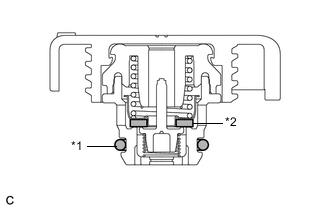
*1 O-Ring *2 Rubber Packing If there are water stains or foreign matter on the O-ring, clean it with water and finger scouring.
-
Check that the O-ring is not deformed, cracked or swollen.
-
Apply engine coolant to the O-ring and rubber packing before using a radiator cap tester.
-
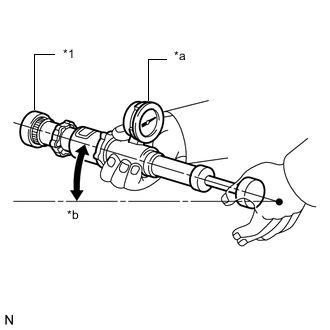
*1 Reservoir Cap *a Radiator Cap Tester *b 30° or more Pump the cap tester several times and check the maximum pressure*.
Pump speed 1 pump per second Tech Tips
-
*: Even if the cap cannot maintain the maximum pressure, it does not necessarily indicate a defect.
-
When using the cap tester, tilt it 30° or more.
Standard Judgment Criterion Item Specified Condition Standard value
(for brand-new cap)
126 to 143 kPa (1.3 to 1.5 kgf/cm2, 18 to 21 psi)
Minimum standard value
(for used cap)
101 kPa (1.0 kgf/cm2, 15 psi)
If the maximum pressure is less than the minimum standard value, replace the reservoir cap.
-
-
-
-
INSPECT FINS FOR BLOCKAGE
-
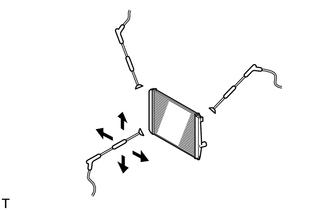
Check that the radiator assembly, condenser assembly and intercooler assembly are not blocked with leaves dirt or insects. Clean the hose connections.
If the fins are blocked, wash them with water or a steam cleaner.
Note
-
If the distance between the steam cleaner and core is too close, the fins may be damaged.
-
When cleaning the intercooler assembly, make sure no water enters its interior.
-
Keep the following injection distance.
Standard Injection Distance Injection Pressure Specified Condition 2942 to 4903 kPa
(30 to 50 kgf/cm2, 427 to 711 psi)
300 mm (11.8 in.) 4903 to 7845 kPa
(50 to 80 kgf/cm2, 711 to 1138 psi)
500 mm (19.7 in.) -
If the fins are bent, straighten them with a screwdriver or pliers.
-
Never apply water directly to the electronic components.
-
-
Dry the fins with compressed air.
-