DRIVE BELT ON-VEHICLE INSPECTION
PROCEDURE
-
INSPECT V-RIBBED BELT
-
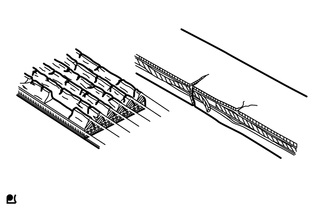
Check the belt for wear, cracks or other signs of damage.
If any of the following defects is found, replace the V-ribbed belt.
-
The V-ribbed belt is cracked.
-
The V-ribbed belt is worn out to the extent that the cords are exposed.
-
The V-ribbed belt has chunks missing from the ribs.
-
-
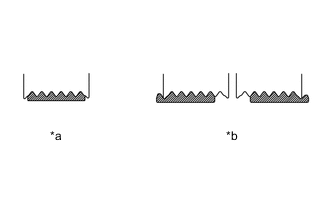
*a CORRECT *b INCORRECT Check that the belt fits properly in the ribbed grooves.
Tech Tips
Check with your hand to confirm that the V-ribbed belt has not slipped out of the grooves on the bottom of the pulley. If it has slipped out, replace the V-ribbed belt. Install a new V-ribbed belt correctly.
-
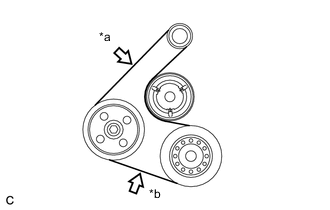
*a Deflection *b Tension Check the V-ribbed belt deflection and tension.
Standard Deflection Item Specified Condition New belt 7.0 to 8.2 mm (0.276 to 0.323 in.) Used belt 7.6 to 10.0 mm (0.299 to 0.394 in.) Standard Tension Item Specified Condition New belt 700 to 800 N (70 to 80 kgf, 157.4 to 179.8 lbf) Used belt 550 to 750 N (55 to 75 kgf, 123.6 to 168.6 lbf) Tech Tips
-
When inspecting the V-ribbed belt deflection, apply 98 N (10 kgf, 22.0 lbf) of tensile force to it.
-
Check the V-ribbed belt deflection at the specified point.
-
V-ribbed belt tension and deflection should be checked after 2 revolutions of engine cranking.
-
Measure the V-ribbed belt tension when the engine is cold.
-
When adjusting the V-ribbed belt, be sure to adjust it so that the tension is as close as possible to the median of the specified range.
-
When replacing the V-ribbed belt with a new one, be sure to perform the following after adjusting the V-ribbed belt: idle the engine for 5 minutes, and then adjust the V-ribbed belt to the specified value for a new V-ribbed belt after the engine has cooled.
-
When inspecting a V-ribbed belt which has been used for over 5 minutes, apply the used V-ribbed belt specifications.
-
When using a belt tension gauge, confirm its accuracy by using a master gauge first.
-
-