ENGINE UNIT INSPECTION

PROCEDURE
-
INSPECT NO. 1 VALVE ROCKER ARM SUB-ASSEMBLY
-
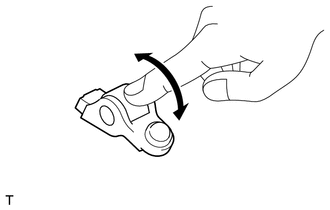
Turn the roller by hand to check that it turns smoothly.
Tech Tips
If the roller does not turn smoothly, replace the No.1 valve rocker arm sub-assembly.
-
-
INSPECT VALVE LASH ADJUSTER ASSEMBLY
Note
-
Keep the valve lash adjuster assembly free of dirt and foreign matter.
-
Only use clean engine oil.
-
Place the valve lash adjuster assembly into a container filled with engine oil.
-
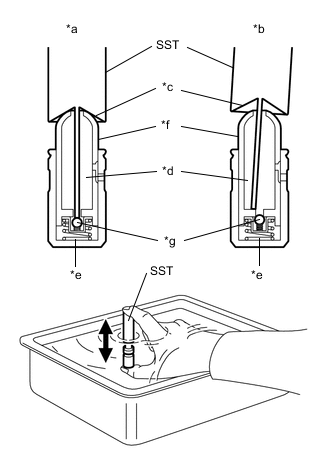
*a Correct *b Incorrect *c Taper Part *d Low Pressure Chamber *e High Pressure Chamber *f Plunger *g Check Ball Insert the tip of SST into the valve lash adjuster assembly plunger and use the tip to press down on the check ball inside the plunger.
- SST
- 09276-75010
-
Squeeze SST and the valve lash adjuster assembly together to move the plunger up and down 5 to 6 times.
-
Check the movement of the plunger and bleed it.
OK Plunger moves up and down. Note
When bleeding the high-pressure chamber, make sure that the tip of SST is actually pressing the check ball as shown in the illustration. If the check ball is not pressed, the high-pressure chamber will not be bled.
-
After bleeding, remove SST. Then, try to quickly and firmly press the plunger by hand.
OK Plunger is very difficult to move. If the result is not as specified, replace the valve lash adjuster assembly.
-
-
INSPECT CAMSHAFT TIMING GEAR ASSEMBLY
-
Install the camshaft timing gear assembly.
-
Check that the Straight Pin is installed on the camshaft.
-
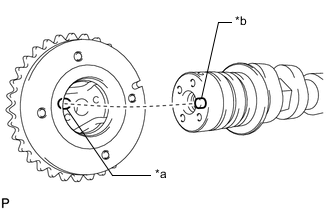
*a Key Groove *b Straight Pin Fit the camshaft timing gear assembly and camshaft together by aligning the key groove and straight pin.
Note
-
Do not forcefully push in the camshaft timing gear assembly. This may cause the camshaft Straight Pin tip to damage the installation surface of the camshaft timing gear assembly.
-
Do not turn the camshaft timing gear assembly in the retard direction (clockwise).
-
-
Tighten the bolt with the camshaft timing gear assembly secured in place.
- Torque:
- 54 N*m { 551 kgf*cm, 40 ft.*lbf }
-
-
Check the locked state of the camshaft timing gear assembly.
-
Confirm that the camshaft timing gear assembly is locked.
-
-
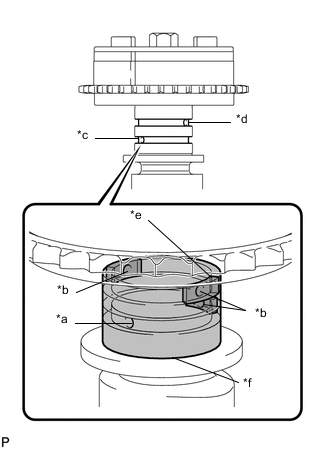
*a Open *b Close *c Advance Side Path *d Retard Side Path *e Rubber *f Vinyl Tape Release the lock pin.
-
Cover the 4 oil paths of the cam journal with vinyl tape as shown in the illustration.
Tech Tips
There are 4 oil paths in the groove of the camshaft. Plug three of the paths with pieces of rubber.
-
Prick a hole in the tape placed on the retard side path, on the opposite side to that of the advance side path, as shown in the illustration.
-
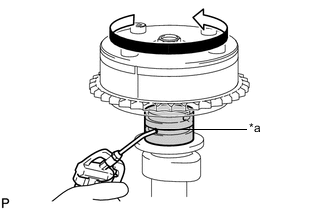
*a Advance Side Path While applying approximately 150 kPa (1.5 kgf/cm2, 22 psi) of air pressure to the oil paths, forcibly turn the camshaft timing gear assembly in the advance direction (counterclockwise).
CAUTION:
Cover the paths with a piece of cloth when applying pressure to keep engine oil from spraying.
Note
Do not lock the camshaft timing gear assembly. If it is locked, release the lock pin again.
Tech Tips
-
The camshaft timing gear assembly may be turned in the advance direction without applying any force.
-
If enough air pressure cannot be applied because of air leaks from the port, releasing the lock pin may be difficult.
-
-
-
Check for smooth rotation.
-
Turn the camshaft timing gear assembly within its movable range (26.5 to 28.5°) 2 or 3 times, but do not turn it to the most retarded position. Make sure that the camshaft timing gear assembly turns smoothly.
Note
Do not lock the camshaft timing gear assembly. If it is locked, release the lock pin again.
-
-
-
INSPECT CAMSHAFT TIMING EXHAUST GEAR ASSEMBLY
-
Install the camshaft timing exhaust gear assembly.
-
Check that the Straight Pin is installed on the No. 2 camshaft.
-
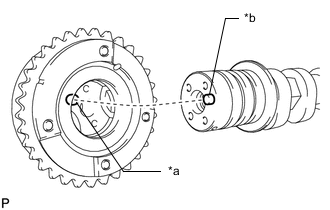
*a Key Groove *b Straight Pin Fit the camshaft timing exhaust gear assembly and No. 2 camshaft together by aligning the key groove and straight pin.
Note
-
Do not forcefully push in the camshaft timing exhaust gear assembly. This may cause the camshaft Straight Pin tip to damage the installation surface of the camshaft timing exhaust gear assembly.
-
Be sure not to turn the camshaft timing exhaust gear assembly in the retard direction (clockwise).
-
-
Tighten the bolt with the camshaft timing exhaust gear assembly secured in place.
- Torque:
- 54 N*m { 551 kgf*cm, 40 ft.*lbf }
-
-
Check locked state of the camshaft timing exhaust gear assembly.
-
Make sure that the camshaft timing exhaust gear assembly is locked.
-
-
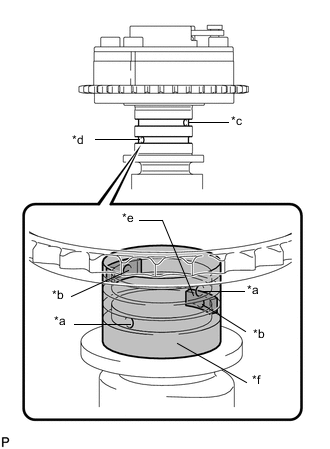
*a Open *b Close *c Advance Side Path *d Retard Side Path *e Rubber *f Vinyl Tape Release the lock pin.
-
Cover the 4 oil paths of the cam journal with vinyl tape as shown in the illustration.
Tech Tips
The 4 oil paths are provided in the grooves. Plug 2 paths with rubber pieces.
-
Prick a hole in the tape placed on the advance side path. Prick a hole in the tape placed on the retard side path, on the opposite side to that of the advance side path, as shown in the illustration.
-
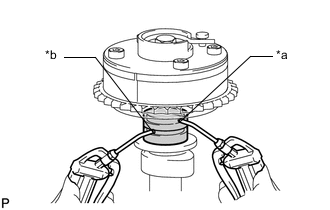
*a Advance Side Path *b Retard Side Path Apply approximately 200 kPa (2.0 kgf/cm2, 29 psi) of air pressure to the 2 paths (the advance side path and the retard side path).
CAUTION:
Cover the paths with a piece of cloth when applying pressure to keep engine oil from spraying.
-
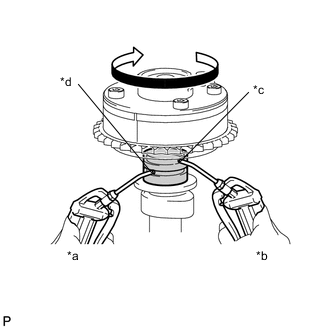
*a Hold Pressure *b Release Pressure *c Advance Side Path *d Retard Side Path Make sure that the camshaft timing exhaust gear assembly turns in the retard direction (clockwise) when reducing the air pressure applied to the advance side path.
Tech Tips
The lock pin is released and the camshaft timing exhaust gear assembly turns in the retard direction.
-
When the camshaft timing exhaust gear assembly moves to the most retarded position, release the air pressure from the advance side path, then release the air pressure from the retard side path.
Note
Be sure to release the air pressure from the advance side path first. If the air pressure of the retard side path is released first, the camshaft timing exhaust gear assembly may abruptly shift in the advance direction and break the lock pin or other parts.
-
-
Check for smooth rotation.
-
Turn the camshaft timing exhaust gear assembly within its movable range (19 to 21°) 2 or 3 times, but do not turn it to the most advanced position. Make sure that the camshaft timing exhaust gear assembly turns smoothly.
Note
When the air pressure is released from the advance side path, then from the retard side path, the camshaft timing exhaust gear assembly automatically returns to the most advanced position due to the advance assist spring operation and locks. Gradually release the air pressure from the retard side path before performing the smooth rotation check.
-
-
Check the locked state at the most advanced position.
-
Make sure that the camshaft timing exhaust gear assembly is locked at the most advanced position.
-
-
-
INSPECT CHAIN SUB-ASSEMBLY
-
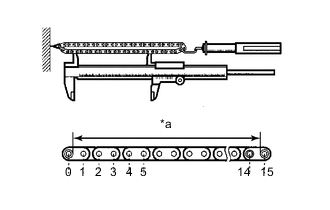
*a Measurement Area Pull the chain sub-assembly with a force of 147 N (15 kgf, 33 lbf) as shown in the illustration.
-
Using a vernier caliper, measure the length of 15 links.
Maximum chain sub-assembly elongation 114.8 mm (4.519 in.) Note
Perform the measurement at 3 random places. Use the average of the measurements.
If the average elongation is greater than the maximum, replace the chain sub-assembly.
-
-
INSPECT CAMSHAFT TIMING GEAR ASSEMBLY
-

*a Chain Roller Place the chain sub-assembly around the camshaft timing gear assembly.
-
Using a vernier caliper, measure the diameter of the camshaft timing gear assembly and chain sub-assembly.
Minimum camshaft timing gear assembly diameter (with chain sub-assembly) 96.8 mm (3.811 in.) Note
The vernier caliper must be in contact with the chain sub-assembly rollers when measuring.
If the diameter is less than the minimum, replace the chain sub-assembly and camshaft timing gear assembly.
-
-
INSPECT CAMSHAFT TIMING EXHAUST GEAR ASSEMBLY
-
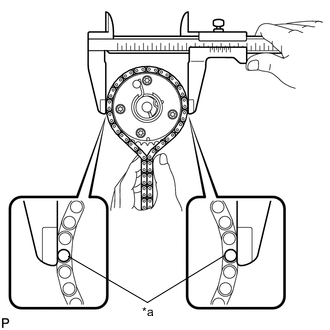
*a Chain Roller Place the chain sub-assembly around the camshaft timing exhaust gear assembly.
-
Using a vernier caliper, measure the diameter of the camshaft timing exhaust gear assembly and chain sub-assembly.
Minimum camshaft timing exhaust gear assembly diameter (with chain sub-assembly) 96.8 mm (3.811 in.) Note
The vernier caliper must be in contact with the chain sub-assembly rollers when measuring.
If the diameter is less than the minimum, replace the chain sub-assembly and camshaft timing exhaust gear assembly.
-
-
INSPECT CRANKSHAFT
-
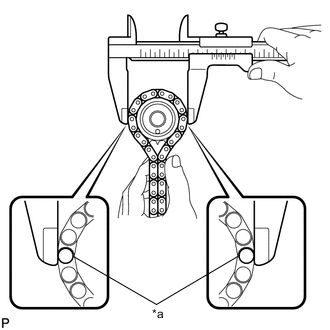
*a Chain Roller Place the chain sub-assembly around the crankshaft.
-
Using a vernier caliper, measure the diameter of the crankshaft and chain sub-assembly.
Minimum gear diameter (with chain sub-assembly) 51.1 mm (2.012 in.) Note
The vernier caliper must be in contact with the chain sub-assembly rollers when measuring.
If the diameter is less than the minimum, replace the chain sub-assembly and crankshaft.
-
-
INSPECT TIMING CHAIN TENSION ARM
-
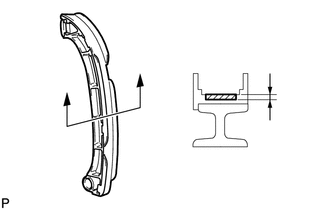
Using a vernier caliper, measure the timing chain tensioner arm for wear.
Maximum wear 1.0 mm (0.0394 in.) If the wear is greater than the maximum, replace the timing chain tensioner arm.
-
-
INSPECT TIMING CHAIN GUIDE
-
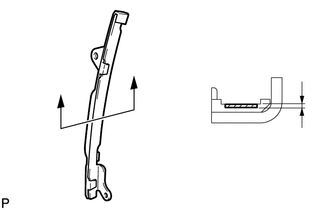
Using a vernier caliper, measure the timing chain guide for wear.
Maximum wear 1.0 mm (0.0394 in.) If the wear is greater than the maximum, replace the timing chain guide.
-
-
INSPECT NO. 2 CHAIN VIBRATION DAMPER
-
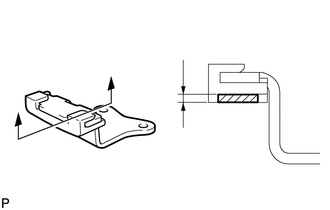
Using a vernier caliper, measure the No.2 chain vibration damper for wear.
Maximum wear 1.0 mm (0.0394 in.) If the wear is greater than the maximum, replace the No. 2 chain vibration damper.
-
-
INSPECT NO. 1 CHAIN TENSIONER ASSEMBLY
-
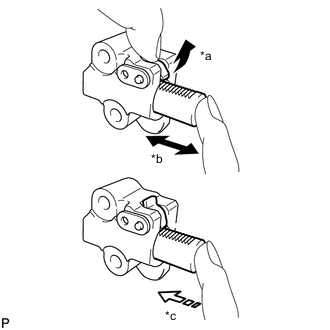
*a Raise *b Move *c Lock Check that the plunger moves smoothly when the ratchet pawl is raised by hand.
-
Release the ratchet pawl, then check that the plunger is locked in place by the ratchet pawl and does not move when pushed by hand.
-
-
INSPECT CAMSHAFT
-
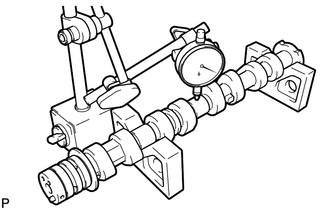
Inspect the camshaft for runout.
-
Place the camshaft on V-blocks.
-
Using a dial indicator, measure the runout at the center journal.
Maximum runout 0.04 mm (0.00157 in.) If the runout is greater than the maximum, replace the camshaft.
-
-
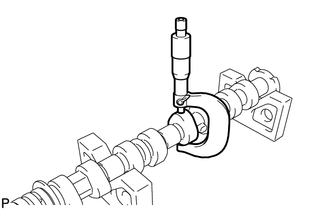
Inspect the cam lobes.
-
Using a micrometer, measure the cam lobe height.
Standard cam lobe height 41.699 to 41.7989 mm (1.6417 to 1.6456 in.) Minimum cam lobe height 41.549mm (1.6358in.) If the cam lobe height is less than the minimum, replace the camshaft.
-
-
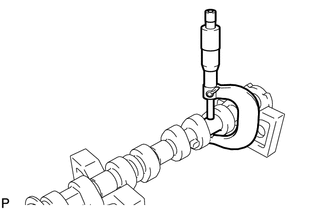
Inspect the camshaft journals.
-
Using a micrometer, measure the journal diameter.
Standard Journal Diameter Journal Position Specified Condition No. 1 34.454 to 34.470 mm (1.3565 to 1.3571 in.) Other 22.954 to 22.970 mm (0.9037 to 0.9043 in.) If the journal diameter is not as specified, check the camshaft oil clearance.
-
-
-
INSPECT NO. 2 CAMSHAFT
-
Inspect the No. 2 camshaft for runout.
-
Place the No. 2 camshaft on V-blocks.
-
Using a dial indicator, measure the runout at the center journal.
Maximum runout 0.04 mm (0.00157 in.) If the runout is greater than the maximum, replace the No. 2 camshaft.
-
-
Inspect the cam lobes.
-
Using a micrometer, measure the cam lobe height.
Standard cam lobe height 41.000 to 41.100 mm (1.6142 to 1.6181 in.) Minimum cam lobe height 40.85 mm (1.6083in.) If the cam lobe height is less than the minimum, replace the No. 2 camshaft.
-
-
Inspect the No.2 camshaft journals.
-
Using a micrometer, measure the journal diameter.
Standard Journal Diameter Journal Position Specified Condition No. 1 34.454 to 34.470 mm (1.3565 to 1.3571 in.) Other 22.954 to 22.970 mm (0.9037 to 0.9043 in.) If the journal diameter is not as specified, check the camshaft oil clearance.
-
-
-
INSPECT CYLINDER HEAD SET BOLT
-
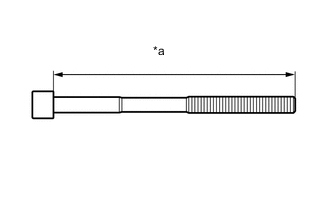
*a Measurement Length Using a vernier caliper, measure the length of the cylinder head set bolt from the seat to the end.
Standard length 125.3 to 126.7 mm (4.9331 to 4.9882 in.) Maximum length 128.2 mm (5.047 in.) If the length is greater than the maximum, replace the cylinder head set bolt with a new one.
-
-
INSPECT EXHAUST MANIFOLD CONVERTER SUB-ASSEMBLY (TWC: Front Catalyst)
-
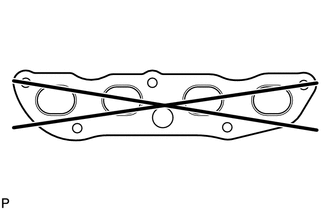
Using a straightedge and feeler gauge, check the surface that contact the cylinder head sub-assembly for warpage.
Maximum warpage 1.2 mm (0.0472 in.) Tech Tips
If the warpage is greater than the maximum, replace the exhaust manifold converter sub-assembly.
-