FUEL PUMP REMOVAL
PROCEDURE
-
REMOVE REAR NO. 1 SEAT ASSEMBLY (w/ Rear No. 1 Seat)
-
Remove the rear No. 1 seat Click here.
-
-
REMOVE REAR CENTER SEAT ASSEMBLY (w/ Rear No. 1 Seat)
-
Remove the rear center seat Click here.
-
-
REMOVE REAR FLOOR SERVICE HOLE COVER
-
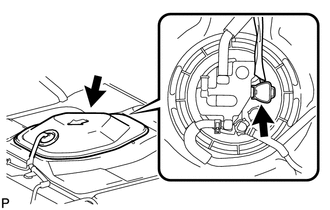
Remove the rear floor service hole cover.
-
Disconnect the connector from the fuel suction with pump.
-
-
DISCHARGE FUEL SYSTEM PRESSURE
-
Discharge fuel system pressure Click here.
-
-
PRECAUTION
Note
After turning the ignition switch off, waiting time may be required before disconnecting the cable from the battery terminal. Therefore, make sure to read the disconnecting the cable from the battery terminal notice before proceeding with work Click here.
-
DISCONNECT CABLE FROM NEGATIVE BATTERY TERMINAL
Note
When disconnecting the cable, some systems need to be initialized after the cable is reconnected Click here.
-
REMOVE FUEL TANK MAIN TUBE SUB-ASSEMBLY
-
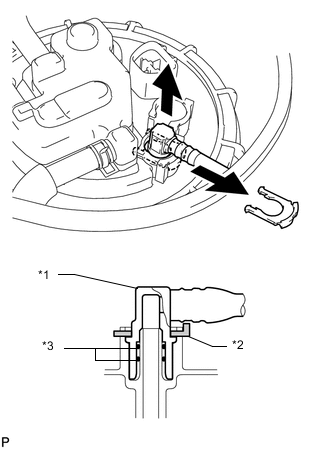
Text in Illustration *1 Fuel Tube Joint *2 Tube Joint Clip *3 O-Ring Remove the tube joint clip and pull the fuel tube joint out of the plug of the fuel suction with pump.
Note
-
Check that there is no dirt or other foreign objects around the fuel tube joint before disconnecting it. Clean the joint if necessary.
-
It is necessary to prevent mud or dirt from entering the joint. If mud or dirt gets in the joint, the O-rings may not seal properly.
-
Only disconnect the joint by hand.
-
Do not bend, kink or twist the nylon tubes.
-
Protect the contact surfaces by covering the fuel tube joint with a plastic bag.
-
-
-
DISCONNECT NO. 1 FUEL EVAPORATION TUBE SUB-ASSEMBLY
-
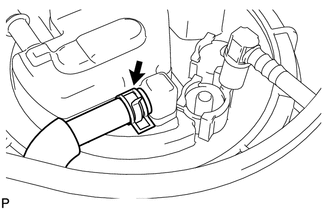
Loosen the clip and disconnect the No. 1 fuel evaporation tube from the fuel suction with pump.
-
-
DISCONNECT NO. 1 CHARCOAL CANISTER OUTLET HOSE
-
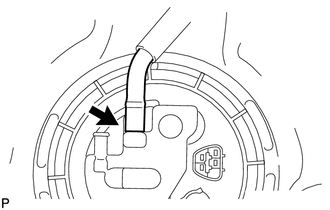
Disconnect the No. 1 charcoal canister outlet hose from the fuel suction with pump.
-
-
REMOVE FUEL PUMP GAUGE RETAINER
Note
Before performing these procedures, first cover the connector and fuel tube joint of the fuel suction with pump and gauge tube assembly with vinyl tape and then clean any dirt and foreign matter in order to prevent contamination of the fuel system.
-
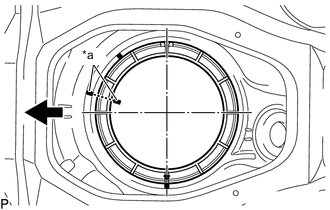
*a Co-rotation Prevention Check Mark 
Front Side of Vehicle Apply a co-rotation prevention check mark to the fuel suction with pump and gauge tube assembly and vehicle body.
Note
-
The fuel suction with pump and gauge tube assembly has 2 protrusions that engage with 2 notches on the fuel tank assembly to ensure correct alignment and to prevent the fuel suction with pump and gauge tube assembly from turning during installation and removal of the fuel pump gauge retainer.
-
If the fuel pump gauge retainer is turned with the fuel suction with pump and gauge tube assembly misaligned, the fuel suction with pump and gauge tube assembly will turn with the fuel pump gauge retainer and may be damaged.
-
Make sure to apply a co-rotation prevention check mark to prevent the fuel suction with pump and gauge tube assembly from co-rotating.
-
-
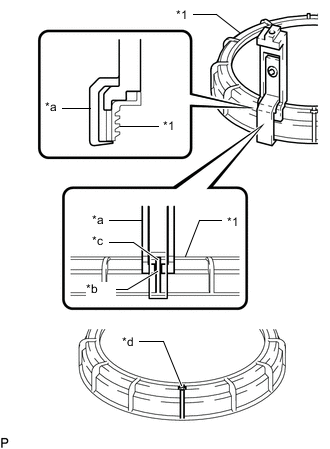
*1 Fuel Pump Gauge Retainer *a SST (Claw Set) *b Rib *c Cutout *d SST (Claw Set) Incorrect Installation Point (Rotational Start Point Mark of Fuel Pump Gauge Retainer) Install SST to the fuel pump gauge retainer.
-
Set 4 SST (claw set) to the fuel pump gauge retainer.
- SST
- 09808-14031 ( 09808-01080, 09808-01090, 09808-01100 )
Note
-
Align the notch of SST (claw set) with the protrusion of the fuel pump gauge retainer.
-
Do not place SST on the rotational start point mark of the fuel pump gauge retainer, otherwise SST (claw set) cannot be set correctly.
-
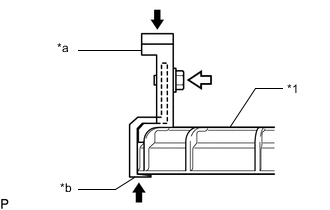
*1 Fuel Pump Gauge Retainer *a SST (Claw Set) *b Hook Press 
SST (Bolt) While firmly pressing the claw of SST against the rib of the fuel pump gauge retainer, tighten the bolt.
-
Temporarily install SST (plate) to SST (claw set) with 4 SST (bolt).
- SST
- 09808-14031 ( 09808-01030, 09808-01090 )
-
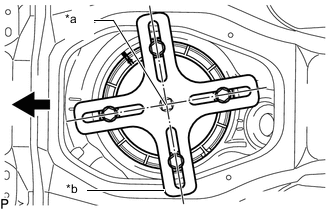
*a Center Point of Fuel Pump Gauge Retainer *b SST (Plate) Front Side of Vehicle Adjust the position of SST (claw set) so that the hole in SST (plate) for installing SST (handle) is in the center of the fuel pump gauge retainer.
-
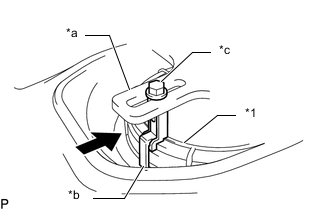
*1 Fuel Pump Gauge Retainer *a SST (Plate) *b SST (Claw Set) *c SST (Bolt) Press Press SST (claw set) against the rib of the fuel pump gauge retainer and tighten SST (bolt).
-
Install SST (handle) to SST (plate).
- SST
- 09808-14031 ( 09808-01010, 09808-01020 )
-
-
Slowly loosen the fuel pump gauge retainer by approximately 90°.
Note
-
Do not spin SST too fast or use an impact wrench as this may result in damage to components.
-
Do not use any tools other than SST, such as a screwdriver, etc.
-
Do not use excessive force when pressing down on SST, as the fuel pump gauge retainer will place excessive force on the fuel suction tube assembly with pump and gauge and be difficult to remove, and parts may be damaged.
-
-
While one person loosens the fuel pump gauge retainer, have another person press down the rising fuel suction with pump and gauge tube assembly, securely insert the protrusion of the fuel suction with pump and gauge tube assembly into the groove of the fuel tank assembly, and then remove the fuel pump gauge retainer while making sure that the fuel suction with pump and gauge tube assembly is properly aligned.
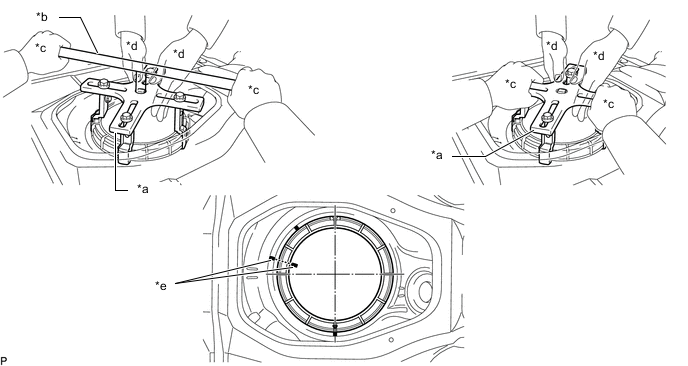
*a SST (Plate) *b SST (Handle) *c Person in Change of Loosening *d Person in Charge of Pressing Down *e Co-rotation Prevention Check Mark - - Note
-
The fuel suction with pump and gauge tube assembly is pressed against the underside of the fuel tank assembly by a spring, and the constant upward pressure applied by this spring causes the fuel suction with pump and gauge tube assembly to rise up.
-
If the fuel pump gauge retainer is turned while the fuel suction with pump and gauge tube assembly and fuel tank assembly are not correctly aligned, the fuel suction with pump and gauge tube assembly will move with the fuel pump gauge retainer, and the fuel suction with pump and gauge tube assembly and fuel tank assembly may both be damaged.
-
Do not rotate the fuel pump gauge retainer when the co-rotation prevention check mark is out of place.
-
Be careful not to bend the arm of the fuel sender gauge assembly.
-
-
-
REMOVE FUEL SUCTION WITH PUMP ASSEMBLY
-
Remove the fuel suction with pump from the fuel tank.
Note
Make sure that the fuel sender gauge arm does not bend.
-
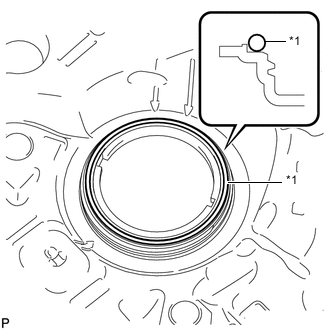
*1 Gasket Remove the gasket from the fuel tank.
-