LUBRICATION SYSTEM ON-VEHICLE INSPECTION
PROCEDURE
-
CHECK OIL QUALITY
-
Check the engine oil for deterioration, water contamination, discoloration or thinning.
If the quality is visibly poor, replace the engine oil and oil filter element Click here.
-
-
INSPECT ENGINE OIL LEVEL
-
Warm up the engine, stop the engine and wait 5 minutes. The engine oil level should be between the dipstick low level mark and full level mark.
If low, check for leakage and add oil up to the full level mark.
Note
Do not fill engine oil above the full level mark.
Tech Tips
A certain amount of engine oil will be consumed while driving. In the following situations, oil consumption may increase, and engine oil may need to be refilled in between oil maintenance intervals.
-
When the engine is new, for example directly after purchasing the vehicle or after replacing the engine.
-
If low quality oil or oil of an inappropriate viscosity is used.
-
When driving at high engine speed or with a heavy load, (when towing, or), when driving while accelerating or decelerating frequently.
-
When idling for a long time, or when driving frequently through heavy traffic.
When judging the amount of oil consumption, keep in mind that the oil may have become diluted, making it difficult to judge the true level accurately.
-
-
-
INSPECT ENGINE OIL PRESSURE
-
Remove the oil pressure sender gauge Click here.
-
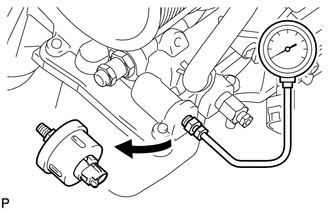
Install an oil pressure sender gauge with an adapter.
-
Warm up the engine.
-
Measure the engine oil pressure.
Standard Oil Pressure Condition Specified Condition Idle 50 kPa (0.5 kgf/cm2, 7.3 psi) or more
2500 rpm 230 kPa (2.3 kgf/cm2, 33 psi) or more
If the pressure is not as specified, check the oil pump.
-
Remove the oil pressure gauge and adapter.
-
Install the oil pressure sender gauge Click here.
-