EGR VALVE INSPECTION
PROCEDURE
-
INSPECT ELECTRIC EGR CONTROL VALVE ASSEMBLY
-
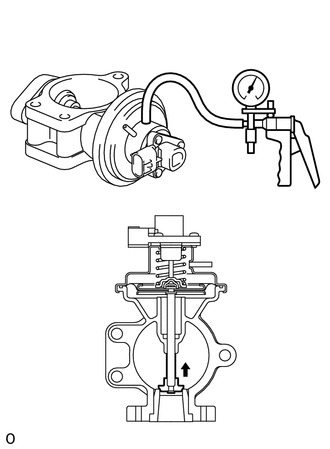
Inspect the electric EGR control valve.
-
When a vacuum of 27 kPa (200 mmHg, 7.88 in.Hg) is applied to the diaphragm chamber, check that the shaft rises and air flows out.
-
Maintaining the above conditions, check that there are no leaks and the shaft stays in position.
-
Check that the valve does not have heavy carbon deposits and is not stuck.
If the result is not as specified, replace the electric EGR control valve.
-
-
Inspect the EGR valve position sensor.
-
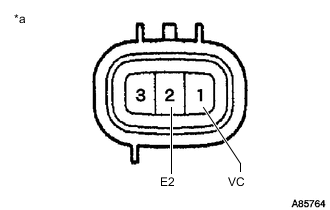
Text in Illustration *a Component without harness connected
(Electric EGR Control Valve)
Measure the resistance according to the value(s) in the table below.
Standard Resistance Tester Connection Condition Specified Condition 1 (VC) - 2 (E2) 20°C (68°F) 4.0 to 6.0 kΩ If the result is not as specified, replace the electric EGR control valve assembly.
-
-
Create a vacuum in the diaphragm chamber.
-
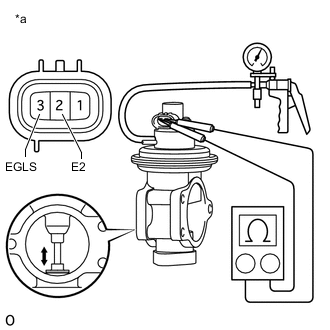
Text in Illustration *a Component without harness connected
(Electric EGR Control Valve)
Measure the resistance according to the value(s) in the table below.
Standard Resistance Tester Connection Condition Specified Condition 3 (EGLS) - 2 (E2) 20°C (68°F)
EGR valve is fully opened
2.0 to 7.0 kΩ 20°C (68°F)
EGR valve is fully closed
0.1 to 2.5 kΩ Tech Tips
The resistance increases in proportion to the opening angle of the EGR valve.
If the result is not as specified, replace the electric EGR control valve assembly.
-
-
-
INSPECT NO. 2 EGR VALVE ASSEMBLY (w/ EGR Cooler)
-
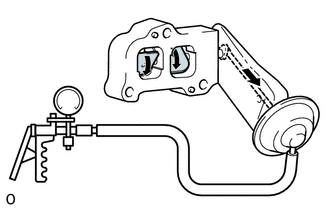
When a vacuum of 33.3 kPa (250 mmHg, 9.83 in.Hg) is applied to the diaphragm chamber, check that the valve turns and air flows out.
-
Maintaining the above conditions, check that there are no leaks and the valve does not return.
-
Check that the valve does not have heavy carbon deposits and is not stuck.
If the result is not as specified, replace the No. 2 EGR valve.
-