EMISSION CONTROL SYSTEM ON-VEHICLE INSPECTION
CAUTION / NOTICE / HINT
Tech Tips
When there is a malfunction which causes the EGR system to remain on, black or white smoke may be emitted from the exhaust pipe.
PROCEDURE
-
CHECK SEATING OF EGR VALVE
-
Check that the engine starts and idles.
-
Stop the engine.
-
-
CHECK EGR VALVE OPERATION
-
Connect the intelligent tester to the DLC3.
-
Turn the ignition switch to ON.
-
Enter the following menus: Powertrain / Control the EGR Step Position.
-
Check the Data List / Target EGR Position and Actual EGR valve pos.
OK Control Range Condition Specified Condition Active Test performed (Set EGR position to 0% → 30% → 60% → 90% → 60% → 30% → 0%) Actual EGR valve opening percentage changes according to Active Test operation for CCo:
If the result is not as specified, refer to DTC P0400 Click here.
for DPF:
If the result is not as specified, refer to DTC P042E Click here.
-
-
CHECK NO. 2 EGR VALVE ASSEMBLY
-
Disconnect the vacuum hose from the No. 2 EGR valve.
-
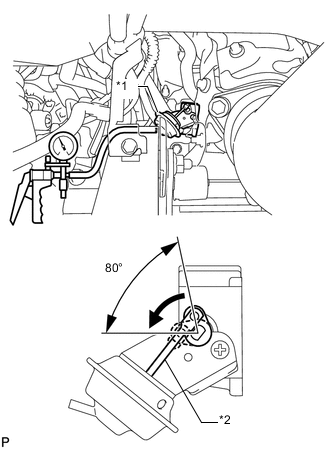
Text in Illustration *1 No. 2 EGR Valve *2 Rod Apply vacuum and check that the rod of the No. 2 EGR valve operates as shown in the illustration.
If the rod does not operate, replace the No. 2 EGR valve Click here.
-
-
VISUALLY INSPECT HOSES, CONNECTIONS AND GASKETS
-
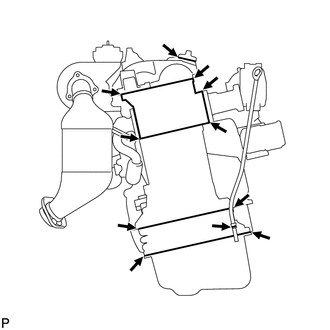
Visually check that the hoses, connections and gaskets have no cracks, leaks or damage.
Note
-
Detachment or other problems with the engine oil dipstick, filler cap, PCV hose or other components may cause the engine to run improperly.
-
Air suction caused by disconnections, looseness or cracks in the parts of the air induction system between the throttle body and cylinder head will cause engine failure or engine malfunctions.
If the result is not as specified, replace parts as necessary.
-
-