OIL AND OIL FILTER REPLACEMENT

CAUTION:
-
Prolonged and repeated contact with engine oil will result in the removal of natural oils from the skin, leading to dryness, irritation and dermatitis. In addition, used engine oil contains potentially harmful contaminants which may cause skin cancer.
-
Wear protective clothing and gloves. Avoid contact with used oil. If contact occurs, wash your skin thoroughly with soap or waterless hand cleaner. Never use gasoline, thinners, or solvents to wash the skin.
-
In order to protect the environment, dispose of used oil and used oil filters at designated disposal sites only.
-
DRAIN ENGINE OIL
-
Remove the oil filler cap.
-
Remove the oil pan drain plug and gasket, and drain the engine oil into a container.
-
Install a new gasket to the oil pan drain plug.
-
Clean and install the oil pan drain plug.
- Torque:
- 40 N*m { 408 kgf*cm, 30 ft.*lbf }
-
-
REMOVE OIL FILTER CAP ASSEMBLY
-
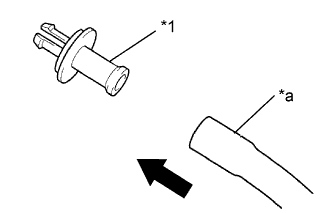
Text in Illustration *1 Pipe *a Hose Connect a hose with an inside diameter of 15 mm (0.591 in.) to the pipe.
-
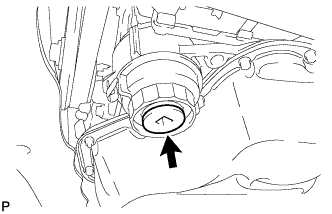
Remove the oil filter drain plug from the oil filter cap assembly.
-
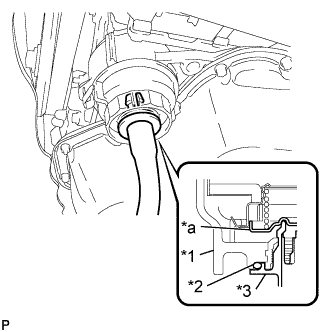
Text in Illustration *1 Oil Filter Cap Assembly *2 O-ring *3 Pipe *a Valve Install the pipe with the hose into the oil filter cap assembly.
Note
If the O-ring is removed with the oil filter drain plug, install the O-ring together with the pipe.
Tech Tips
Use a container to catch the draining oil.
-
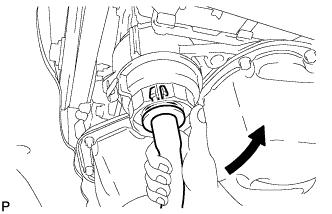
Check that the engine oil is drained from the oil filter cap assembly. Then disconnect the pipe as shown in the illustration and remove the O-ring.
-
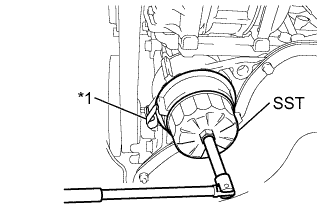
Text in Illustration *1 Oil Filter Bracket Clip Using SST, remove the oil filter cap assembly.
- SST
- 09228-06501
Note
Do not remove the oil filter bracket clip.
-
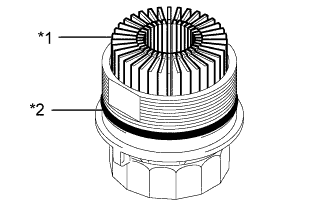
Text in Illustration *1 Oil Filter Element *2 O-ring Remove the oil filter element and O-ring from the oil filter cap assembly.
Note
Do not use any tools to remove the O-ring to prevent damage to the oil filter cap assembly. Be sure to remove it by hand.
-
-
INSTALL OIL FILTER CAP ASSEMBLY
-
Clean the inside of the oil filter cap assembly, the threads and O-ring groove.
-
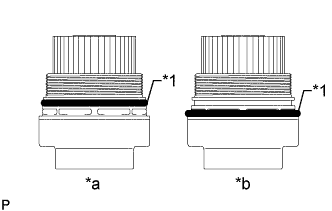
Text in Illustration *1 O-ring *a Correct *b Incorrect Apply a small amount of engine oil to a new O-ring and install it to the oil filter cap assembly.
Note
-
Be sure to install the O-ring in the proper location, otherwise oil may leak.
-
Do not twist the O-ring.
-
-
Set a new oil filter element in the oil filter cap assembly.
-
Remove any dirt or foreign matter from the installation surface of the engine.
-
Apply a small amount of engine oil to the O-ring again and temporarily install the oil filter cap assembly.
Note
Make sure that the O-ring does not get caught between the parts.
-
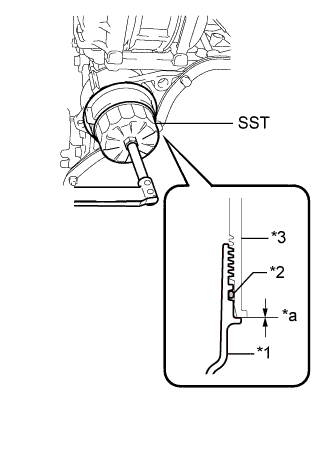
Text in Illustration *1 Oil Filter Cap Assembly *2 O-ring *3 Oil Filter Bracket *a No Gap Using SST, tighten the oil filter cap assembly.
- SST
- 09228-06501
- Torque:
- 25 N*m { 255 kgf*cm, 18 ft.*lbf }
Note
After tightening the oil filter cap assembly, make sure that there is no gap and that the O-ring is not protruding.
-
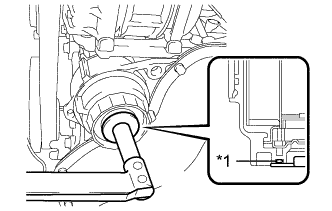
Text in Illustration *1 O-ring Apply a small amount of engine oil to a new O-ring, and install it to the oil filter cap assembly.
Note
Before installing the O-ring, remove any dirt or foreign matter from the installation surface of the oil filter cap assembly.
-
Install the oil filter drain plug.
- Torque:
- 13 N*m { 127 kgf*cm, 10 ft.*lbf }
Note
Be careful that the O-ring does not get caught between any surrounding parts.
-
-
ADD ENGINE OIL
-
Add new engine oil and install the oil filler cap.
Standard Oil Grade Oil Grade Oil Viscosity (SAE)
-
API grade SL "Energy-Conserving", SM "Energy-Conserving", SN "Resource-Conserving" or ILSAC multigrade engine oil
-
0W-20
-
5W-20
-
5W-30
-
10W-30
API grade SL, SM or SN multigrade engine oil
-
15W-40
-
20W-50
Standard Capacity Item Specified Condition Drain and refill (with oil filter change) 4.4 liters (4.6 US qts, 3.9 Imp. qts) Drain and refill (without oil filter change) 4.0 liters (4.2 US qts, 3.5 Imp. qts) Dry fill 5.3 liters (5.6 US qts, 4.7 Imp. qts) -
-
-
INSPECT FOR OIL LEAK
-
Warm up the engine. Make sure that there are no engine oil leaks from the area that was worked on.
-
-
INSPECT ENGINE OIL LEVEL
-
Warm up and stop the engine, then wait for 5 minutes.
-
Check that the engine oil level is between the low level and full level marks on the engine oil level dipstick.
If the level is low, check for engine oil leaks and add engine oil to the full level mark.
Note
Do not fill to above the full level mark.
Tech Tips
A certain amount of engine oil will be consumed while driving. In the following situations, oil consumption may increase, and engine oil may need to be refilled in between oil maintenance intervals.
-
When the engine is new, for example directly after purchasing the vehicle or after replacing the engine.
-
If low quality oil or oil of an inappropriate viscosity is used.
-
When driving at high engine speeds or with a heavy load (when towing, etc.), or when accelerating or decelerating frequently while driving.
-
When judging the amount of oil consumption, keep in mind that the oil may have become diluted, making it difficult to judge the true level accurately.
-
-