AIR CONDITIONING UNIT INSTALLATION

-
INSTALL BLOWER ASSEMBLY
-
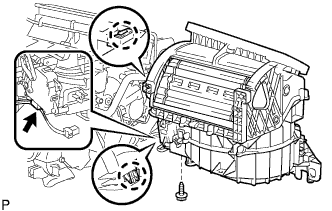
Install the blower assembly with the claw and screw.
-
Connect the connector.
-
-
INSTALL AIR CONDITIONING AMPLIFIER ASSEMBLY
-

Install the air conditioning amplifier with the screw and connect the connector.
-
-
INSTALL NO. 2 AIR DUCT
-
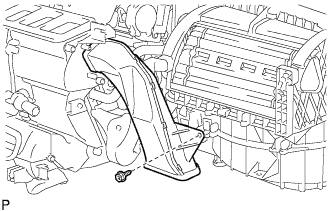
Install the No. 2 air duct with the screw.
-
-
INSTALL AIR CONDITIONER UNIT ASSEMBLY
-
Using pliers, grip the claws of the clip and slide the clip to connect the heater water inlet hose.
-
Using pliers, grip the claws of the clip and slide the clip to connect the heater water outlet hose.
-
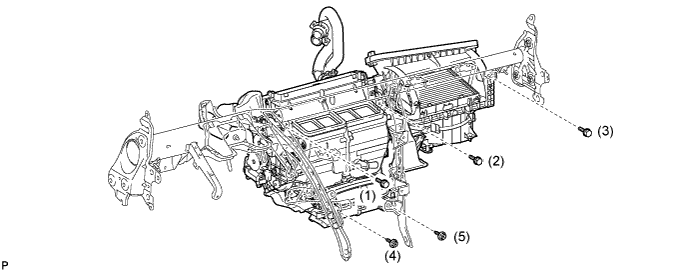
Install the air conditioning unit assembly with the 3 bolts and 2 screws.
Tech Tips
Tighten the bolts and screws to the instrument panel reinforcement in the order shown in the illustration.
- Torque:
- Bolt
- 9.8 N*m { 100 kgf*cm, 87 in.*lbf }
-
-
INSTALL INSTRUMENT PANEL REINFORCEMENT ASSEMBLY
-
Driver seat side:
-
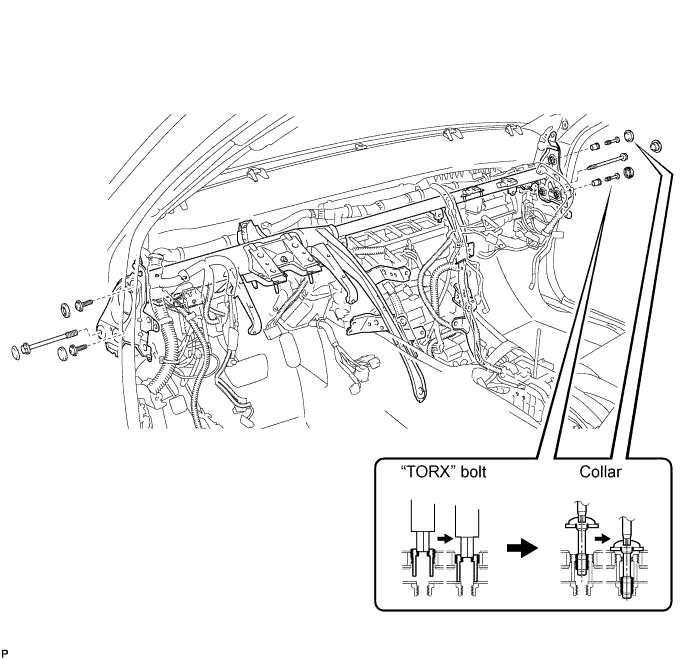
Using a T40 "TORX" socket wrench, install the instrument panel reinforcement with the 2 "TORX" bolts.
-
-
Install the bolt.
-
Passenger seat side:
-
Using a 12 mm hexagon wrench, install the instrument panel reinforcement with the 2 collars.
- Torque:
- 6.0 N*m { 61 kgf*cm, 53 in.*lbf }
-
Using a T40 "TORX" socket wrench, install the 2 "TORX" bolts.
- Torque:
- 20 N*m { 204 kgf*cm, 15 ft.*lbf }
-
Install the bolt.
-
-
Install the 6 caps.
-
Install the instrument panel reinforcement with the 3 bolts and nut.
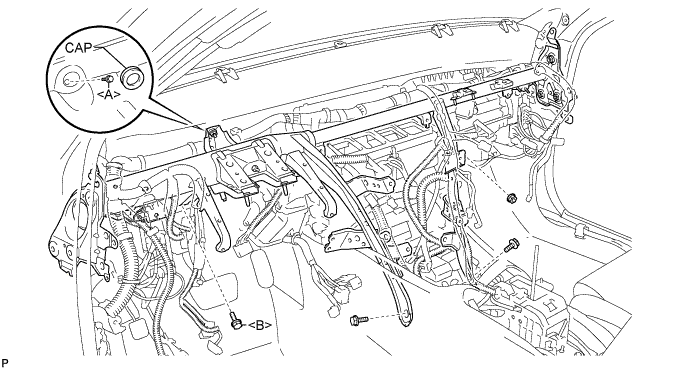
- Torque:
- Bolt<B>
- 21 N*m { 214 kgf*cm, 16 ft.*lbf }
- Nut
- 9.8 N*m { 100 kgf*cm, 87 in.*lbf }
-
Install the bolt <A> and cap.
-
Connect each connector and engage each clamp.
-
Install the 2 earth wires with the 2 bolts.
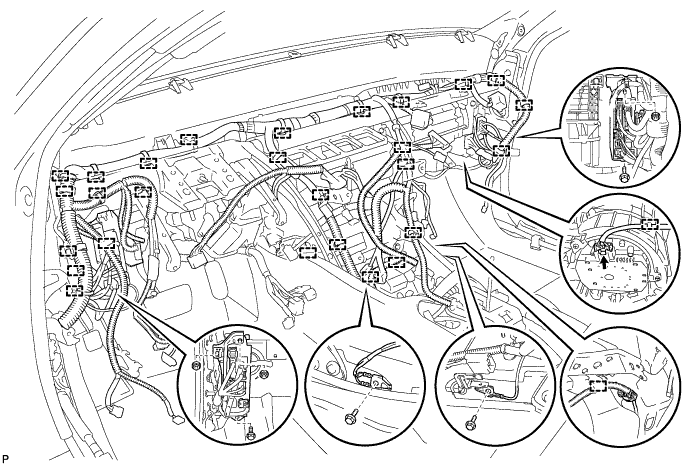
- Torque:
- 8.5 N*m { 87 kgf*cm, 75 in.*lbf }
-
Install the 2 junction blocks with the 2 bolts and 3 nuts.
- Torque:
- Nut
- 8.0 N*m { 82 kgf*cm, 71 in.*lbf }
- Bolt
- 13 N*m { 127 kgf*cm, 9 ft.*lbf }
-
-
INSTALL POWER SOURCE CONTROL ECU WITH BRACKET (for RHD)
-
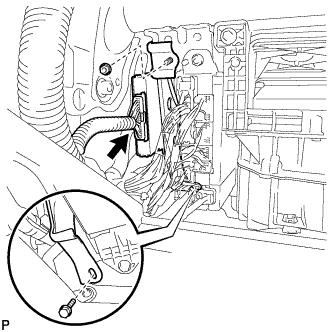
Install the bolt and nut, to install the power source control ECU with bracket.
- Torque:
- Bolt
- 13 N*m { 126 kgf*cm, 9 ft.*lbf }
- Nut
- 13 N*m { 126 kgf*cm, 9 ft.*lbf }
-
Connect the connector.
-
-
INSTALL MULTI-MEDIA INTERFACE ECU WITH BRACKET (for LHD)
-
Install the multi-media interface ECU with bracket with the 2 screws.
-
Connect each connector.
-
-
INSTALL SKID CONTROL BUZZER
-
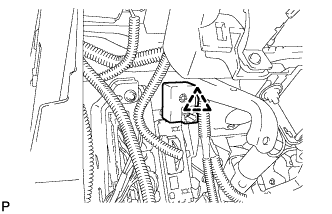
Attach the clip and install the skid control buzzer.
-
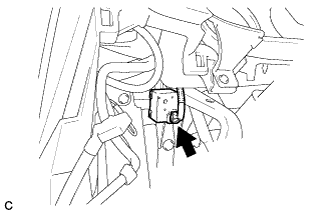
Connect the skid control buzzer connector.
-
-
INSTALL PARKING ASSIST ECU (w/ Parking Assist Monitor System)
for LHD: Click here
for RHD: Click here
-
INSTALL DISTANCE CONTROL ECU (w/ Dynamic Radar Cruise Control System)
for LHD: Click here
for RHD: Click here
-
INSTALL CLEARANCE WARNING BUZZER (w/ LEXUS Parking Assist-sensor System)
-
Engage the clamp and install the clearance warning buzzer.
-
Connect the connector.
-
-
INSTALL LOWER DEFROSTER NOZZLE ASSEMBLY
-
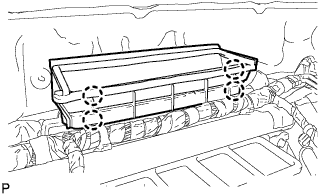
Attach the 4 claws to install the lower defroster nozzle assembly.
-
-
INSTALL STEERING COLUMN ASSEMBLY
-
INSTALL NO. 1 AIR DUCT
-
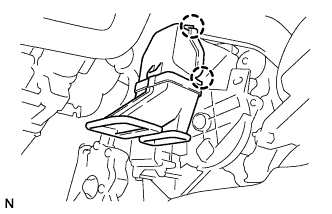
Engage the 2 claws to install the No. 1 air duct.
-
-
INSTALL INSTRUMENT PANEL SAFETY PAD ASSEMBLY
-
INSTALL WINDSHIELD WIPER MOTOR AND LINK ASSEMBLY
-
INSTALL HEATER WATER INLET HOSE
-
Install the water hose and attach the clip.
-
-
INSTALL HEATER WATER OUTLET HOSE
Tech Tips
Use the same procedure for the water hose inlet.
-
INSTALL COOLER REFRIGERANT LIQUID PIPE A
-
Remove the vinyl tape attached to the pipe.
-
Sufficiently apply compressor oil to a new O-ring and the fitting surface of the cooler refrigerant liquid pipe A.
Compressor oil ND-OIL 8 or equivalent -
Install the O-ring on the cooler refrigerant liquid pipe A.
-
Install the cooler refrigerant liquid pipe A to the fitting hole.
-
-
INSTALL SUCTION PIPE SUB-ASSEMBLY
-
Remove the vinyl tape attached to the pipe.
-
Sufficiently apply compressor oil to a new O-ring and the fitting surface of the suction pipe sub-assembly.
Compressor oil ND-OIL 8 or equivalent -
Install the O-ring on the suction pipe sub-assembly.
-
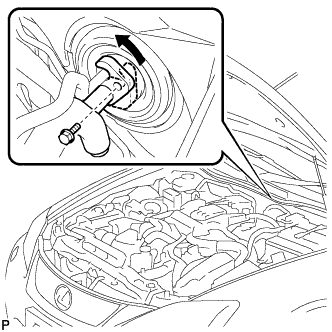
Move the hook connector in the direction indicated by the arrow in the illustration.
-
Insert the pipe joints into the fitting holes securely and tighten the bolt.
- Torque:
- 9.8 N*m { 100 kgf*cm, 87 in.*lbf }
-
-
CHARGE REFRIGERANT
-
Perform vacuum purging using a vacuum pump.
-
Charge refrigerant HFC-134a (R134a).
Standard 400 to 500g (14.10 to 17.63 oz.) - SST
- 09985-20010 ( 09985-02010, 09985-02050, 09985-02060, 09985-02070, 09985-02080, 09985-02090, 09985-02110, 09985-02130, 09985-02140, 09985-02150 )
Note
-
Do not operate the cooler compressor before charging refrigerant as the cooler compressor will not work properly without any refrigerant, and will overheat.
-
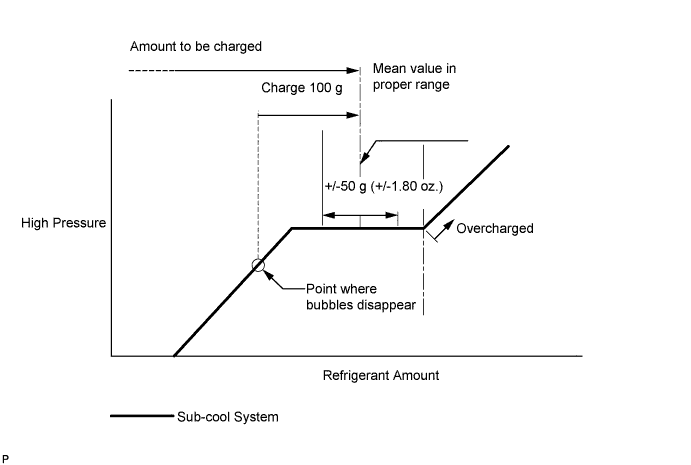
Approximately 100 g (3.53 oz.) of refrigerant may need to be charged after bubbles disappear. The refrigerant amount should be checked by measuring its quantity, and not with the sight glass.
-
-
WARM UP ENGINE
-
Warm up the engine at less than 1570 rpm for 2 minutes or more after charging the refrigerant.
Note
Be sure to warm up the compressor when turning the A/C switch ON after removing and installing the cooler refrigerant lines (including the compressor), to prevent damage to the compressor.
-
-
INSPECT FOR REFRIGERANT LEAK
-
After recharging the refrigerant gas, check for refrigerant gas leakage using a halogen leak detector.
-
Perform the operation under the following conditions:
-
Stop the engine.
-
Secure good ventilation (the gas leak detector may react to volatile gases other than refrigerant, such as evaporated gasoline or exhaust gas).
-
Repeat the test 2 or 3 times.
-
Make sure that some refrigerant remains in the refrigeration system. When compressor is off: approximately 392 to 588 kPa (4 to 6 kgf/cm2, 57 to 85 psi)
-
-
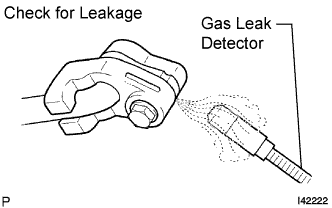
Using a gas leak detector, check the refrigerant line for leakage.
-
If a gas leak is not detected on the drain hose, remove the blower motor control (blower resistor) from the cooling unit. Insert the gas leak detector sensor into the unit and perform the test.
-
Disconnect the connector and leave the pressure switch on for approximately 20 minutes. Bring the gas leak detector close to the pressure switch and perform the test.
-