IGNITION SYSTEM INSPECTION

Note
In the following section, the terms "cold" and "hot" refer to the temperature of the coils. "Cold" means approximately -10 °C (14 °F) to 50 °C (122 °F). "Hot" means approximately 50 °C (122 °F) to 100 °C (212 °F).
-
INSPECT SPARK PLUG
Note
-
Do not use a wire brush for cleaning.
-
Do not attempt to adjust the electrode gap of a used spark plug.
-
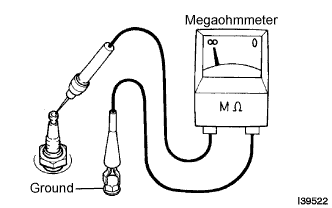
Check the electron.
-
Using an megaohmmeter, measure the insulation resistance.
Correct insulation resistance 10 MΩ or more If the resistance is less than the specified value, proceed to step (e). Tech Tips
If the megaohmmeter is not available, perform the following simple inspection instead.
-
-
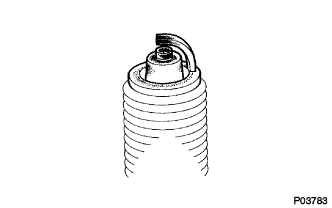
Alternative inspection method:
-
Quickly accelerate the engine to 4,000 rpm 5 times.
-
Remove the spark plug.
-
Visually check the spark plug.
-
If the electron is dry, the spark plug is functioning. Proceed to step 2.
-
If the electrode is damp, proceed to steps (c), (d) and (e).
-
Install the spark plug.
-
-
Check the spark plug for any damage on its threads and insulator.
If there is any damage, replace the spark plug.
Recommended spark plug DENSO K20HR11 -
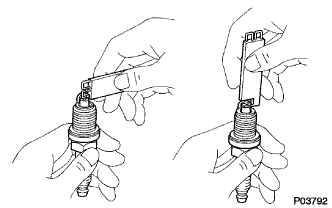
Check the spark plug electrode gap.
Maximum electrode gap for used spark plug 1.3 mm (0.051 in.) If the gap is greater than the maximum, replace the spark plug.
Correct electrode gap for new spark plug 1.0 to 1.1 mm (0.039 to 0.043 in.) Note
If adjusting the gap of a new spark plug, bend only the base of the ground electrode. Do not touch the tip. Never attempt to adjust the gap on a used plug.
-
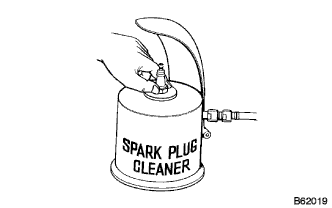
Clean the spark plugs.
If the electrode has traces of wet carbon, clean the electrode with a spark plug cleaner and then dry it.
Air pressure 588 kPa (6 kgf/cm2, 85psi) Duration 20 seconds or less Tech Tips
Only use the spark plug cleaner when the electrode is free of oil. If the electrode has traces of oil, use gasoline to clean off the oil before using the spark plug cleaner.
-