- Click here
INSPECT AND ADJUST BRAKE BOOSTER PUSH ROD
Note:Make an adjustment with no vacuum in the brake booster assembly. (Depress the brake pedal several times with the engine stopped.)
Tip:
-
Adjustment of the brake booster push rod is required when the brake master cylinder sub-assembly is replaced with a new one.
-
Adjustment is not necessary when the removed brake master cylinder sub-assembly is reused and the brake booster assembly is replaced with a new one.
-
Apply chalk to the tip of the accessory tool.
Tip:An accessory tool is enclosed with a new brake master cylinder sub-assembly.
-
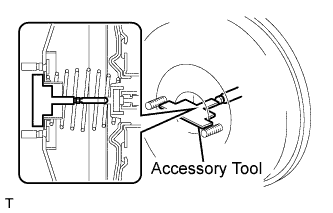
Place the accessory tool on the brake booster assembly.
-
Measure the clearance between the brake booster push rod and accessory tool.
Standard clearance 0 mm (0 in.) Tip:Adjust the clearance in the following cases:
-
If there is a clearance between the accessory tool and the shell of the brake booster (floating accessory tool), the push rod is protruding too far.
-
If the chalk does not stick on the tip of the brake booster push rod, the push rod protrusion is insufficient.
-
-
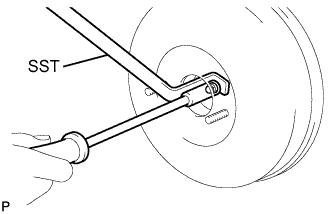
If the clearance is not as specified, adjust the push rod length by holding the rod using SST and turning the tip of the rod using a socket driver (7 mm).
09737-00020 Tip:Check the push rod clearance again after adjustment.
-
- Click here
INSTALL BRAKE MASTER CYLINDER SUB-ASSEMBLY (for LHD)
-
Install a new O-ring to the brake master cylinder sub-assembly.
-
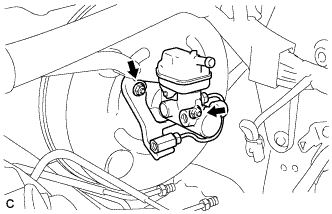
Install the brake master cylinder sub-assembly to the brake booster assembly with the 2 nuts.
13 N*m 132 kgf*cm 10 ft.*lbf Note:
-
The master cylinder requires careful handling. Do not allow the master cylinder to receive any impact, such as from being dropped. Do not reuse a master cylinder that has been dropped.
-
Do not strike or pinch the master cylinder piston, and do not cause any damage to the master cylinder piston by any other means.
-
When installing the master cylinder to the brake booster, or when removing the master cylinder from the brake booster, make sure that the master cylinder is kept horizontal or its tip faces downward (the piston faces upward) to prevent the master cylinder piston from falling out.
-
Do not allow any foreign objects to contaminate the master cylinder piston. If a foreign object gets on the piston, remove it by using a shop rag or a piece of cloth and then apply an even layer of lithium soap based glycol grease around the circumference (sliding part) of the piston.
-
Do not use any other type of grease or fluid.
-
-
- Click here
CONNECT BRAKE LINE (for LHD)
-
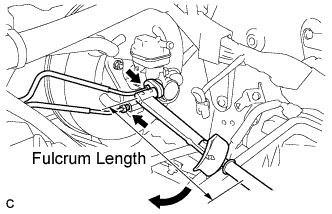
Using a union nut wrench (12 mm), connect the 2 brake lines to the brake master cylinder sub-assembly.
without union nut wrench 20 N*m 204 kgf*cm 15 ft.*lbf with union nut wrench 18 N*m 184 kgf*cm 13 ft.*lbf Note:
-
Use a torque wrench with a fulcrum length of 250 mm (9.84 in.).
-
This torque value is effective when the union nut wrench is parallel to the torque wrench.
-
-
- Click here
INSTALL BRAKE MASTER CYLINDER SUB-ASSEMBLY (for RHD)
-
Install a new O-ring to the brake master cylinder sub-assembly.
-
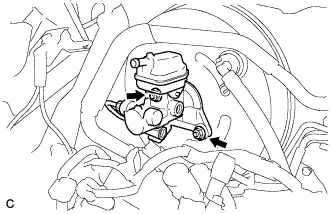
Install the brake master cylinder sub-assembly to the brake booster assembly with the 2 nuts.
13 N*m 132 kgf*cm 10 ft.*lbf Note:
-
The master cylinder requires careful handling. Do not allow the master cylinder to receive any impact, such as from being dropped. Do not reuse a master cylinder that has been dropped.
-
Do not strike or pinch the master cylinder piston, and do not cause any damage to the master cylinder piston by any other means.
-
When installing the master cylinder to the brake booster, or when removing the master cylinder from the brake booster, make sure that the master cylinder is kept horizontal or its tip faces downward (the piston faces upward) to prevent the master cylinder piston from falling out.
-
Do not allow any foreign objects to contaminate the master cylinder piston. If a foreign object gets on the piston, remove it by using a shop rag or a piece of cloth and then apply an even layer of lithium soap based glycol grease around the circumference (sliding part) of the piston.
-
Do not use any other type of grease or fluid.
-
-
- Click here
CONNECT BRAKE LINE (for RHD)
-
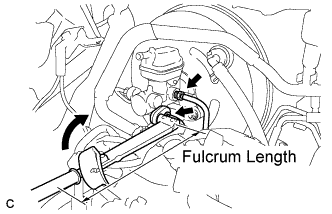
Using a union nut wrench (12 mm), connect the 2 brake lines to the brake master cylinder sub-assembly.
without union nut wrench 20 N*m 204 kgf*cm 15 ft.*lbf with union nut wrench 18 N*m 184 kgf*cm 13 ft.*lbf Note:
-
Use a torque wrench with a fulcrum length of 250 mm (9.84 in.).
-
This torque value is effective when the union nut wrench is parallel to the torque wrench.
-
-
- Click here
CONNECT NO. 1 RESERVOIR TUBE
-
Connect the No. 1 reservoir tube to the brake master cylinder reservoir assembly.
-
- Click here
FILL BRAKE FLUID RESERVOIR
-
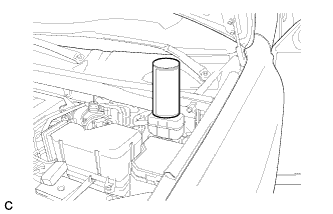
Fill the reservoir with brake fluid.
Brake Fluid SAE J1703 or FMVSS No. 116 DOT 3 Note:Make sure that there is sufficient brake fluid in the reservoir.
-
- Click here
BLEED BRAKE MASTER CYLINDER
Note:
-
If the master cylinder is reinstalled or if the reservoir becomes empty, bleed the master cylinder.
-
To prevent brake fluid from adhering, cover the painted surfaces with a shop rag or a piece of cloth.
-
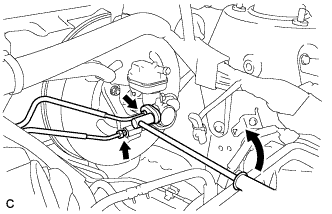
Using a union nut wrench (12 mm), disconnect the 2 brake lines from the master cylinder.
-
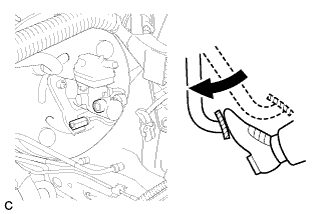
Slowly depress the brake pedal and hold it (*1).
-
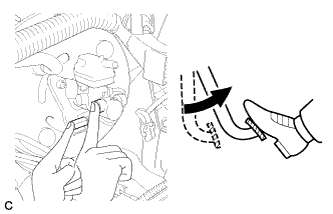
Cover the 2 outer holes with fingers, and release the brake pedal (*2).
-
Repeat (*1) and (*2) 3 or 4 times.
-
Using a union nut wrench (12 mm), connect the 2 brake lines to the master cylinder.
w/o union nut wrench 20 N*m 204 kgf*cm 15 ft.*lbf w/ union nut wrench 18 N*m 184 kgf*cm 13 ft.*lbf Note:
-
Use a torque wrench with a fulcrum length of 250 mm (9.84 in.).
-
This torque value is effective when the union nut wrench is parallel to the torque wrench.
-
-
- Click here
BLEED BRAKE LINE
Note:
-
Bleed the brake line of the wheel farthest from the master cylinder first.
-
Add brake fluid to keep the level between the MIN and MAX lines of the reservoir while bleeding the brakes.
-
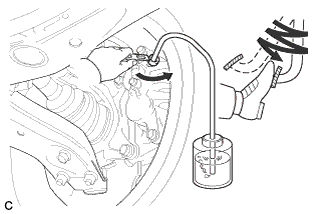
Connect a vinyl tube to the bleeder plug.
-
Depress the brake pedal several times, and then loosen the bleeder plug with the pedal depressed (*3).
-
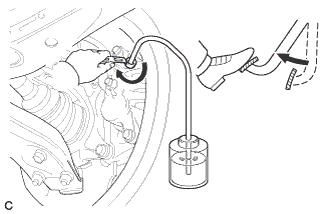
When fluid stops coming out, tighten the bleeder plug, and then release the brake pedal (*4).
-
Repeat (*3) and (*4) until all the air in the fluid is completely bled out.
-
Tighten the bleeder plug completely.
8.3 N*m 85 kgf*cm 73 in.*lbf -
Repeat the above procedure for each wheel to bleed the brake line.
-
- Click here
BLEED BRAKE ACTUATOR
Note:After bleeding the brake system, if the specified height or feel of the brake pedal cannot be obtained, bleed the brake actuator assembly with the intelligent tester by following the procedure below.
-
Depress the brake pedal more than 20 times with the ignition switch off.
-
Connect the intelligent tester to the DLC3, and then turn the ignition switch on (IG).
Note:Do not start the engine.
-
Turn the intelligent tester on and select "AIR BLEEDING" on the screen.
Note:
-
Refer to the intelligent tester operator's manual for further details.
-
Bleed the air by following the steps displayed on the intelligent tester.
-
-
Bleed the air according to "Step 1: Increase" on the intelligent tester display.
Note:
-
Make sure that the master cylinder reservoir tank does not run out of brake fluid.
-
Add brake fluid to keep the level between the MIN and MAX lines of the reservoir while bleeding the brakes.
-
Connect a vinyl tube to either one of the bleeder plugs.
-
Depress the brake pedal several times, and then loosen the bleeder plug connected to the vinyl tube with the pedal depressed (*5).
-
When fluid stops coming out, tighten the bleeder plug, and then release the brake pedal (*6).
-
Repeat (*5) and (*6) until all the air in the fluid is completely bled out.
-
Tighten the bleeder plug completely.
8.3 N*m 85 kgf*cm 73 in.*lbf -
Repeat the above procedure for the rest of the wheels to bleed the brake lines.
-
-
Bleed the suction line according to "Step 2: Inhalation" on the intelligent tester display.
Note:
-
Bleed the suction line by following the steps displayed on the intelligent tester.
-
Add brake fluid to keep the level between the MIN and MAX lines of the reservoir while bleeding the brakes.
-
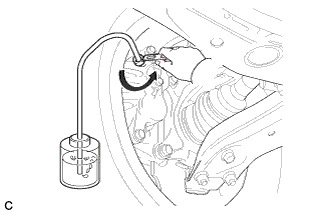
Connect a vinyl tube to the bleeder plug at the right front wheel or the right rear wheel and loosen the bleeder plug.
-
Operate the brake actuator assembly to bleed the air using the intelligent tester (*7).
Note:
-
During this step, be sure to release the brake pedal.
-
The actuator operation stops automatically in 4 seconds.
-
-
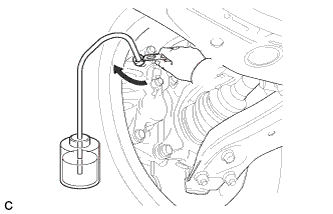
Check that the actuator operation has stopped by referring to the intelligent tester display, and tighten the bleeder plug (*8).
-
Repeat (*7) and (*8) until all the air in the fluid is completely bled out.
-
Tighten the bleeder plug completely.
8.3 N*m 85 kgf*cm 73 in.*lbf -
For the rest of the wheels, bleed the air in the same way as stated in the above procedure.
8.3 N*m 85 kgf*cm 73 in.*lbf
-
-
Bleed the pressure reduction line according to "Step 3: Decrease" on the intelligent tester display.
Note:
-
Bleed the pressure reduction line by following the steps displayed on the intelligent tester.
-
Add brake fluid to keep the level between the MIN and MAX lines of the reservoir while bleeding the brakes.
-
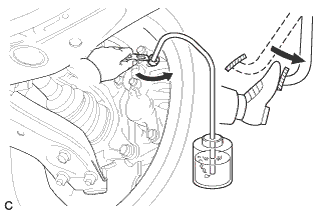
Connect a vinyl tube to either one of the bleeder plugs.
-
Loosen the bleeder plug (*9).
-
While keeping the brake pedal fully depressed, operate the brake actuator assembly using the intelligent tester.
Note:
-
The actuator operation stops automatically in 4 seconds. When performing this procedure continuously, an interval of at least 20 seconds is required.
-
After the operation is completed, the brake pedal goes down slightly. This is a normal phenomenon when the solenoid opens.
-
During this procedure, the pedal seems heavy, but completely depress it so that the brake fluid comes out from the bleeder plug.
-
Be sure to keep the brake pedal depressed. Never depress and release the pedal repeatedly.
-
-
Tighten the bleeder plug, and then release the brake pedal (*10).
-
Repeat steps (*9) to (*10) until all the air in the fluid is completely bled out.
-
Tighten the bleeder plug completely.
8.3 N*m 85 kgf*cm 73 in.*lbf -
Repeat the above procedures for the rest of the brakes to bleed the brake line.
-
-
Bleed the brake lines again according to "Step 4: Increase" on the intelligent tester display.
Note:
-
Bleed the air by following the steps displayed on the intelligent tester.
-
Add brake fluid to keep the level between the MIN and MAX lines of the reservoir while bleeding the brakes.
-
Connect a vinyl tube to either one of the bleeder plugs.
-
Depress the brake pedal several times, and then loosen the bleeder plug connected to the vinyl tube with the pedal depressed (*11).
-
When fluid stops coming out, tighten the bleeder plug, and then release the brake pedal (*12).
-
Repeat (*11) and (*12) until all the air in the fluid is completely bled out.
-
Tighten the bleeder plug completely.
8.3 N*m 85 kgf*cm 73 in.*lbf -
Repeat the above procedures for each brake to bleed the brake lines.
-
-
Finish "AIR BLEEDING" on the intelligent tester, and then turn off the tester.
-
Disconnect the intelligent tester from the DLC3.
-
Turn the ignition switch off.
-
- Click here
INSPECT FOR BRAKE FLUID LEAK
- Click here
INSPECT FLUID LEVEL
-
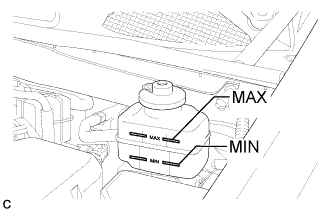
Check the fluid level.
If brake fluid level is lower than the MIN line, check for leaks and inspect the disc brake pads. If necessary, refill the reservoir with brake fluid to the MAX line after repair or replacement.
Brake Fluid SAE J1703 or FMVSS No. 116 DOT 3
-
- Click here
INSTALL CHARCOAL CANISTER ASSEMBLY (for LHD)
-
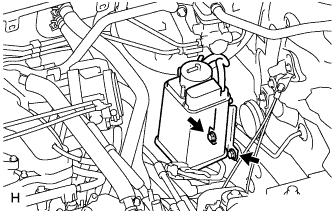
Install the charcoal canister assembly with the 2 bolts.
26.5 N*m 270 kgf*cm 20 ft.*lbf -
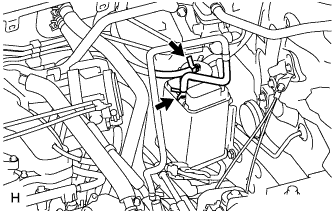
Connect the 2 hoses.
-
- Click here
INSTALL AIR CLEANER CASE SUB-ASSEMBLY (for LHD)
-
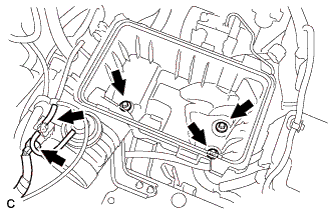
Install the air cleaner case with the 3 bolts.
5.0 N*m 51 kgf*cm 44 in.*lbf -
Connect the hose and connector.
-
- Click here
INSTALL AIR CLEANER FILTER ELEMENT SUB-ASSEMBLY (for LHD)
- Click here
INSTALL AIR CLEANER CAP SUB-ASSEMBLY (for LHD)
-
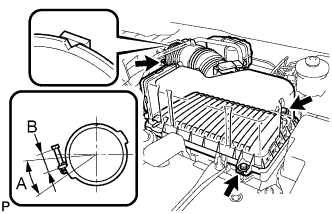
Install the air cleaner filter element, align the groove on the air cleaner hose with the throttle body alignment tab and tighten the clamp as shown in the illustration.
Tip:
-
A = 30°
-
B = 11 to 14 mm (0.433 in. to 0.551 in.)
-
-
Install the air cleaner cap with the 2 bolts and clips.
5.0 N*m 51 kgf*cm 44 in.*lbf -
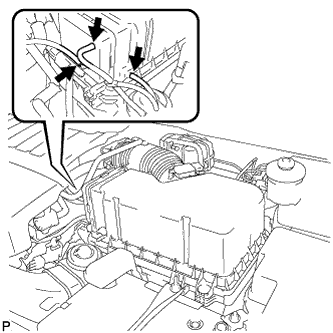
Connect the 3 vacuum hoses.
-
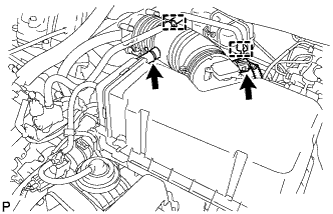
Connect the mass air flow meter connector.
-
Connect the No. 2 ventilation hose and fuel vapor feed hose assembly.
-
- Click here
INSTALL NO. 2 AIR CLEANER INLET (for LHD)
-
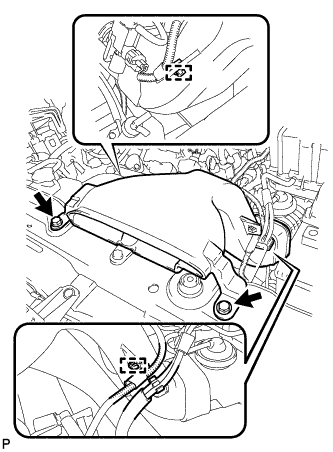
Install the No. 2 air cleaner inlet with the 2 bolts.
7.0 N*m 71 kgf*cm 62 in.*lbf -
Connect the 2 vacuum hoses and harness clamps.
-
- Click here
INSTALL COOL AIR INTAKE DUCT SEAL (for LHD)
-
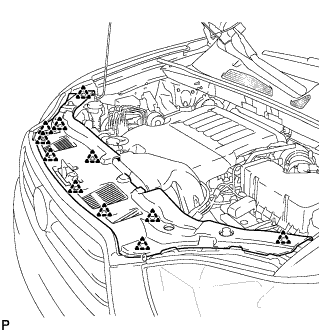
Install the cool air intake duct seal with the 11 clips.
-
- Click here
INSTALL OUTER COWL TOP PANEL SUB-ASSEMBLY
-
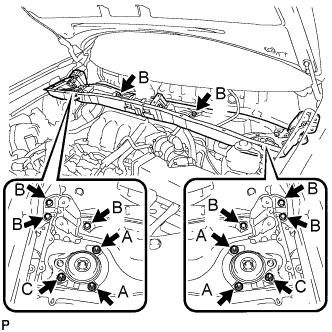
Install the outer cowl top panel sub-assembly with the 8 bolts and 6 nuts.
Nut A 85 N*m 866 kgf*cm 63 ft.*lbf Bolt B 8.8 N*m 90 kgf*cm 78 in.*lbf Nut C 8.8 N*m 90 kgf*cm 78 in.*lbf -
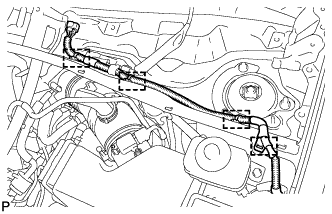
Engage the 4 clamps.
-
- Click here
INSTALL WINDSHIELD WIPER MOTOR AND LINK
-
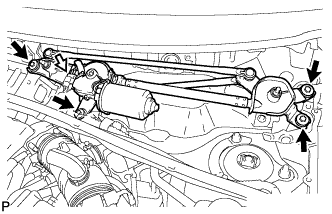
Install the windshield wiper motor and link assembly with the 4 bolts.
7.0 N*m 71 kgf*cm 62 in.*lbf -
Connect the connector.
-
- Click here
INSTALL COWL TOP VENTILATOR LOUVER SUB-ASSEMBLY
-
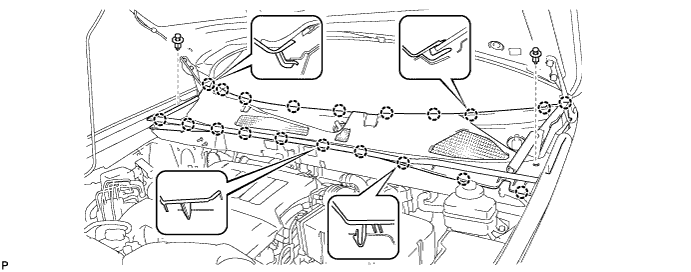
Engage the 20 claws.
-
Install the cowl top ventilator louver sub-assembly with the 2 clips.
-
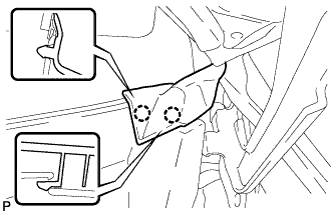
Engage the 2 claws and connect the front fender to cowl side seal LH.
-
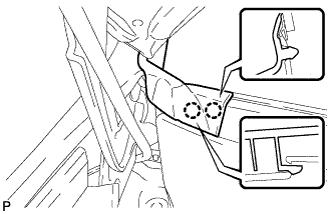
Engage the 2 claws and connect the front fender to cowl side seal RH.
-
- Click here
INSTALL FRONT WIPER ARM AND BLADE ASSEMBLY RH
-
Operate the wiper and stop the windshield wiper motor at the automatic stop position.
-
When reinstalling:
-
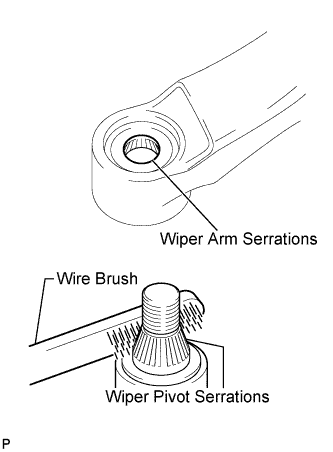
Clean the wiper arm serrations.
-
Clean the wiper pivot serrations with a wire brush.
-
-
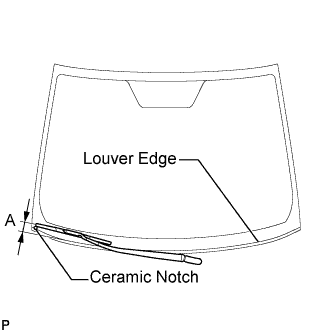
Install the front wiper arm and blade assembly RH with the nut to the position shown in the illustration.
24 N*m 245 kgf*cm 18 ft.*lbf Tip:Hold the wiper arm by hand when tightening the nut.
Area Measurement A 25.6 mm (1.00 in.)
-
- Click here
INSTALL FRONT WIPER ARM AND BLADE ASSEMBLY LH
-
Operate the wiper and stop the windshield wiper motor at the automatic stop position.
-
When reinstalling:
-
Clean the wiper arm serrations.
-
Clean the wiper pivot serrations with a wire brush.
-
-
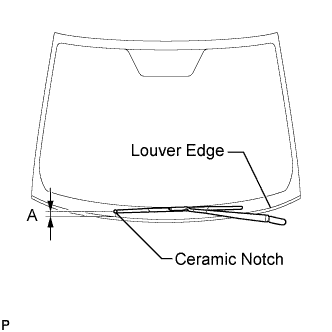
Install the front wiper arm and blade assembly LH with the nut to the position shown in the illustration.
24 N*m 245 kgf*cm 18 ft.*lbf Tip:Hold the wiper arm by hand when tightening the nut.
Area Measurement A 31.9 mm (1.26 in.) -
Operate the front wipers while spraying washer fluid onto the windshield glass. Make sure that the front wipers function properly and the wipers do not come into contact with the vehicle body.
-