- Click here
INSPECT REFRIGERANT VOLUME
-
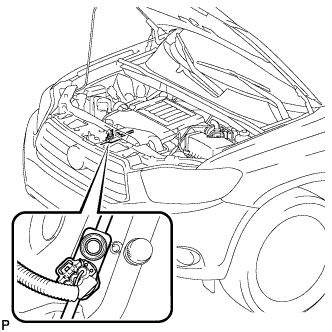
Check the sight glass on the air conditioning tube and accessory.
-
Prepare the vehicle according to the chart below.
Item Condition Vehicle door Fully open Temperature setting MAX COOL Blower speed HI A/C ON -
Compare the sight glass to the following chart.
Item Symptom Amount of refrigerant Corrective Actions 1 Bubbles exist Insufficient*
-
Check for gas leakage and repair if necessary
-
Recharge with proper amount of refrigerant
2 No bubbles exist (DTC 76 is output) Empty, insufficient, or excessive Refer to 3 and 4 3 No temperature difference between compressor inlet and outlet Empty or nearly empty
-
Check for gas leakage and repair if necessary
-
Evacuate the AC system and recharge with proper amount of refrigerant
4 Considerable temperature difference between compressor inlet and outlet Proper or excessive Refer to 5 and 6 5 Immediately after air conditioning is turned off, refrigerant remains clear Excessive
-
Recover refrigerant
-
Evacuate the AC system and recharge with proper amount of refrigerant
6 Immediately after air conditioning is turned off, refrigerant foams and then becomes clear Proper - *: Bubbles in the sight glass with the vehicle's interior temperature above 35°C (95°F) can be considered normal if cooling is sufficient.
-
-
-
- Click here
INSPECT REFRIGERANT PRESSURE WITH MANIFOLD GAUGE SET
Tip:This is a method where a manifold gauge set is used to help locate the problem.
-
Read the manifold gauge pressure when the following conditions are met:
Test conditions:
-
Temperature at the air inlet with the switch set at RECIRC is 30 to 35°C (86 to 95°F).
-
The engine is running at 1500 rpm.
-
The blower speed control switch position is at "HI".
-
The temperature control dial position is at "COOL".
-
The A/C switch is on.
-
Doors are fully open.
-
The ignition switch is in a position that enables the A/C compressor to run.
-
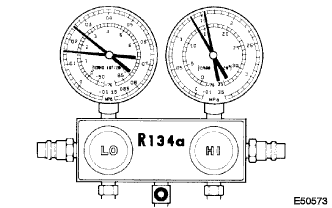
Normally functioning refrigeration system
Table 1. Gauge reading Pressure side Refrigerant volume Low 0.15 to 0.25 MPa (1.5 to 2.5 kgf/cm2, 21.3 to 35.5 psi)
High 1.37 to 1.57 MPa (14 to 16 kgf/cm2, 199.1 to 227.5 psi)
-
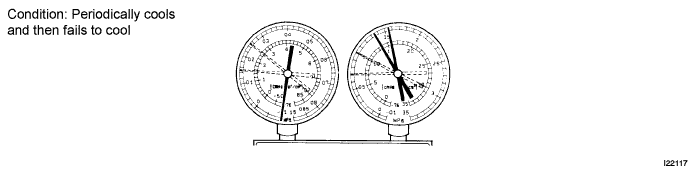
Moisture is present in the refrigeration system.
Symptom Probable Cause Diagnosis Corrective Actions During operation, pressure on low pressure side cycles between normal and vacuum
-
Moisture in the AC system will freeze at the expansion valve orifice, causing the refrigeration cycle to temporarily stop
-
After the system stops, and warms up again, the ice will melt and normal operation will be temporarily restored
-
Cooler dryer (integrated into condenser tank) in oversaturated state
-
Moisture in refrigeration system freezes at expansion valve orifice and blocks circulation of refrigerant
-
Replace cooler dryer
-
Remove moisture in system by repeatedly evacuating air
-
Supply a proper amount of new refrigerant
-
-
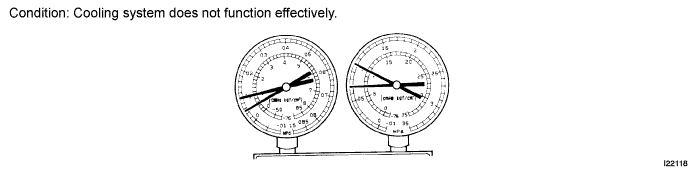
Insufficient cooling
Symptom Probable Cause Diagnosis Corrective Actions
-
Pressure is low on both low and high pressure sides
-
Bubbles are seen through sight glass continuously
-
Insufficient cooling performance
Gas leakage from the refrigeration system
-
Insufficient refrigerant
-
Refrigerant leaking
-
Check for gas leaks and repair if necessary
-
Supply a proper amount of new refrigerant
-
If the gauge indicates a pressure of close to 0, then it will be necessary to evacuate the system after repairing the leak
-
-
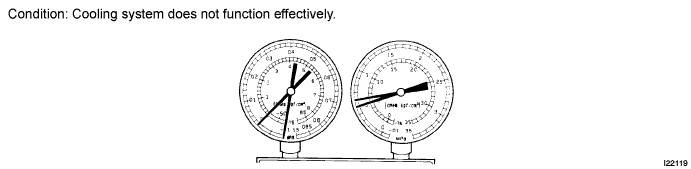
Poor circulation of refrigerant
Symptom Probable Cause Diagnosis Corrective Actions
-
Pressure is low on both low and high pressure sides
-
Frost exists on pipe from condenser to unit
Refrigerant flow is obstructed by dirt inside the pipes of the condenser core Receiver is clogged Replace condenser -
-
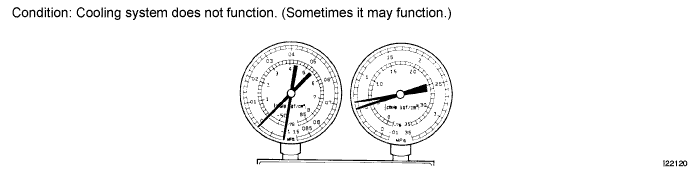
Refrigerant does not circulate.
Symptom Probable Cause Diagnosis Corrective Actions
-
Vacuum is indicated on low pressure side and very low pressure is indicated on high pressure side
-
Frost or condensation is seen on piping on both sides of receiver/drier or expansion valve
-
Refrigerant flow is obstructed by moisture or dirt in refrigeration system
-
Refrigerant flow is disrupted by gas leaking internally through the expansion valve
Refrigerant does not circulate
-
Check expansion valve
-
Replace expansion valve
-
Replace condenser
-
Evacuate air and supply a proper amount of new refrigerant
-
For internal gas leak at expansion valve, replace expansion valve
-
-
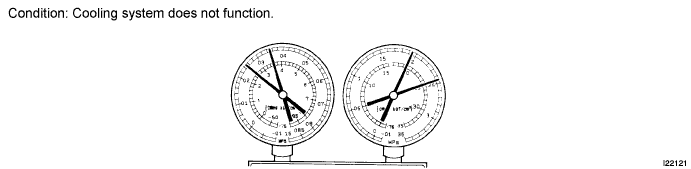
Refrigerant is overcharged or cooling effectiveness of condenser is insufficient.
Symptom Probable Cause Diagnosis Corrective Actions
-
Pressure is too high on both low and high pressure sides
-
No air bubbles are seen through sight glass even when engine rpm lowers
-
Unable to develop sufficient performance due to excessive use of refrigeration system
-
Cooling effectiveness of condenser is insufficient
-
Excessive refrigerant in cycle → excessive refrigerant was added during recharging
-
Condenser cooling effectiveness is insufficient → condenser fins are clogged at cooling fan
-
Clean condenser
-
Check the operation of the condenser cooling fan
-
If 1 and 2 are normal state, check the amount of refrigerant and supply a proper amount of refrigerant
-
-
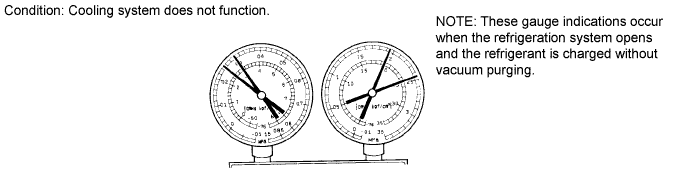
Air is present in the refrigeration system.
Symptom Probable Cause Diagnosis Corrective Actions
-
Pressure is too high on both low and high pressure sides
-
The low pressure piping is too hot to touch
-
Bubbles can be seen through sight glass
Air in system
-
Air present in refrigeration system
-
Insufficient vacuum purging
-
Check compressor oil to see if it is dirty or insufficient
-
Evacuate the system and recharge it with new or purified refrigerant
-
-
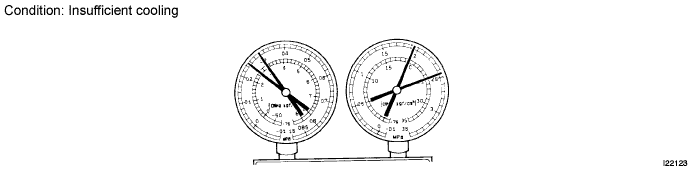
Expansion valve malfunction
Symptom Probable Cause Diagnosis Corrective Actions
-
Pressure is too high on both low and high pressure sides
-
Frost or a large amount of condensation on piping on low pressure side
Expansion valve may be stuck
-
Excessive refrigerant in low pressure piping
-
Expansion valve opened too wide
Check expansion valve -
-
Insufficient compressor compression
Symptom Probable Cause Diagnosis Corrective Actions
-
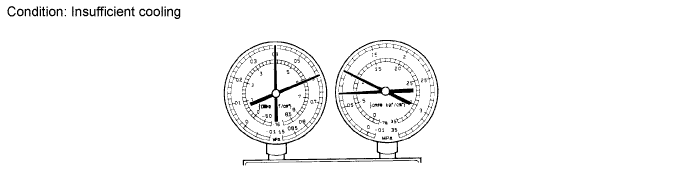
Pressure is too high on both low and high pressure sides
-
Pressure is too low on high pressure side
Internal leak in compressor
-
Low compression
-
Leak from a damaged valve, or parts may be broken
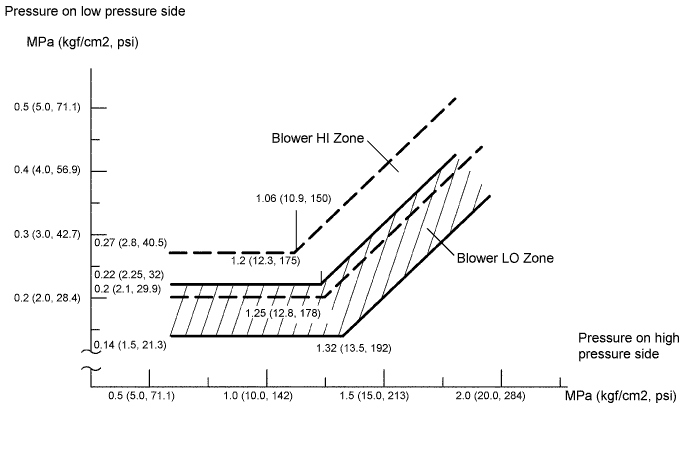
Replace compressor Gauge readings (Reference)
-
-
-