COOLING SYSTEM ON-VEHICLE INSPECTION

-
INSPECT FOR COOLANT LEAK
CAUTION:
Do not remove the radiator cap while the engine and radiator are still hot. Hot, pressurized engine coolant and steam may be released and cause serious burns.
-
Fill the radiator with coolant and attach a radiator cap tester to the radiator.
-
Warm up the engine.
-
Using a radiator cap tester, increase the pressure inside the radiator to 137 kPa (1.4 kgf/cm2, 19.9 psi), and check that the pressure does not drop.
Tech Tips
If the pressure drops, check the hoses, radiator and water pump for leaks. If no external leaks are found, check the heater core, cylinder block and cylinder head.
-
-
INSPECT RESERVOIR TANK COOLANT LEVEL
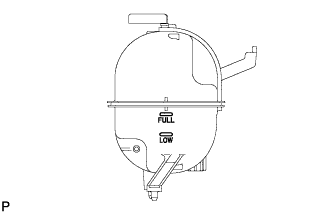
-
The engine coolant should be between the LOW and FULL lines when the engine is cold.
If low, check for leakage and add Toyota Super Long Life Coolant or similar high quality ethylene glycol based non-silicate, non-amine, non-nitrite, and non-borate coolant with long-life hybrid organic acid technology up to the FULL line.
-
-
INSPECT COOLANT QUALITY
-
Remove the radiator reserve tank cap.
CAUTION:
To avoid the danger of being burned, do not remove the radiator reserve tank cap while the engine and radiator are still hot. Thermal expansion will cause hot engine coolant and steam to blow out from the radiator.
-
Check for any excessive deposits of rust or scale around the radiator reserve tank cap and radiator filler hole. The coolant should be free of oil.
If excessively dirty, replace the coolant.
-
Reinstall the radiator reserve tank cap.
-
-
CHECK FINS FOR BLOCKAGE
-
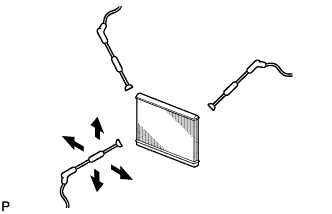
Check that the radiator and condenser are not blocked with any foreign matter such as leaves, dirt, or insects. Clean the hose connection. If the fins are clogged, wash them with water or a steam cleaner and dry with compressed air.
Note
-
If the distance between the steam cleaner and the core is too close, there is a possibility of damaging the fins, so keep the following injection distance.
Injection Pressures
kPa (kg/cm2, psi)
Injection Distance
mm (in.)
2,942 to 4,903
(30 to 50, 427 to 711)
300 (11.811) 4,903 to 7,845
(50 to 80, 711 to 1,138)
500 (19.685) -
If the fins are bent, straighten them with a screwdriver or pliers.
-
Never apply water directly onto the electronic components.
-
-