OIL AND OIL FILTER REPLACEMENT

CAUTION:
-
Prolonged and repeated contact with engine oil will result in the removal of natural oils from the skin, leading to dryness, irritation and dermatitis. In addition, used engine oil contains potentially harmful contaminants which may cause skin cancer.
-
Precautions should be taken when replacing engine oil to minimize the risk of your skin making contact with used engine oil. Protective clothing and gloves that cannot be penetrated by oil should be worn. The skin should be washed with soap and water, or use waterless hand cleaner, to remove any used engine oil thoroughly. Do not use gasoline, thinners or solvents.
-
In order to protect the environment, used oil and used oil filters must be disposed of at designated disposal sites.
-
TILT UP CAB
CAUTION:
-
Make sure that the vehicle is on a level surface before tilting the cab up.
-
Make sure that all the doors are closed before tilting the cab up.
-
Make sure that nobody is inside or near the cab when tilting it up.
-
Be sure to have 2 people tilt the cab up when a heavy object such as a roof rack or cargo carrier is installed to the cab.
-
Be sure to remove anything set on top of the cab before tilting it up.
-
Make sure that the cab is securely locked in place after it is tilted up.
-
Make sure that there are no tools, cloths, etc. left in the engine room before tilting the cab back down.
-
Make sure that the cab is securely locked in place after tilting it back down.
-
-
DRAIN ENGINE OIL
-
Remove the oil filler cap.
-
Remove the oil pan drain plug and gasket, and then drain the engine oil into a container.
-
Wipe the oil pan and oil pan drain plug.
-
Install a new gasket and the oil pan drain plug.
- Torque:
- 41 N*m { 418 kgf*cm, 30 ft.*lbf }
-
-
REMOVE OIL FILTER SUB-ASSEMBLY
-
Using SST, remove the oil filter sub-assembly.
- SST
- 09228-78010
-
-
INSTALL OIL FILTER SUB-ASSEMBLY
-
Check and clean the oil filter sub-assembly installation surface.
-
Apply clean engine oil to the gasket of a new oil filter sub-assembly.
-
Lightly screw the oil filter sub-assembly to the engine until the oil filter sub-assembly does not turn by hand.
-
Using SST, tighten the oil filter sub-assembly an additional 2/3 turn.
- SST
- 09228-78010
-
-
ADD ENGINE OIL
-
Add new engine oil.
Standard Oil Grade Oil Grade Oil Viscosity (SAE) API (CJ-4)
JASO (DH-2)
ACEA (E-6, E-9)
- 5W-30
- 10W-30
- 15W-40
Standard Capacity Item Specified Condition Drain and refill without oil filter change 5.2 liters (5.5 US qts, 4.6 Imp. qts) Drain and refill with oil filter change 6.5 liters (6.9 US qts, 5.7 Imp. qts) Dry fill 8.7 liters (9.2 US qts, 7.7 Imp. qts) -
Install the oil filler cap.
-
-
INSPECT FOR OIL LEAK
-
Start the engine. Make sure that there are no oil leaks from the areas that were worked on.
-
-
INSPECT ENGINE OIL LEVEL
-
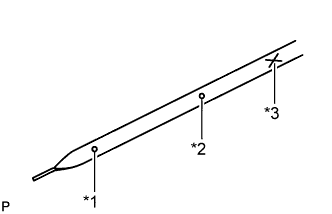
Text in Illustration *1 Low Level Mark *2 Full Level Mark *3 Full Level Mark (For Inspection) Warm up the engine, stop the engine and wait 5 minutes. The engine oil level should be between the dipstick low level mark and full level mark (for inspection). If low, check for leakage and add oil up to the full level mark.
Note
Do not fill engine oil above the full level mark.
Tech Tips
A certain amount of engine oil will be consumed while driving. In the following situations, oil consumption may increase, and engine oil may need to be refilled in between oil maintenance intervals.
-
When the engine is new, for example directly after purchasing the vehicle or after replacing the engine.
-
If low quality oil or oil of an inappropriate viscosity is used.
-
When driving at high engine speed or with a heavy load, (when towing, or), when driving while accelerating or decelerating frequently.
-
When idling for a long time, or when driving frequently through heavy traffic.
When judging the amount of oil consumption, keep in mind that the oil may have become diluted, making it difficult to judge the true level accurately.
-
-