REFRIGERANT(for HFC-134a(R134a)) ON-VEHICLE INSPECTION

PROCEDURE
-
CHECK REFRIGERANT PRESSURE USING MANIFOLD GAUGE SET
-
This is a method to identify trouble areas by using a manifold gauge set. Read the manifold gauge pressure under the following conditions.
Test conditions:
-
Engine warm.
-
All doors fully open.
-
A/C switch on.
-
Blower speed control switch at HI.
-
Engine running at 1500 rpm.
-
Air inlet mode damper set at RECIRC.
-
Temperature control switch in MAX. COLD position.
-
Air temperature at air inlet 30 to 35°C (86 to 95°F).
-
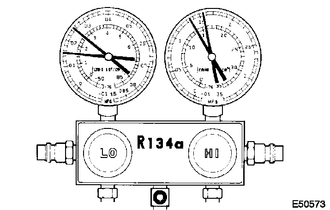
When the refrigerant volume is correct, the gauge reading indicates as follows:
Gauge Reading Pressure Side Specified Condition Low 0.15 to 0.25 MPa (1.5 to 2.5 kgf/cm2, 22 to 36 psi)
High 1.37 to 1.57 MPa (14 to 16 kgf/cm2, 199 to 228 psi)
Tech Tips
Pressure varies in accordance with certain conditions (outside air temperature, sunlight and wind).
-
When there is moisture in the refrigeration system:
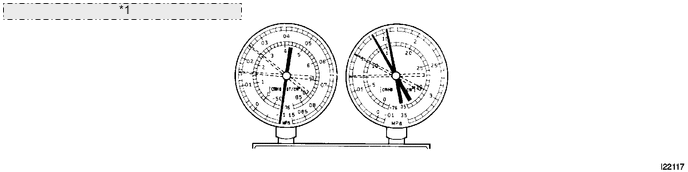
*1 Condition: Air conditioning system periodically cools and then fails to cool. Symptom Probable Cause Diagnosis Corrective Action During operation, pressure on low pressure side cycles between normal and vacuum Moisture in refrigeration system freezes at expansion valve orifice, causing temporary interruption of cycle
However, when melted, returns to normal condition
-
Receiver dryer oversaturated
-
Moisture in refrigeration system freezes at expansion valve orifice and blocks refrigerant circulation
-
Replace receiver dryer
-
Remove moisture from cycle by repeatedly evacuating air
-
Charge appropriate volume of new refrigerant
-
-
When cooling is insufficient:
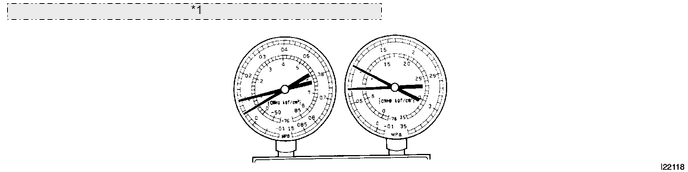
*1 Condition: Air conditioning system does not function effectively. Symptom Probable Cause Diagnosis Corrective Action
-
Pressure low on both low and high pressure sides
-
Bubbles are seen through sight glass continuously
-
Cooling performance insufficient
Gas leakage from refrigeration system
-
Insufficient refrigerant
-
Refrigerant leakage
-
Check for gas leakage using halogen leak detector, and repair if necessary
-
Charge appropriate volume of new refrigerant
-
If indicated pressure value close to 0 when connected to gauge, create vacuum after inspecting and repairing location of leakage
-
-
When the circulation of the refrigerant is poor:
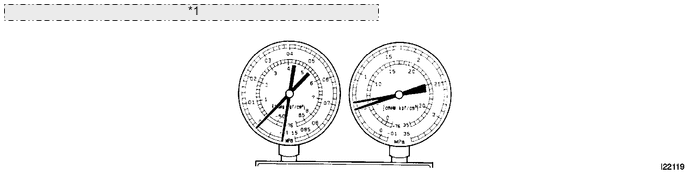
*1 Condition: Air conditioning system does not function effectively. Symptom Probable Cause Diagnosis Corrective Action
-
Pressure low on both low and high pressure sides
-
Frost exists on piping from condenser to A/C unit
Refrigerant flow obstructed by dirt in condenser Condenser clogged Replace condenser -
-
When the refrigerant does not circulate:
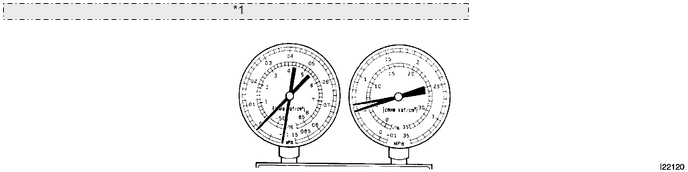
*1 Condition: Air conditioning system does not function or functions intermittently. Symptom Probable Cause Diagnosis Corrective Action
-
Vacuum indicated on low pressure side, and extremely low pressure indicated on high pressure side
-
Frost or condensation seen on piping on both sides of condenser or expansion valve
-
Refrigerant flow obstructed by moisture or dirt in refrigeration system
-
Refrigerant flow obstructed by gas leakage from expansion valve
Refrigerant does not circulate
-
Check expansion valve
-
Clean expansion valve with compressed air
-
Replace condenser
-
Evacuate air and then charge appropriate volume of new refrigerant
-
For gas leakage from expansion valve, replace expansion valve
-
-
When the refrigerant is overcharged or cooling of condenser is insufficient:
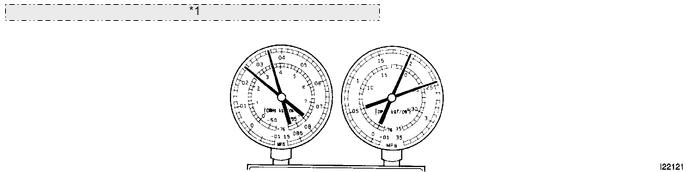
*1 Condition: Air conditioning system does not function effectively. Symptom Probable Cause Diagnosis Corrective Action
-
Pressure extremely high on both sides
-
No air bubbles are seen through sight glass even when engine rpm lowers
-
Excessive refrigerant
-
Cooling performance of condenser insufficient
-
Excessive refrigerant
-
Cooling performance of condenser insufficient
-
Clean condenser fins
-
Check condenser fan motor operation by switching A/C on
-
If 1 and 2 normal, check amount of refrigerant and charge appropriate volume of refrigerant
-
-
When there is air in the refrigeration system:
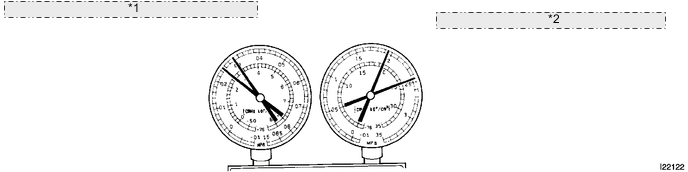
*1 Condition: Cooling system does not function. *2 NOTE: These gauge indications occur when the refrigeration system opens and the refrigerant is charged without vacuum purging. Symptom Probable Cause Diagnosis Corrective Action
-
Pressure extremely high on both low and high pressure sides
-
Low pressure piping too hot to touch
-
Bubbles can be seen through sight glass
Air in refrigeration system
-
Air in refrigeration system
-
Insufficient vacuum purging
-
Check whether compressor oil dirty or insufficient
-
Evacuate air and charge new refrigerant
-
-
When the expansion valve malfunctions:
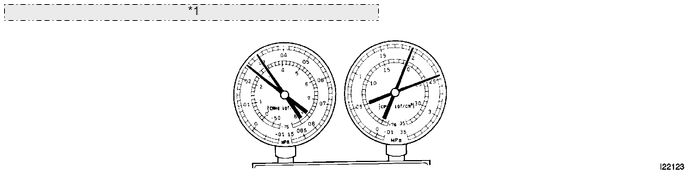
*1 Condition: Air conditioning system does not function effectively. Symptom Probable Cause Diagnosis Corrective Action
-
Pressure extremely high on both low and high pressure sides
-
Frost or condensation on piping on low pressure side
Expansion valve malfunction
-
Excessive refrigerant in low pressure piping
-
Expansion valve opening too wide
Replace expansion valve -
-
When the compressor is defective:
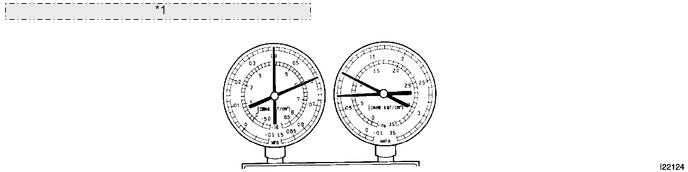
*1 Condition: Air conditioning system does not function. Symptom Probable Cause Diagnosis Corrective Action
-
Pressure extremely high on both low and high pressure sides
-
Pressure extremely low on high pressure side
Internal leakage in compressor
-
Compression failure of compressor
-
Leakage from damaged valve or broken sliding parts in compressor
Repair or replace compressor -
-
-
-
INSPECT IDLING SPEED
-
Warm up the engine.
-
Inspect idling speed when these conditions are established.
Standard for 1KR-FE Condition Idling Speed A/C switch off 730 to 830 rpm A/C switch on (A/C Lo → Hi) 750 → 850 rpm for 2NR-FKE CVT Condition Idling Speed A/C switch off 680 to 780 rpm A/C switch on (A/C Lo → Hi) 730 → 900 rpm for 2NR-FKE Manual Transaxle Condition Idling Speed A/C switch off 550 to 650 rpm A/C switch on (A/C Lo → Hi) 700 → 900 rpm for 1ND-TV Condition Idling Speed A/C switch off 720 to 820 rpm A/C switch on 850 rpm Power heater switch on 950 rpm If the idling speed is not as specified, check the idle control system.
-