FUEL SYSTEM PRECAUTION
-
IGNITION SWITCH EXPRESSIONS
-
The type of ignition switch used on this model differs according to the specifications of the vehicle. The expressions listed in the table below are used in this section.
Expression Ignition Switch (Position) Engine Switch (Condition) Ignition Switch off LOCK Off Ignition Switch ACC ACC On (ACC) Ignition Switch ON ON On (IG) Engine Start START Start
-
-
FUEL SYSTEM
-
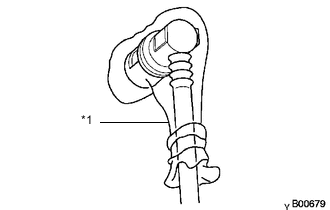
Text in Illustration *1 Plastic Bag When disconnecting the fuel line, fuel will splash. So take the following precautions.
-
Disconnect the fuel tube.
-
Release the pressure remaining in the fuel tank main tube.
-
Cover the disconnected fuel tank main tube (fuel tube joint and fuel tube connector) with a vinyl bag to prevent damage and the intrusion of foreign matter.
-
-
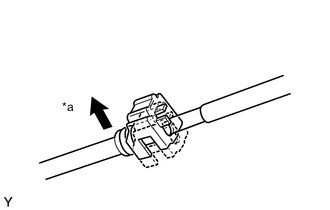
Observe the following precautions when disconnecting the fuel tube connectors (Quick Type A).
Text in Illustration *a Pull
-
Check that there is no dirt or other foreign matter on the fuel tube connector and pipe before disconnecting them. Clean them if necessary.
-
Disengage the lock claw by lifting the cover, as shown in the illustration.
-
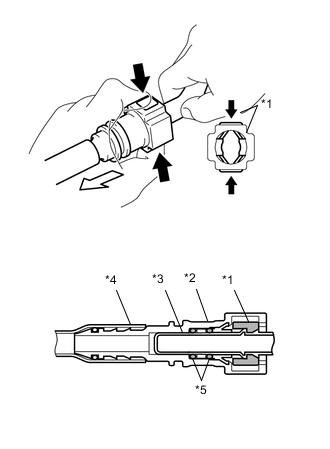
Text in Illustration *1 Retainer *2 Fuel Tube Connector *3 Fuel Pipe *4 Nylon Tube *5 O-ring 
Pinch 
Pull Out Disconnect the fuel tube connector from the pipe by pinching the retainer as shown in the illustration.
Note
Do not use any tools.
-
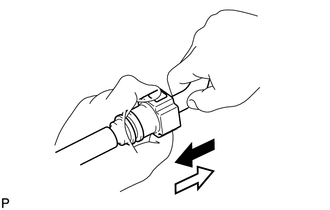
If the fuel tube connector and the pipe are stuck, push and pull on the fuel tube connector to release them. Pull the fuel tube connector out of the pipe carefully.
Text in Illustration Pull Push Note
Do not use any tools.
-
Check the sealing surfaces of the disconnected parts, and clean them if necessary.
-
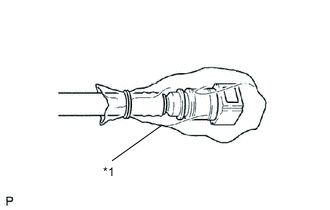
Text in Illustration *1 Plastic Bag Protect the contact surface by covering it with a plastic bag.
Note
Do not damage the pipe or fuel tube connector, and prevent entry of foreign objects.
-
-
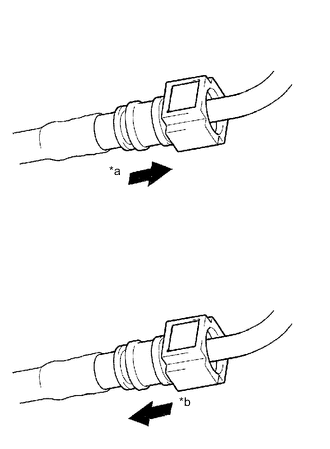
Observe the following precautions when connecting the fuel tube connectors (Quick Type A).
Text in Illustration *a Push *b Pull
-
Check that there is no dirt or other foreign matter on the fuel tube connector and pipe before connecting them. Clean them if necessary.
-
Line up the pipe and connector and push them together until a "click" sound is heard.
Tech Tips
If the pipe is difficult to push into the connector, apply a small amount of clean engine oil to the tip of the pipe and reinsert it.
-
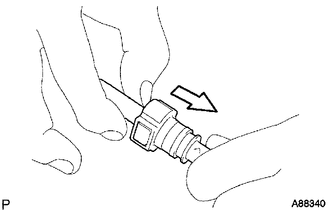
After connecting the fuel tube connector, check that the pipe and fuel tube connector are securely connected by pulling on them.
Text in Illustration Pull
-
-
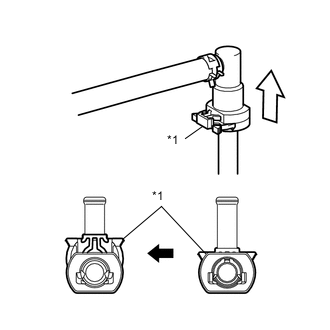
Observe the following precautions when disconnecting the fuel tube connectors (Quick Type B).
Text in Illustration *1 Retainer Pull Out
-
Check that there is no dirt or other foreign matter on the fuel tube connector and pipe before disconnecting them. Clean them if necessary.
-
Pull the tabs of the fuel tube retainer as shown in the illustration to disconnect the fuel tube connector from the pipe.
Note
Do not use any tools.
-
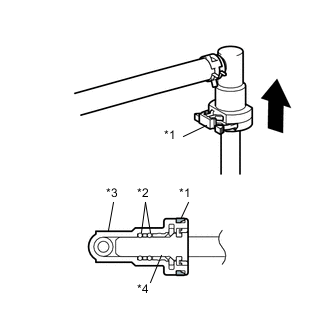
Text in Illustration *1 Retainer *2 O-Ring *3 Fuel Tube Connector *4 Fuel Pipe
(Fuel Tank Fuel Filter)
Pull Out Disconnect the fuel tube connector from the fuel tank fuel filter by pull the retainer as shown in the illustration.
Note
Do not use any tools.
-
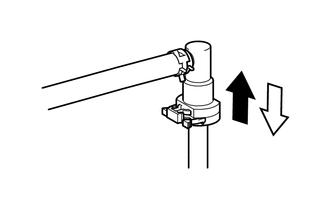
If the fuel tube connector and the pipe are stuck, push and pull on the fuel tube connector to release them. Pull the fuel tube connector out of the pipe carefully.
Pull Push Note
Do not use any tools.
-
Check the sealing surfaces of the disconnected parts, and clean them if necessary.
-
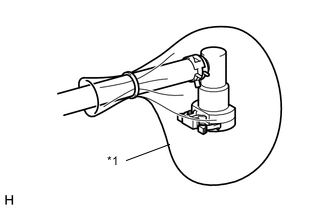
Text in Illustration *1 Plastic Bag Protect the contact surface by covering it with a plastic bag.
Note
Do not damage the pipe or fuel tube connector, and prevent entry of foreign objects.
-
-
Observe the following precautions when connecting the fuel tube connectors (Quick Type B).
-
Check that there is no dirt or other foreign matter on the fuel tube connector and pipe before connecting them. Clean them if necessary.
-
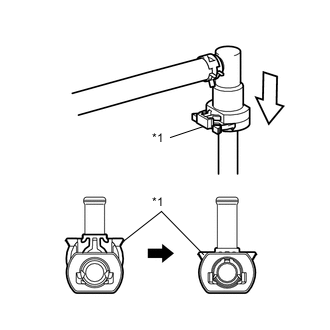
Text in Illustration *1 Retainer Push Line up the pipe and the fuel tube connector to be connected, and push them together and push down the retainer.
-
After connecting the fuel tube connector, check that the pipe and fuel tube connector are securely connected by pulling on them.
-
-
-
INSPECT FOR FUEL LEAK
-
BLEED AIR FROM FUEL SYSTEM
-
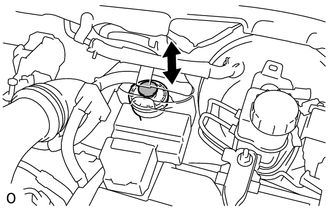
Text in Illustration *1 Hand Pump (a) Using the hand pump mounted on the fuel filter cap, bleed the air from the fuel system. Continue pumping until the pump resistance increases.
Note
-
Hand pump pumping speed: Max. 2 strokes/sec.
-
The hand pump must be pushed full stroke during pumping.
-
When the fuel pressure at the supply pump inlet port reaches a saturated pressure, the hand pump resistance increases.
-
If pumping is interrupted during the air bleeding process, fuel in the fuel line may return to the fuel tank. Continue pumping until the hand pump resistance increases.
-
If the hand pump resistance does not increase despite consecutively pumping 200 times or more, there may be a fuel leak between the fuel tank and fuel filter, the hand pump may be malfunctioning, or the vehicle may have run out of fuel.
-
If a large amount of air remains inside the fuel system, the common rail pressure does not rise to the pressure range necessary for normal use, and the engine cannot be started.
-
-
(b) Start the engine.
Note
-
If a large amount of air remains inside the fuel system, the starter may need to be cranked for 10 seconds or more to start the engine.
-
Do not crank the engine continuously for more than 20 seconds. The battery may be discharged.
-
Use a fully-charged battery.
Tech Tips
-
When the engine can be started, proceed to the next step.
-
If the engine cannot be started, bleed the air again using the hand pump until the hand pump resistance increases (refer to step (a)). Then start the engine.
-
-
(c) Turn the ignition switch off.
-
(d) Connect the intelligent tester to the DLC3.
-
(e) Turn the ignition switch to ON and turn the tester on.
-
(f) Clear DTCs.
-
(g) Start the engine.
-
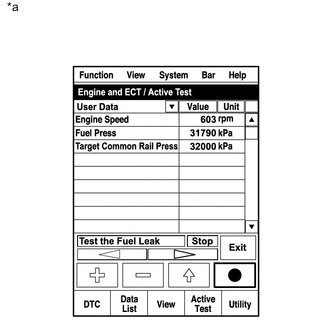
Text in Illustration *a Active Test Operation (h) Enter the following menus: Powertrain / Engine and ECT / Active Test / Test the Fuel Leak.
-
(i) Maintain the engine speed at 3500 rpm, and then press the "Start" button.
-
(j) Perform the following test 5 times with on/off intervals of 10 seconds: Active Test / Test the Fuel Leak.
-
(k) Allow the engine to idle for 3 minutes or more after performing the Active Test.
Tech Tips
When the Active Test "Test the Fuel Leak" is used to change the pump control mode, the actual fuel pressure inside the common rail drops below the target fuel pressure when the Active Test is off, but this is normal and does not indicate a pump malfunction.
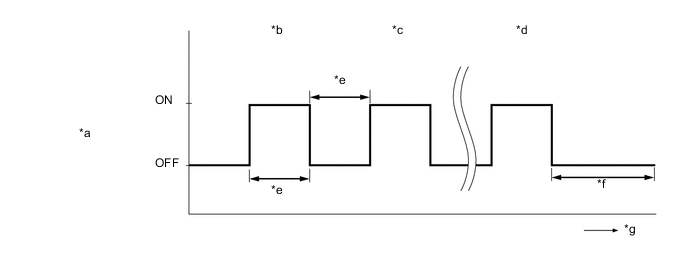
Text in Illustration *a Active Test Operation *b 1st time *c 2nd time *d 5th time *e 10 seconds *f 3 minutes *g Time - - -
(l) Enter the following menus: Powertrain / Engine and ECT / DTC.
-
(m) Read Current DTCs.
Tech Tips
-
When no DTCs are output, the air bleeding is completed.
-
If any DTCs are output, proceed to the next step.
-
-
(n) Clear DTCs.
-
(o) Repeat steps (g) to (k).
-