CYLINDER HEAD(w/ DPF) REPAIR

PROCEDURE
-
REPAIR INTAKE VALVE SEAT
Note
Releasing the seat cutter pressure gradually helps to make the intake valve seat faces smoother.
-
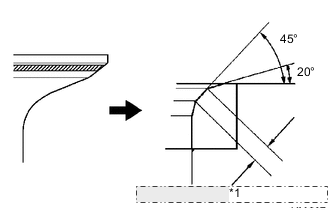
*1 1.0 to 1.2 (0.039 to 0.047 in.) If the seating is too high on the intake valve face, use 20° and 45° cutters to correct the intake valve seat.
-
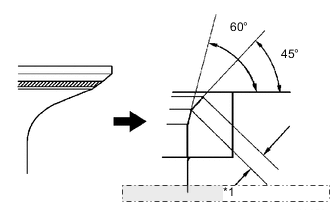
*1 1.0 to 1.2 mm (0.039 to 0.047 in.) If the seating is too low on the intake valve face, use 60° and 45° cutters to correct the intake valve seat.
-
Lap the intake valve and intake valve seat with an abrasive compound by hand.
-
Recheck the valve seating position.
-
-
REPAIR EXHAUST VALVE SEAT
Note
Releasing the seat cutter pressure gradually helps to make the exhaust valve seat faces smoother.
-
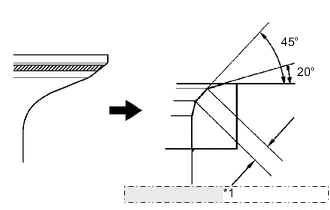
*1 1.2 to 1.6 mm (0.047 to 0.063 in.) If the seating is too high on the exhaust valve face, use 20° and 45° cutters to correct the exhaust valve seat.
-
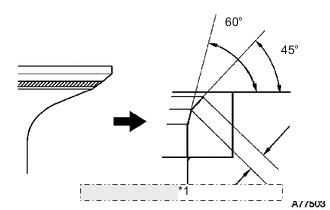
*1 1.2 to 1.6 mm (0.047 to 0.063 in.) If the seating is too low on the exhaust valve face, use 60° and 45° cutters to correct the exhaust valve seat.
-
Lap the exhaust valve and exhaust valve seat with an abrasive compound by hand.
-
Recheck the valve seating position.
-