ELECTRONICALLY CONTROLLED BRAKE SYSTEM PRECAUTION
-
HANDLING PRECAUTIONS
-
When replacing the skid control ECU assembly, always install a new one.
Note
Do not use a skid control ECU assembly from another vehicle (vehicle on display, etc.).
-
The removal or installation of the brake actuator assembly, brake master cylinder sub-assembly or brake stroke simulator cylinder sub-assembly as well as other procedures can cause the brake fluid level to drop below the outlet port of the fluid reservoir. If this happens when performing such work, be sure to remove the 2 ABS motor relays until the brake lines and brake actuator hose have been bled.
Tech Tips
-
If the pump motor is operated while there is air in the brake actuator hose, bleeding the air becomes difficult due to air in the brake actuator assembly.
-
With the engine switch off, the skid control ECU assembly may operate for 2 minutes after operating the brake pedal.
-
-
Wait for 2 minutes after turning the engine switch off, operating the brake pedal and closing the driver door before removing the relays.
Tech Tips
The skid control ECU assembly operates the pump motor just before the brake control system shuts down in order to prepare the system for the next time it is operated.
-
If the skid control ECU assembly or a sensor has been removed and installed, it is necessary to check the system for problems after the parts have been reassembled. Check for DTCs using the GTS. Also check that the system functions and signals received by the ECU are normal using Test Mode (signal check).
-
-
DTC PRECAUTION
-
Warnings for some DTCs cannot be cleared by only repairing the malfunctioning parts. If the warning is displayed even after repair work, the DTC should be cleared after turning the engine switch off.
Note
If a DTC for a malfunctioning part reappears after it is cleared, then it has been stored again.
-
When 2 or more DTCs are detected, perform circuit inspections one by one until the problem is identified.
-
-
BRAKE TESTER PRECAUTION
-
When inspecting the brakes using a brake tester, the braking force of the rear wheels may be reduced.
When the vehicle speed is 0 km/h (0 mph), the brake control system of the vehicle limits the rear brake fluid pressure to approximately 50% of the normal brake fluid pressure when driving the vehicle, in order to reduce energy consumption.
-
-
CHASSIS DYNAMOMETER PRECAUTION
-
When using a drum tester, be sure to enter the VSC OFF mode to prohibit TRC and VSC control.
CAUTION:
-
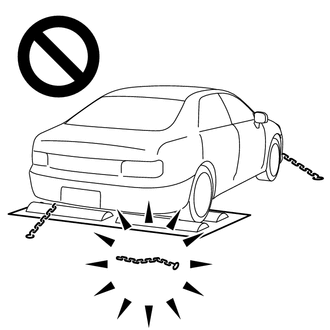
Do not use the drum tester with any of the lock chains disconnected.
-
Using the drum tester with a lock chain disconnected could cause the vehicle to begin moving unexpectedly.
-
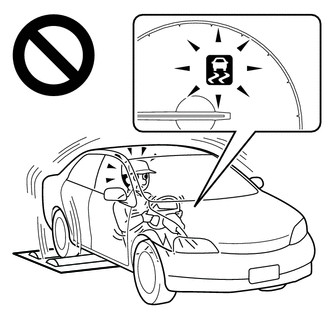
Do not use the drum tester while the TRC or VSC is able to operate.
-
TRC or VSC operation could cause the vehicle to begin moving unexpectedly.
-
-