INTAKE SYSTEM ON-VEHICLE INSPECTION
PROCEDURE
-
INSPECT INTAKE SYSTEM
-
Check that there are no vacuum leaks at the points shown in the illustration.
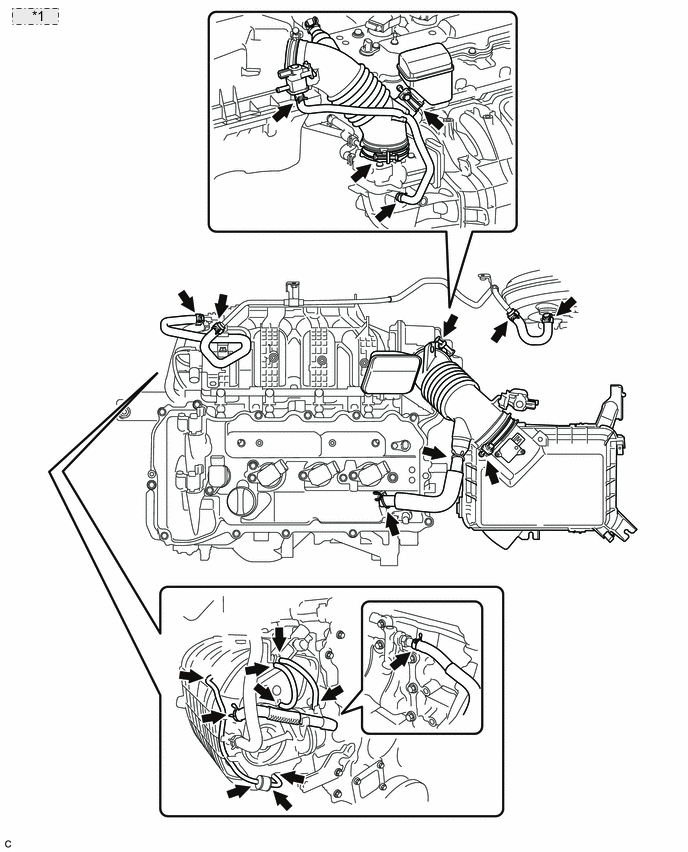
*1 for LHD: 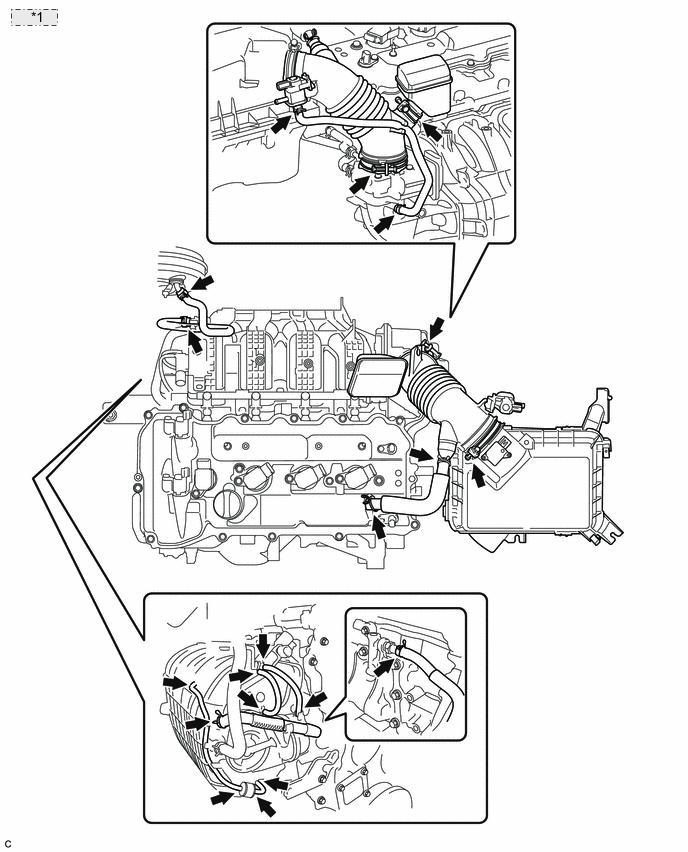
*1 for RHD: Tech Tips
Perform "Inspection After Repair" after repairing vacuum leaks in the intake system Click here.
-
-
INSPECT INTAKE AIR CONTROL VALVE (for ACIS)
-
Connect the GTS to the DLC3.
-
Turn the engine switch on (IG).
-
Turn the GTS on.
-
Enter the following menus: Powertrain / Engine / Active Test / Activate the VSV for Intake Control.
-
When "Activate the VSV for Intake Control" is turned on, check that the actuator rod operates.
If the operation is not as specified, inspect the intake air control valve, vacuum tank and check valve Click here.
-
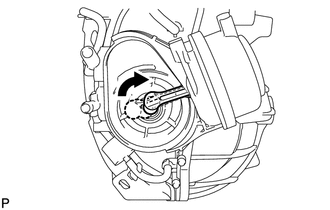
When "Activate the VSV for Intake Control" is turned off, check that the actuator rod returns to its original position.
If the operation is not as specified, inspect the intake air control valve and vacuum hose Click here.
-
-
INSPECT INTAKE AIR CONTROL VALVE ACTUATOR (for TCV) (w/ TCV)
-
Connect the GTS to the DLC3.
-
Turn the engine switch on (IG).
-
Turn the GTS on.
-
Enter the following menus: Powertrain / Engine / Active Test / All Data / Control the IAC Duty Ratio.
-
Set the duty ratio to 60% or -60% for 1 to 3 seconds, and then return the duty ratio to 0%. Check Intake Air Control Position in the Data List.
Specified Condition Condition (Active Test) Specified Condition (Data List) Control the IAC Duty Ratio set to 60% Intake Air Control Position 35° or more Control the IAC Duty Ratio set to
-60%
Intake Air Control Position 17° or less Note
-
Supply power to the intake air control valve actuator for 1 to 3 seconds.
-
If power is supplied to the intake air control valve actuator for less than 1 second, the gear of the tumble control valve does not reach the stopper and the value in the Data List may be incorrect.
-
If power is supplied to the intake air control valve actuator for more than 3 seconds, the motor may be damaged.
-
Do not perform this inspection more than 2 times consecutively.
Tech Tips
The standard duty ratio for inspections is 60% or -60%. However, if the value in the Data List is not as specified, set the duty ratio to 100% or -100% for 1 to 3 seconds, and check the value in the Data List again.
Specified Condition Condition (Active Test) Specified Condition (Data List) Control the IAC Duty Ratio set to 100% Intake Air Control Position 70° or more Control the IAC Duty Ratio set to
-100%
Intake Air Control Position 2° or less -
-
-
When the result is not as specified during the Active Test, perform the following procedure.
-
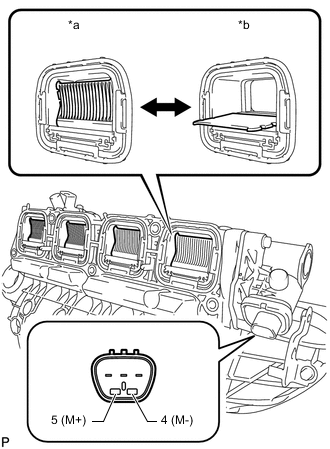
Text in Illustration *a Condition: Closed *b Condition: Open Remove the intake manifold Click here.
Tech Tips
When removing the intake manifold, the tumble control valves are half open.
-
Check that the tumble control valves move when connecting the battery to the terminals of the intake air control valve actuator.
Standard Tester Connection Specified Condition Positive (+) battery voltage applied to terminal 4 (M-), and negative (-) battery voltage applied to terminal 5 (M+) Open → Closed Positive (+) battery voltage applied to terminal 5 (M+), and negative (-) battery voltage applied to terminal 4 (M-) Closed → Open Note
-
Apply battery voltage for 1 to 3 seconds.
-
If battery voltage is applied for more than 3 seconds, the intake air control valve actuator may be damaged.
-
If the positive (+) and negative (-) battery leads contact the sensor terminals, the intake air control valve actuator may be damaged.
-
-
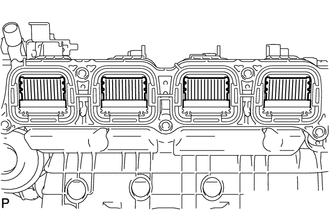
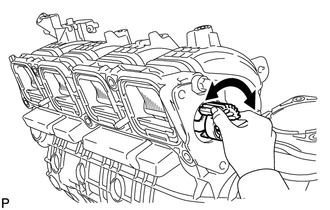
When the results are not as specified, perform the following inspections.
Check that the tumble control valves are not cracked or deformed.
Remove the intake air control valve actuator Click here, and check that the tumble control valves move smoothly.
If there are no problems with the tumble control valves, inspect the intake air control valve actuator Click here.
-
-