REFRIGERANT(for HFC-134a(R134a)) ON-VEHICLE INSPECTION
PROCEDURE
INSPECT REFRIGERANT PRESSURE WITH MANIFOLD GAUGE SET
Tip:The following examples show the readings of a manifold gauge set and the corresponding air conditioning system problems.
Read the manifold gauge pressure when the following conditions are met:
Doors are fully open.
The engine is idling.
The A/C switch is on.
The temperature is set to max cool.
The blower speed is set to high.
Temperature at the air inlet with recirculate selected is 30 to 35°C (86 to 95°F).
-
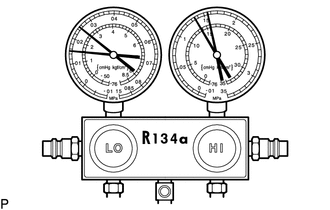
Normally functioning air conditioning system
Table 1. Gauge Reading Pressure Side
Refrigerant Volume
Low
0.15 to 0.25 MPa (1.5 to 2.5 kgf/cm2, 21 to 36 psi)
High
1.37 to 1.57 MPa (14 to 16 kgf/cm2, 199 to 228 psi)
Abnormally functioning air conditioning system
-
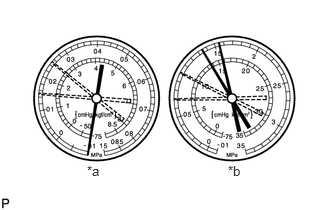
*a
LO
*b
HI
During operation, pressure on low pressure side cycles between normal and vacuum
Symptom
Air conditioning system periodically cools and then fails to cool
Probable Cause
Moisture in air conditioning system freezes at expansion valve orifice, causing refrigerant to temporarily stop circulating
After system stops and warms up again, ice melts and normal operation is temporarily restored
Diagnosis
Cooler dryer (integrated into condenser tank) saturated with moisture
Moisture in air conditioning system is freezing at expansion valve orifice and blocking circulation of refrigerant
Corrective Actions
Replace cooler dryer
Remove moisture by repeatedly evacuating air from air conditioning system
Recharge air conditioning system with proper amount of new or purified refrigerant
Tip:For the example above, moisture is present in the air conditioning system.
-
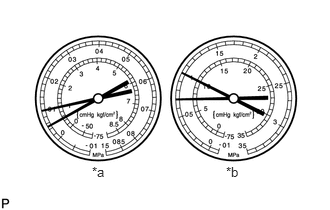
*a
LO
*b
HI
Pressure is low on both low and high pressure sides
Symptom
Air conditioning system does not cool effectively
Insufficient cooling performance
Probable Cause
Refrigerant leaks from air conditioning system
Diagnosis
Insufficient refrigerant
Refrigerant leaking
Corrective Actions
Check for refrigerant leaks and repair if necessary
Recharge air conditioning system with proper amount of new or purified refrigerant
If gauges indicate pressure of close to 0, then it is necessary to evacuate air conditioning system after repairing leaks
Tip:For the example above, there is insufficient refrigerant.
-
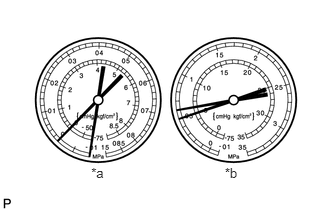
*a
LO
*b
HI
Pressure is low on both low and high pressure sides
Symptom
Air conditioning system does not cool effectively
Frost exists on pipe from condenser to evaporator unit
Probable Cause
Refrigerant flow is obstructed by dirt inside pipes of condenser core
Diagnosis
Condenser is clogged
Corrective Actions
Replace condenser
Tip:For the example above, there is poor circulation of refrigerant.
-
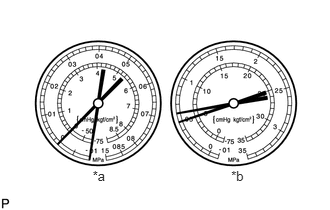
*a
LO
*b
HI
Vacuum is indicated on low pressure side and very low pressure is indicated on high pressure side
Symptom
Air conditioning system does not cool effectively (System may cool occasionally)
Frost or condensation is seen on piping on both sides of receiver/dryer or expansion valve
Probable Cause
Refrigerant flow is obstructed by moisture or dirt in air conditioning system
Expansion valve is stuck closed
Diagnosis
Refrigerant does not circulate
Corrective Actions
Replace expansion valve
Replace condenser
Evacuate air conditioning system and recharge with proper amount of new or purified refrigerant
Tip:For the example above, the refrigerant does not circulate.
-
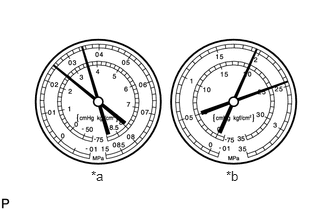
*a
LO
*b
HI
Pressure is too high on both low and high pressure sides
Symptom
Air conditioning system does not cool effectively
Probable Cause
Unable to provide sufficient performance due to excessive amount of refrigerant
Cooling effectiveness of condenser is insufficient
Diagnosis
Excessive amount of refrigerant in air conditioning system because excessive refrigerant was added during recharging
Cooling effectiveness of condenser is insufficient because condenser fins are clogged or cooling fan is faulty
Corrective Actions
Clean condenser
Check operation of condenser cooling fan
If condenser is clean and fan operation is normal, check amount of refrigerant and recharge air conditioning system with proper amount of new or purified refrigerant
Tip:For the example above, the air conditioning system is overcharged or cooling effectiveness of condenser is insufficient.
-
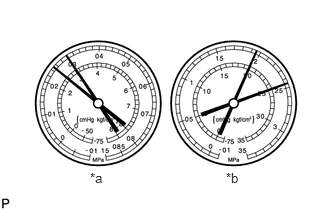
*a
LO
*b
HI
Pressure is too high on both low and high pressure sides
Symptom
Air conditioning system does not cool
The low pressure piping is too hot to touch
Probable Cause
Air in air conditioning system
Diagnosis
Air present in air conditioning system
Insufficient vacuum purging when evacuating air conditioning system
Corrective Actions
Replace cooler dryer
Check compressor oil to see if it is dirty or insufficient
Evacuate air conditioning system and recharge it with new or purified refrigerant
Note:These gauge indications occur when the air conditioning system has been left open and then recharged without evacuating the system.
Tip:For the example above, air is present in the air conditioning system.
-
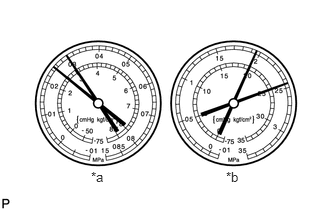
*a
LO
*b
HI
Pressure is too high on both low and high pressure sides
Symptom
Air conditioning system does not cool effectively
Frost or large amount of condensation on piping on low pressure side
Probable Cause
Expansion valve may be stuck open or metering refrigerant incorrectly
Diagnosis
Excessive refrigerant in low pressure piping
Expansion valve open too wide
Corrective Actions
Replace expansion valve
Tip:For the example above, there is an expansion valve malfunction.
-
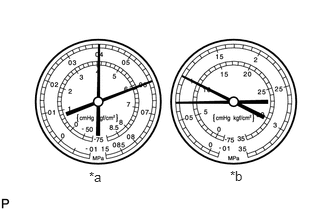
*a
LO
*b
HI
Pressure is too high on both low and high pressure sides or pressure is too low on high pressure side
Symptom
Air conditioning system does not cool effectively
Probable Cause
Internal leak in compressor
Diagnosis
Low compression
Leak from damaged valve or other compressor component
Corrective Actions
Replace compressor
Tip:For the example above, there is insufficient compressor compression.
-
Gauge readings (Reference)
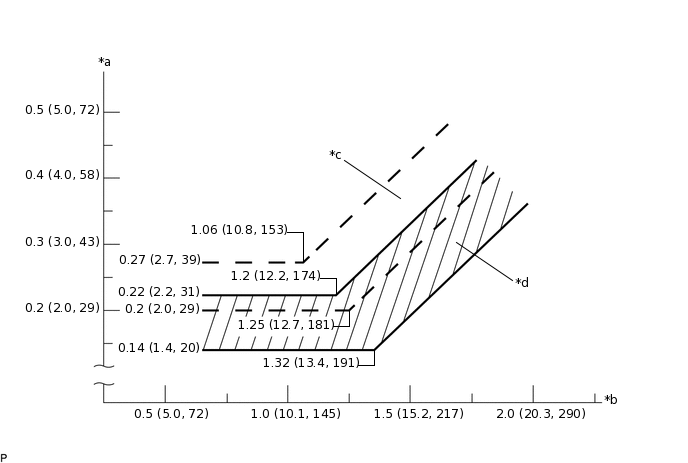
*a
Pressure on Low Pressure Side MPa (kgf/cm2, psi)
*b
Pressure on High Pressure Side MPa (kgf/cm2, psi)
*c
Blower High Zone
*d
Blower Low Zone