FRONT BRAKE FLEXIBLE HOSE (for 4WD and Pre-Runner) INSTALLATION
Tech Tips
-
Use the same procedure for the RH and LH sides.
-
The procedure listed below is for the LH side.
-
INSTALL FRONT NO. 1 WHEEL CYLINDER TUBE LH
-
Using a union nut wrench, install the wheel cylinder tube to the brake cylinder.
- Torque:
- 15 N*m { 155 kgf*cm, 11 ft.*lbf }
Note
-
Do not bend or damage the wheel cylinder tube.
-
Do not allow any foreign matter such as dirt and dust to enter the wheel cylinder tube from the connecting points.
-
Use the formula to calculate special torque values for situations where a union nut wrench is combined with a torque wrench Click here.
-
-
INSTALL FRONT FLEXIBLE HOSE
-
Attach the 2 new clips to the flexible hose.
-
Using a union nut wrench, connect the flexible hose to the brake tube and wheel cylinder tube while holding the flexible hose with a wrench.
- Torque:
- 15 N*m { 155 kgf*cm, 11 ft.*lbf }
Note
-
Do not bend or damage the brake tube and wheel cylinder tube.
-
Do not allow any foreign matter such as dirt and dust to enter the brake tube and wheel cylinder tube from the connecting points.
-
Use the formula to calculate special torque values for situations where a union nut wrench is combined with a torque wrench Click here.
-
-
FILL RESERVOIR WITH BRAKE FLUID (w/ VSC)
Fluid Item Specified Condition except TSAM Made SAE J1703 or FMVSS No. 116 DOT 3 for TSAM Made SAE J1704 or FMVSS No. 116 DOT 4 -
FILL RESERVOIR WITH BRAKE FLUID (for TMT Made)
Fluid SAE J1703 or FMVSS No. 116 DOT 3 -
FILL RESERVOIR WITH BRAKE FLUID (for TSAM Made)
Fluid SAE J1704 or FMVSS No. 116 DOT 4 -
BLEED AIR FROM BRAKE MASTER CYLINDER (w/ VSC)
Tech Tips
If the master cylinder has been disassembled or if the reservoir becomes empty, bleed air from the master cylinder.
-
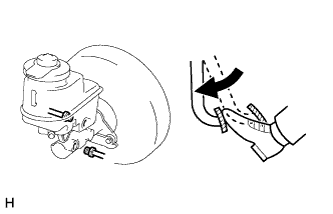
Using a union nut wrench, disconnect the 2 brake lines from the master cylinder.
-
Slowly depress and hold the brake pedal.
-
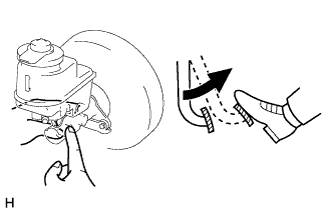
Block the tube holes with your fingers, and then release the brake pedal.
-
Remove the your fingers, slowly depress and hold the brake pedal, block the tube holes with your fingers again, and then release the brake pedal. Repeat this step 3 or 4 times.
-
Using a union nut wrench, connect the 2 brake tubes to the brake master cylinder.
- Torque:
- 15 N*m { 155 kgf*cm, 11 ft.*lbf }
Note
Use the formula to calculate special torque values for situations where a union nut wrench is combined with a torque wrench Click here.
-
-
BLEED AIR FROM BRAKE MASTER CYLINDER (for TMT Made)
Tech Tips
If the master cylinder has been disassembled or if the reservoir becomes empty, bleed air from the master cylinder.
-
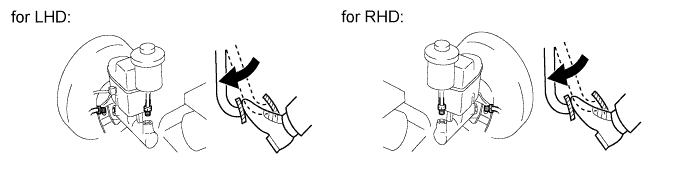
Using a union nut wrench, disconnect the 2 brake lines from the master cylinder.
-
Slowly depress and hold the brake pedal.
-
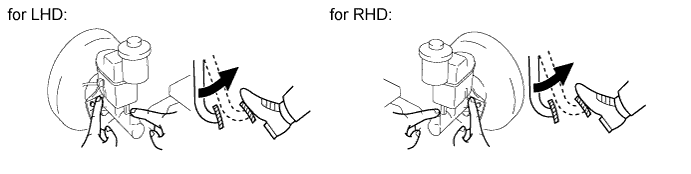
Cover the outer holes with your finger, and release the pedal.
-
Repeat the 2 previous steps 3 or 4 times.
-
Using a union nut wrench, connect the 2 brake lines to the master cylinder.
- Torque:
- 15 N*m { 155 kgf*cm, 11 ft.*lbf }
Note
Use the formula to calculate special torque values for situations where a union nut wrench is combined with a torque wrench Click here.
-
-
BLEED AIR FROM BRAKE MASTER CYLINDER (for TSAM Made)
Tech Tips
If the master cylinder has been disassembled or if the reservoir becomes empty, bleed air from the master cylinder.
-
Using a union nut wrench, disconnect the 2 brake lines from the master cylinder.
-
Slowly depress and hold the brake pedal.
-
Cover the outer holes with your finger, and release the pedal.
-
Repeat the 2 previous steps 3 or 4 times.
-
Using a union nut wrench, connect the 2 brake lines to the master cylinder.
- Torque:
- 15 N*m { 155 kgf*cm, 11 ft.*lbf }
Note
Use the formula to calculate special torque values for situations where a union nut wrench is combined with a torque wrench Click here.
-
-
BLEED AIR FROM BRAKE LINE (w/ VSC)
-
Remove the bleeder plug cap.
-
Connect a vinyl tube to the bleeder plugs.
-
Depress the brake pedal several times, and then loosen the bleeder plug with the pedal depressed.
-
When fluid stops coming out, immediately tighten the bleeder plug. Then release the pedal.
-
Repeat the 2 previous steps until all the air in the brake fluid is gone.
-
Tighten the bleeder plug.
- Torque:
- for front brake
- 11 N*m { 110 kgf*cm, 8 ft.*lbf }
- for rear brake
- 10 N*m { 102 kgf*cm, 7 ft.*lbf }
-
Install the cap.
-
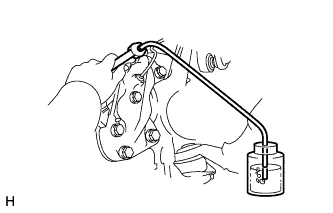
Bleed air from the brake line for each wheel by repeating the above procedures.
-
-
BLEED AIR FROM BRAKE LINE (for TMT Made)
-
Remove the bleeder plug cap.
-
Connect the vinyl tube to the bleeder plugs.
-
Depress the pedal several times, and then loosen the bleeder plug with the pedal depressed.
-
When fluid stops coming out, immediately tighten the bleeder plug. Then release the pedal.
-
Repeat the 2 previous steps until all the air in the brake fluid is gone.
-
Tighten the bleeder plug.
- Torque:
- for front brake
- 11 N*m { 110 kgf*cm, 8 ft.*lbf }
- for rear brake (2WD)
- 11 N*m { 112 kgf*cm, 8 ft.*lbf }
- for rear brake (4WD and Pre-Runner)
- 10 N*m { 102 kgf*cm, 7 ft.*lbf }
-
Install the cap.
-
Bleed air from the brake line for each wheel by repeating the above procedures.
-
-
BLEED AIR FROM BRAKE LINE (for TSAM Made)
-
Remove the bleeder plug cap.
-
Connect the vinyl tube to the bleeder plugs.
-
Depress the pedal several times, and then loosen the bleeder plug with the pedal depressed.
-
When fluid stops coming out, immediately tighten the bleeder plug. Then release the pedal.
-
Repeat the 2 previous steps until all the air in the brake fluid is gone.
-
Tighten the bleeder plug.
- Torque:
- for front brake (2WD)
- 10 N*m { 102 kgf*cm, 7 ft.*lbf }
- for front brake (4WD and Pre-Runner)
- 11 N*m { 110 kgf*cm, 8 ft.*lbf }
- for rear brake (2WD)
- 11 N*m { 112 kgf*cm, 8 ft.*lbf }
- for rear brake (4WD and Pre-Runner)
- 10 N*m { 102 kgf*cm, 7 ft.*lbf }
-
Install the cap.
-
Bleed air from the brake line for each wheel by repeating the above procedures.
-
-
BLEED AIR FROM CLUTCH LINE (for Manual Transmission)
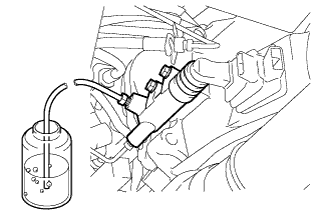
-
Remove the bleeder plug cap.
-
Connect the vinyl tube to the bleeder plug.
-
Depress the clutch pedal several times, and then loosen the bleeder plug with the pedal depressed.
-
At the point when fluid stops coming out, tighten the bleeder plug, and then release the clutch pedal.
-
Repeat the previous 2 steps until all the air in the fluid is completely bled out.
-
Tighten the bleeder plug.
- Torque:
- 11 N*m { 112 kgf*cm, 8 ft.*lbf }
-
Install the bleeder plug cap.
-
Check that all the air has been bled out of the clutch line.
-
-
CHECK BRAKE FLUID LEVEL IN RESERVOIR (w/ VSC)
-
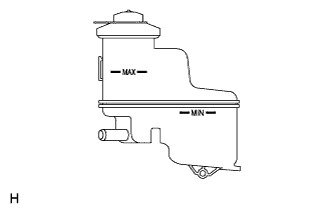
Check the fluid level.
If the brake fluid level is lower than the MIN line, check for leaks and inspect the disc brake pads. If necessary, refill the reservoir with brake fluid to the MAX line after repair or replacement.
Fluid Item Specified Condition except TSAM Made SAE J1703 or FMVSS No. 116 DOT 3 for TSAM Made SAE J1704 or FMVSS No. 116 DOT 4
-
-
CHECK BRAKE FLUID LEVEL IN RESERVOIR (for TMT Made)
-
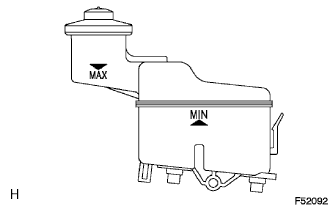
Check the fluid level.
If the brake fluid level is lower that the MIN line, check for leaks and inspect the disc brake pads. If necessary, refill the reservoir with brake fluid to the MAX line after repair or replacement.
Fluid SAE J1703 or FMVSS No. 116 DOT 3
-
-
CHECK BRAKE FLUID LEVEL IN RESERVOIR (for TSAM Made)
-
Check the fluid level.
If the brake fluid level is lower than the MIN line, check for leaks and inspect the disc brake pads. If necessary, refill the reservoir with brake fluid to the MAX line after repair or replacement.
Fluid SAE J1704 or FMVSS No. 116 DOT 4
-
-
CHECK FOR BRAKE FLUID LEAKAGE
-
INSTALL FRONT WHEEL
- Torque:
- 105 N*m { 1071 kgf*cm, 77 ft.*lbf }